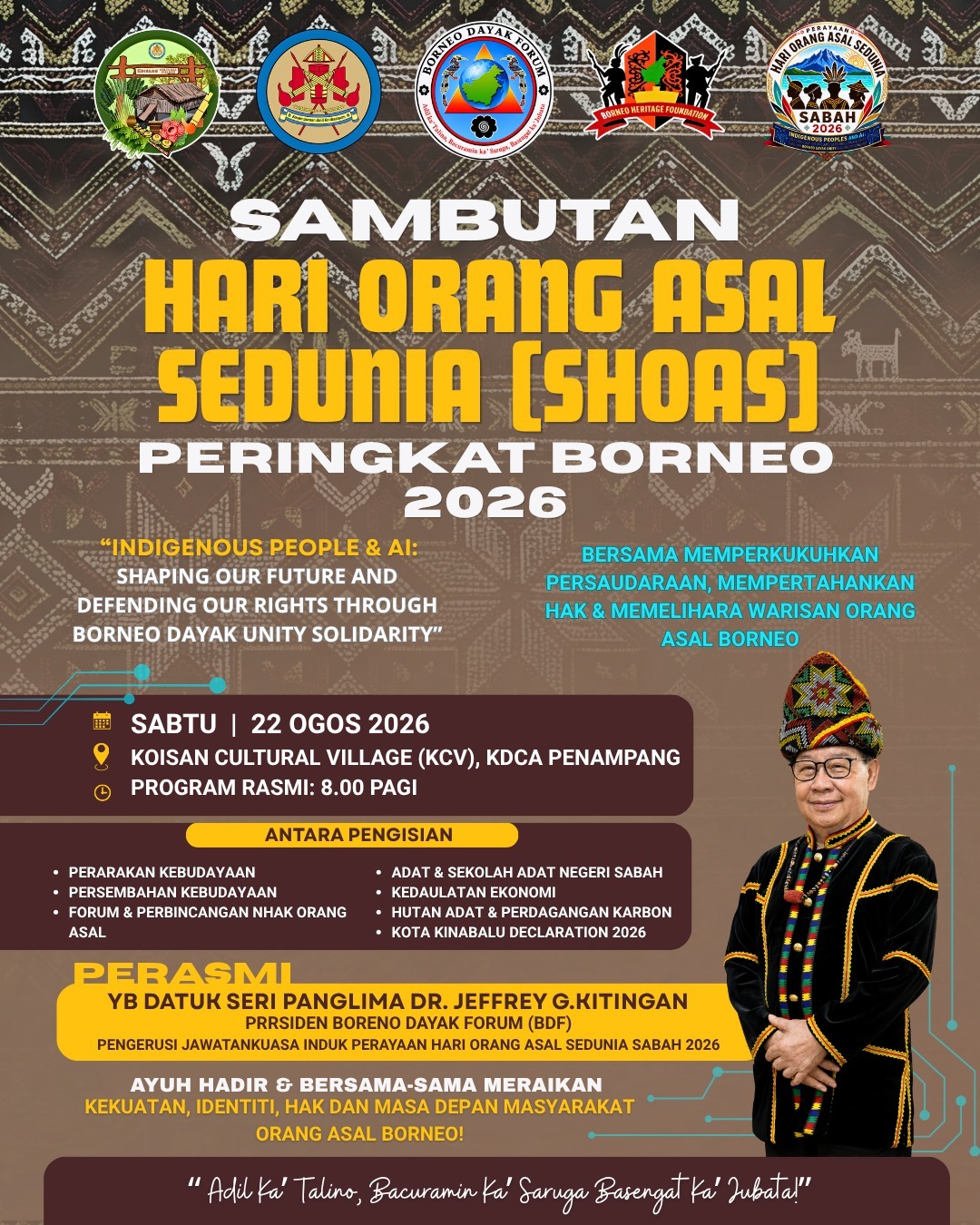
KOTA KINABALU: Aug 20, 2026 — The Sabah Indigenous Peoples Day celebration 2026 (SHOAS2026) is set to bring together indigenous leaders, youths, cultural practitioners, traditional knowledge holders, thinkers, activists, and communities from across Borneo in Sabah from Aug 21 to 23.
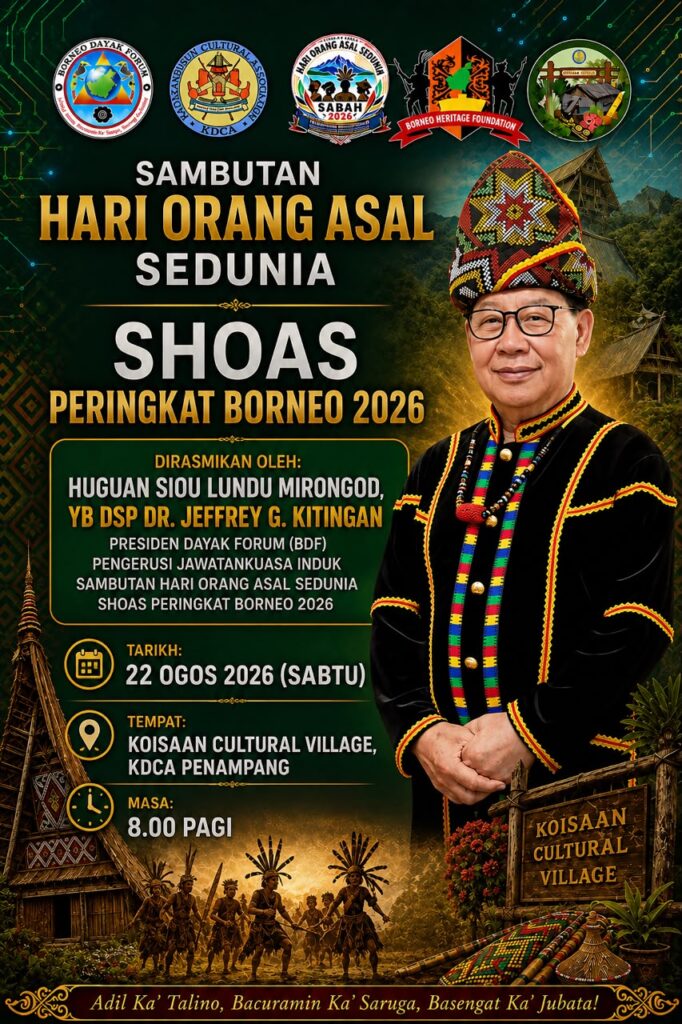
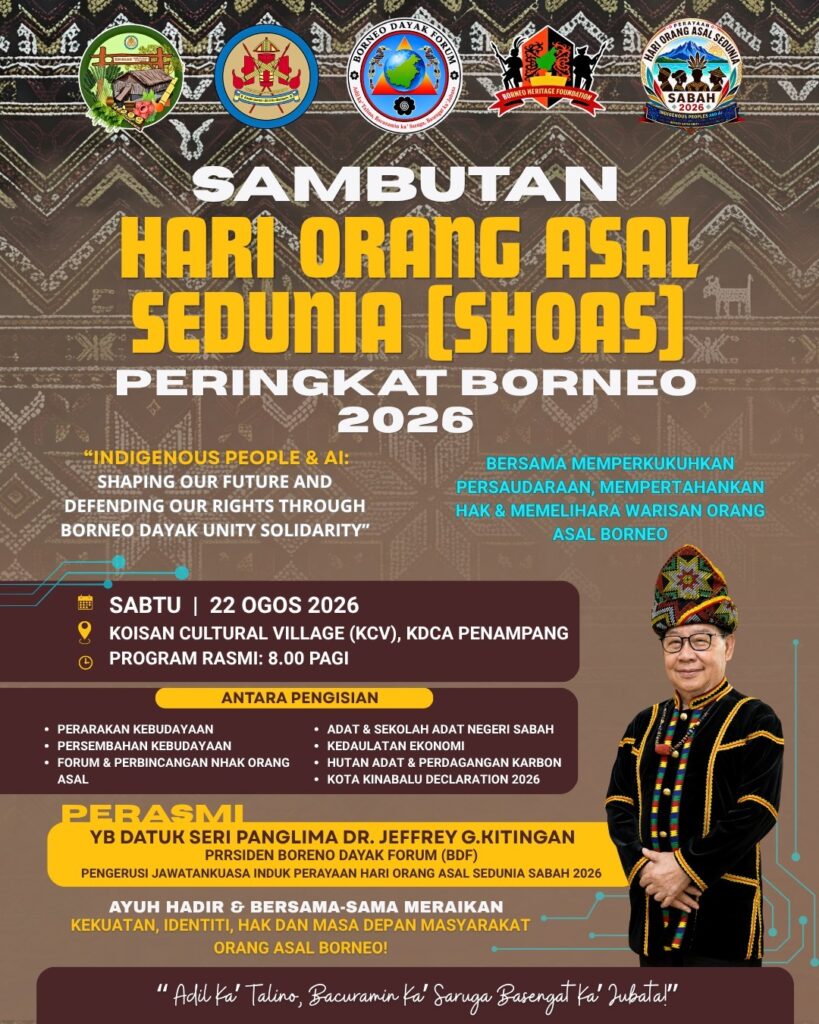
The main conference, alongside a cultural programme, will take place on Saturday, Aug 22, at the Koisaan Cultural Village, KDCA Penampang.
This year, SHOAS2026 will tackle the future of indigenous peoples amid the rise of artificial intelligence (AI), digital technology, and rapid economic shifts that are transforming societies globally.
The central question revolves around whether indigenous communities can step into the future without losing the knowledge, identity, rights, and cultural foundations they have upheld for generations.
Main International Conference Committee (MICC) Chairman Andrew Ambrose @ Atama Katama said the future of indigenous peoples must be framed through intergenerational continuity.
He said protecting their way of life also means safeguarding knowledge, languages, traditions, territories, values, and social relationships that ensure indigenous communities endure from one generation to the next.
“Our youth are already living in the age of AI, digital technology, and global connections. They must be part of the conversation regarding the future,” he said.
According to Atama, indigenous peoples should not be viewed as communities trapped in the past, as their knowledge systems may be hundreds or even thousands of years old, yet they have continuously evolved.
Today’s indigenous youth are content creators, artists, researchers, entrepreneurs, activists, community mobilisers, and future leaders.
“The question is not whether they will enter the digital world, because they are already in it. The question is whether they will step into the future with a strong identity, awareness of their cultural rights, and the confidence to defend their community’s interests,” he said.
SHOAS2026 does not see tradition and technology as opposing forces. Young indigenous people need to understand AI without losing their identity, while communities should adopt digital technology without ceding ownership of their traditional knowledge.
Indigenous languages must also enter the digital space without being disconnected from the communities that created and sustain them. Meanwhile, development progress should not come at the cost of indigenous identity.
“You can be proud of your traditional identity while understanding AI, speak your mother tongue while mastering new technology, uphold customs while building a new economy, and at the same time honour your ancestors while creating something for future generations,” Atama said.
In the AI era, questions surrounding ownership, recording, digitalisation, profit, and the use of indigenous knowledge are becoming increasingly vital.
The international theme for 2026 also carries an important dimension, as indigenous midwives have reminded that knowledge is not necessarily confined to books, universities, or formal institutions. Much of indigenous knowledge continues to live through people, familial ties, lived experiences, and oral traditions passed down through community practices.
For this reason, SHOAS2026 places emphasis on indigenous participation in discussions covering data, digital representation, intellectual property, cultural knowledge, and AI.
Technology can serve as a tool for language preservation, education, cultural documentation, environmental monitoring, and indigenous entrepreneurship — most importantly, ensuring communication between communities remains intact.
However, technology must not become a new channel for indigenous knowledge to be extracted, commercialised, or used without consent or benefit to the communities that hold it.
Youth will play a key role at SHOAS2026 through efforts to document, capture images, produce videos, ask questions, create content, engage in debates, and even disseminate conference messages through their own digital networks.
The new generation is increasingly using smartphones, social media, digital archives, podcasts, videos, and creative technologies to define themselves on their own terms.
“The indigenous archives of the future may be digital, language classes may take place online, and indigenous entrepreneurs may use AI. However, technology must remain a tool in our hands, not the owner of our knowledge,” Atama said.
The main programme of SHOAS2026 will kick off as early as 6.30am on Saturday, Aug 22, with a cultural parade led by Datuk Seri Panglima Dr Jeffrey G. Kitingan from Borenos, Bandar Baru Penampang, heading to KDCA.
The parade will open a full day of events blending indigenous culture, customary rituals, dialogue, leadership, and regional Borneo solidarity.
The opening programme will also feature traditional elements, spirituality, cultural performances, prayers, Bobohizan rituals, customary leadership, and participation from representatives across Borneo.
Among the prominent figures scheduled to take part are Dr Drs Marthin Billa, M.M., President of the Majelis Adat Dayak Nasional, Indonesia; Datuk Amar Douglas Uggah Embas, Deputy Premier of Sarawak; and Datuk Seri Panglima Dr Jeffrey G. Kitingan, President of the Borneo Dayak Forum.
Key issues to be addressed include indigenous rights, the UN Declaration on the Rights of Indigenous Peoples (UNDRIP), sustainable development, the indigenous economy, cultural assets, customary governance, identity, border communities, technology, and AI.
SHOAS2026 also serves as a meeting point between the older and younger generations, tradition and innovation, while connecting Sabah with the wider indigenous world of Borneo.
Organisers welcome participation from indigenous communities, youth organisations, university students, content creators, academics, cultural bodies, civil society, media practitioners, and the general public at the main programme in KDCA.
“Come with your identity, questions, ideas, and culture as the voice of your generation. The future of indigenous peoples should not be designed without indigenous peoples themselves,” Atama said.
The theme for SHOAS2026 is “Indigenous Peoples and AI: Shaping Our Future and Defending Our Rights Through Borneo Dayak Unity and Solidarity.”
Organisers stressed that the challenge for today’s generation is to carry indigenous heritage into the future and strengthen Borneo solidarity, ensuring that these communities are not mere spectators of global change, but remain the deciders, creators, and authors of their own future.
Source: Media & Publicity, Main International Conference Committee (MICC), SHOAS2026.