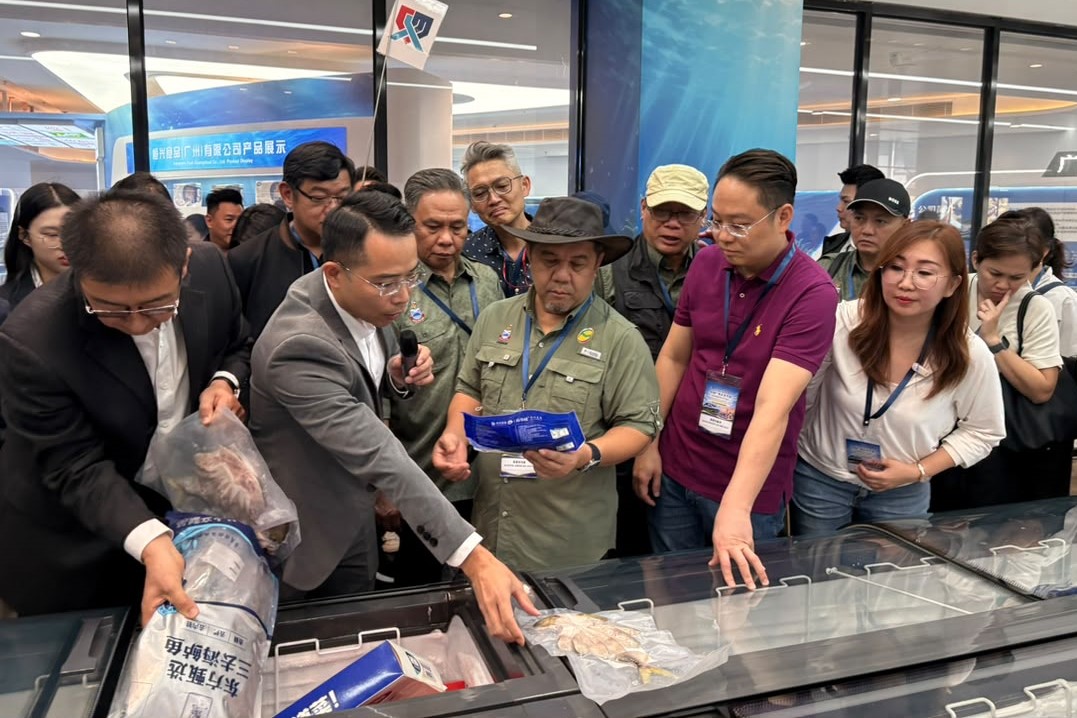

GUANGZHOU: November 13, 2026 – “Trade should benefit both sides. The people should enjoy quality products at reasonable prices, while the business community gets opportunities to expand markets and increase income.”
That is the essence of the Malaysia-China Chamber of Commerce’s (MCCC) struggle, which is now intensifying efforts to bring the issue of market access for Sabah products, particularly durian, fishery products and swiftlet nests, to the attention of the Chinese government.
MCCC President Datuk Dexter Lau said the three sectors still face constraints in terms of export routes because Sabah products must go through Peninsular Malaysia before they can enter the Chinese market.
He said the situation not only lengthens the logistics chain but also has the potential to increase trade costs and affect the competitiveness of local products.
“We have raised this matter with the Chinese government, particularly the relevant agriculture officials, so that they see the need to allow Sabah products to be exported directly,” he said.
He said this after attending the Malaysia-China Economic & Trade Exchange & Business Matching Session here.
Dexter said Sabah has a strategic advantage in terms of transport links following the existence of about 12 direct flights connecting the state with several cities in China.
Therefore, the existing air connectivity and logistics network should be leveraged as a catalyst for increased exports and expanded cross-border trade activities.
“We already have direct flight networks and logistics facilities between Sabah and China. The question is, why are we not taking advantage of this to increase the scale of business and exports?”
“When products can be marketed directly, it has the potential to reduce distribution costs, increase sales and offer consumers quality product choices at more competitive prices,” he said.
He stressed that MCCC is committed to championing the interests of the business community by ensuring that Malaysia-China trade relations are translated into tangible economic opportunities, particularly for entrepreneurs and industry players in Sabah.
He said sustainable trade cooperation must create a mutually beneficial ecosystem, not only for governments and companies, but also for producers, exporters, importers and consumers of both countries.
Dexter described the trade mission as very productive as it opened space to highlight the real needs of the Sabah business community, while strengthening the foundation of long-term economic cooperation between Sabah and China.