The International Day of the World’s Indigenous Peoples is about the recognition of rights and self-governance, rather than merely a celebration of cultural diversity, a prominent Malaysian indigenous leader has said.
Datuk Seri Panglima Dr Jeffrey G. Kitingan, president of the Borneo Dayak Forum (BDF) and MP for Keningau, said the annual observance on 9 August should be viewed as part of a broader struggle to defend indigenous rights, ancestral lands, traditional knowledge and self-determination.
“Culture is part of our identity,” he said. “But this observance carries a much deeper meaning.”
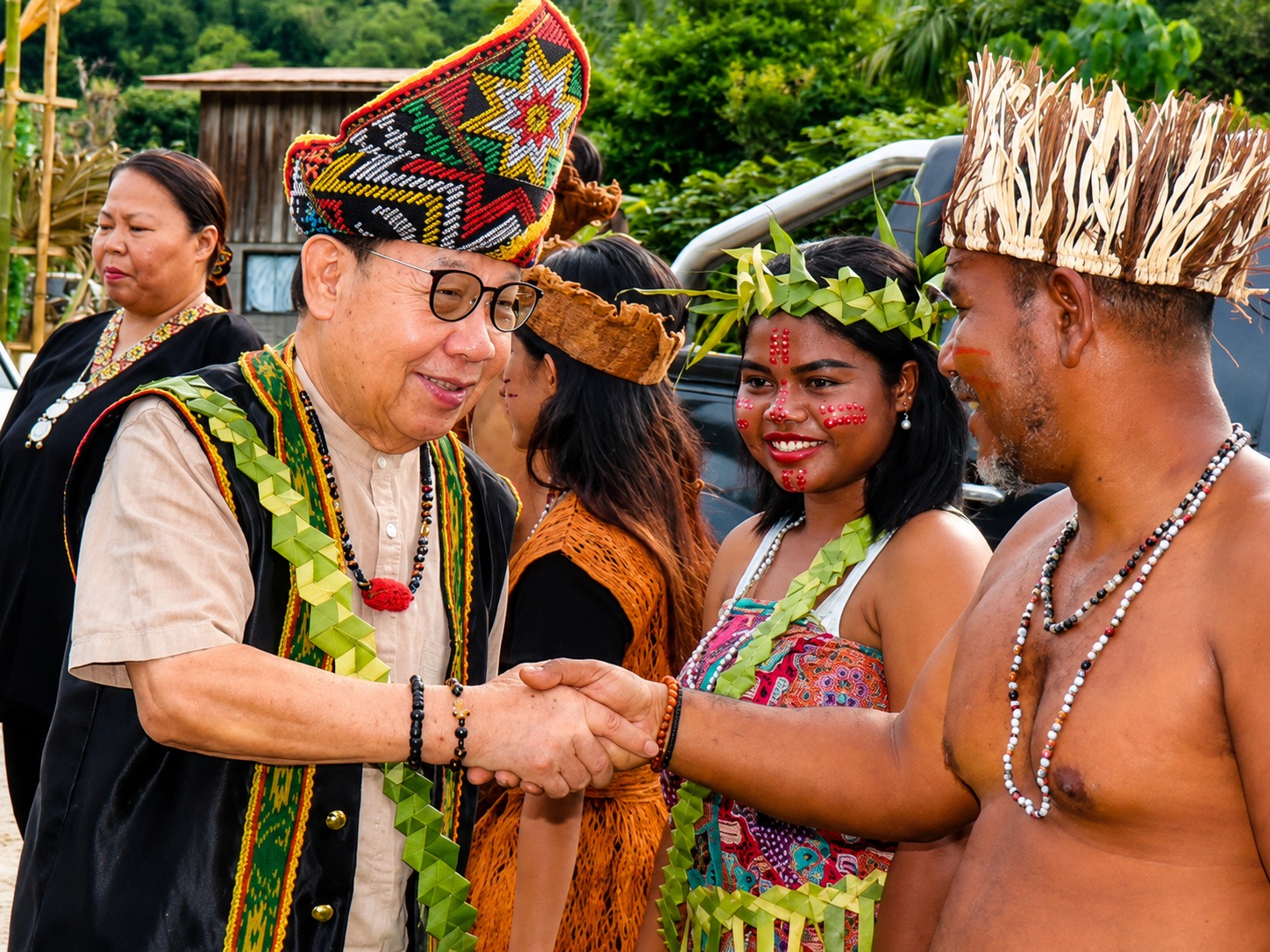
He was speaking at the opening ceremony of the four-day 2026 World Indigenous Peoples Day Celebration (PHOAS), being held in Kampung Rantai, Tambunan, Sabah.
Exact historical milestones
The United Nations General Assembly, through Resolution 49/214 adopted on 23 December 1994, designated 9 August as the International Day of the World’s Indigenous Peoples.
The date holds historical significance because it marks the first meeting of the UN Working Group on Indigenous Populations, which convened on 9 August 1982 in Geneva.
That working group itself was established earlier in 1982 within the UN system to examine developments relating to the promotion and protection of indigenous human rights.
Its work contributed directly to the UN Declaration on the Rights of Indigenous Peoples (UNDRIP), which was adopted by the UN General Assembly on 13 September 2007.
‘Living knowledge’
This year’s theme focuses on indigenous midwives, traditional knowledge, biodiversity, climate action, sustainable energy and wellbeing.
Dr Jeffrey said indigenous knowledge should not be dismissed as mere heritage from the past, but recognised as “living knowledge” that continues to guide communities in healthcare, environmental protection and community life.
“What the world today recognises as nature-based solutions has actually been practised by indigenous peoples for generations,” he said.
He also stressed that indigenous communities should not be viewed simply as beneficiaries of development, but as partners with the capacity to manage their own resources and determine their own future.
“Indigenous identity is not just about clothing, language or customs,” he said. “Identity also means the right to determine who we are, how we want to live, how we manage our land and resources, and how we want to shape the future of our own communities.”
Land rights under threat
Dr Jeffrey warned that indigenous communities continue to face challenges, particularly regarding the loss of customary land, forests and rivers.
“When customary land, forests and rivers are threatened, what is lost is not just sources of livelihood, but also language, culture, knowledge and identity passed down by previous generations,” he said.
The event in Tambunan marks the fourth national-level celebration of World Indigenous Peoples Day in Malaysia. The district previously hosted the same commemoration on 9 August 1998 – then known as HOAS-4 (Hari Orang Asal Sedunia ke-4) – at the Tambunan Village Resort Centre.
Three regions represented
The five-day programme, which runs from 6 to 10 August 2026, has brought together about 350 participants from Sabah, Sarawak and Peninsular Malaysia.
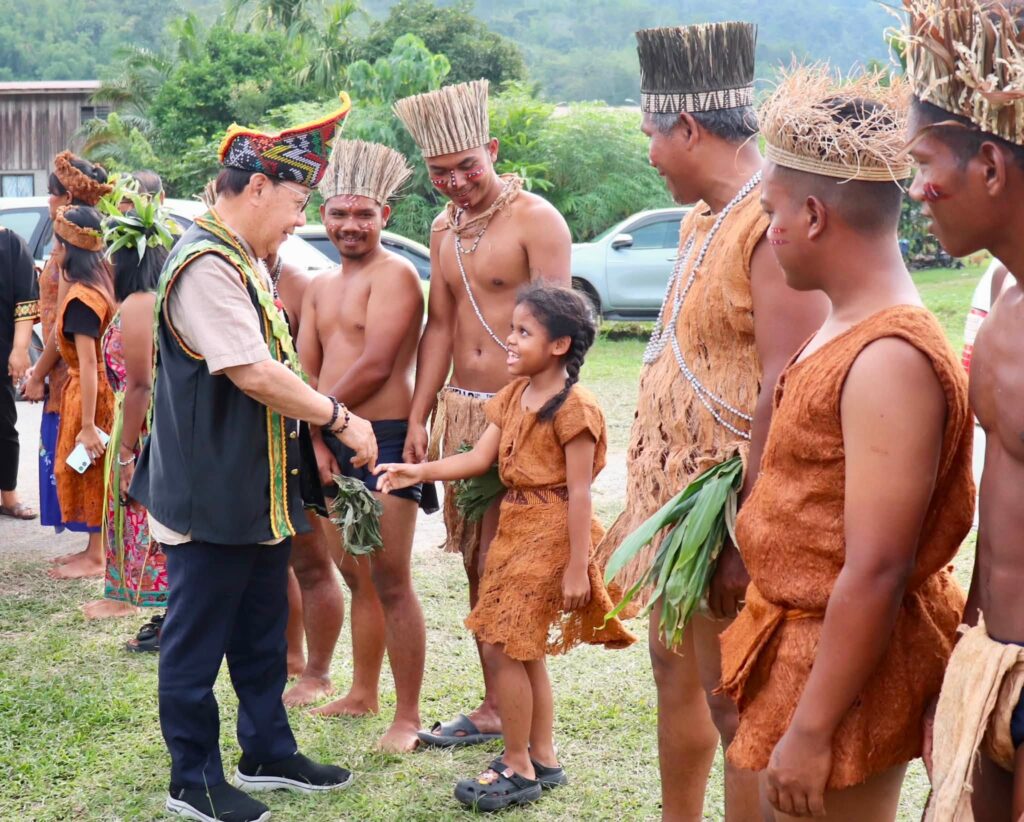
Representatives from Peninsular Malaysia include communities such as Jakun, Temiar, Temuan, Mah Meri, Semoq Beri and Jahai. Sarawak is represented by Bidayuh, Iban, Penan, Kayan and Kenyah groups. Sabah’s delegation includes Dusun, Murut, Kadazan, Rungus and Tidung communities, among others.
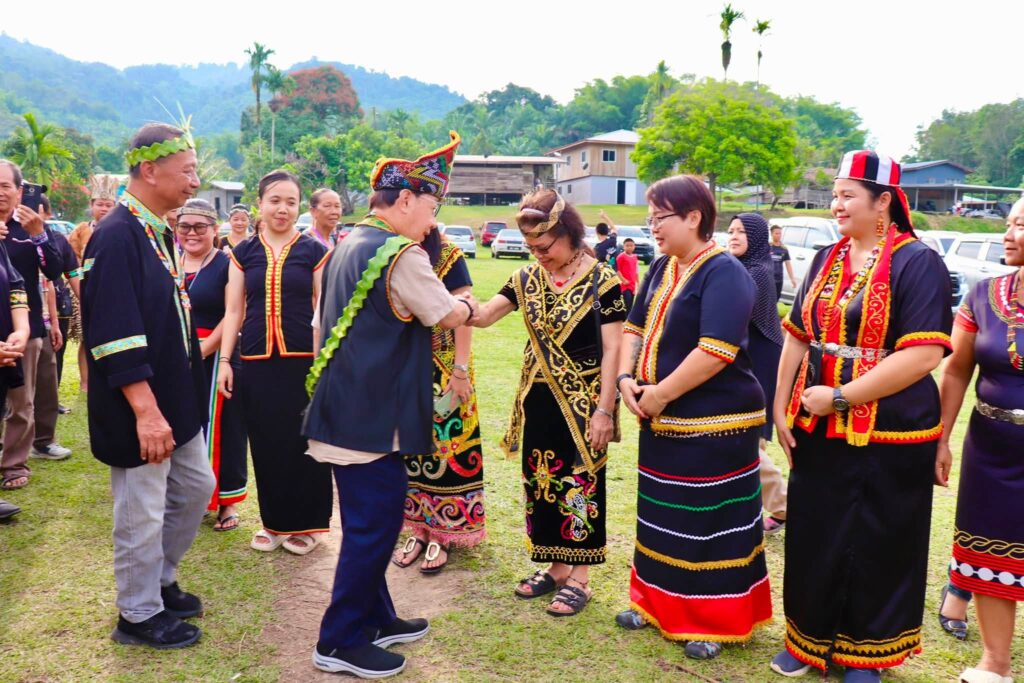
The event is organised by several civil society groups, including the Indigenous Women’s Organisation of Malaysia (PWOAM), PACOS Trust, the Centre for Orang Asli Concerns (COAC), TONIBUNG, SADIA, MAMAKAT and the Sabah Children’s Voice Association (PSAS). The organising chair is Hilda Pius, secretary-general of the Jaringan Orang Asal SeMalaysia (JOAS) network.
Global context
According to UN estimates, there are approximately 476 million indigenous people living across 90 countries worldwide, representing less than 5% of the global population but speaking a majority of the world’s estimated 7,000 languages.
Event programme
The PHOAS 2026 programme includes forums on indigenous self-governance, a fair energy transition, community-based renewable energy, and the rights of indigenous women – including a session on CEDAW General Recommendation No. 39 (adopted in 2022, specifically addressing the rights of indigenous women and girls).
Traditional sports such as blowpipe shooting, coconut bowling, tug-of-war, and coconut peeling competitions are also being held alongside cultural performances from all three regions.
The event concludes on 10 August 2026.
Footnotes (with full historical references)
1. Daily Express Malaysia. “Indigenous Day vital platform for rights, self-governance: Jeffrey.” 10 August 2026. https://www.dailyexpress.com.my/news/286343/indigenous-day-vital-platform-for-rights-self-governance-jeffrey/
2. United Nations General Assembly Resolution 49/214 (23 December 1994) – International Day of the World’s Indigenous Peoples. https://undocs.org/en/A/RES/49/214
3. United Nations. “Background – International Day of the World’s Indigenous Peoples.” (Notes first Working Group meeting on 9 August 1982). https://www.un.org/en/observances/indigenous-day/background
4. United Nations Declaration on the Rights of Indigenous Peoples (UNDRIP) – adopted by General Assembly on 13 September 2007. https://www.ohchr.org/en/indigenous-peoples/un-declaration-rights-indigenous-peoples
5. TV Sarawak. “Orang Asal perlu jadi rakan kongsi dalam pembangunan.” 10 August 2026. https://www.tvsarawak.my/2026/08/10/orang-asal-perlu-jadi-rakan-kongsi-dalam-pembangunan/
6. United Nations. “International Day of the World’s Indigenous Peoples – 9 August.” https://www.un.org/en/observances/indigenous-day
7. CEDAW General Recommendation No. 39 (2022) – on the rights of indigenous women and girls. https://www.ohchr.org/en/documents/general-comments-and-recommendations/general-recommendation-no-39-2022-rights-indigenous