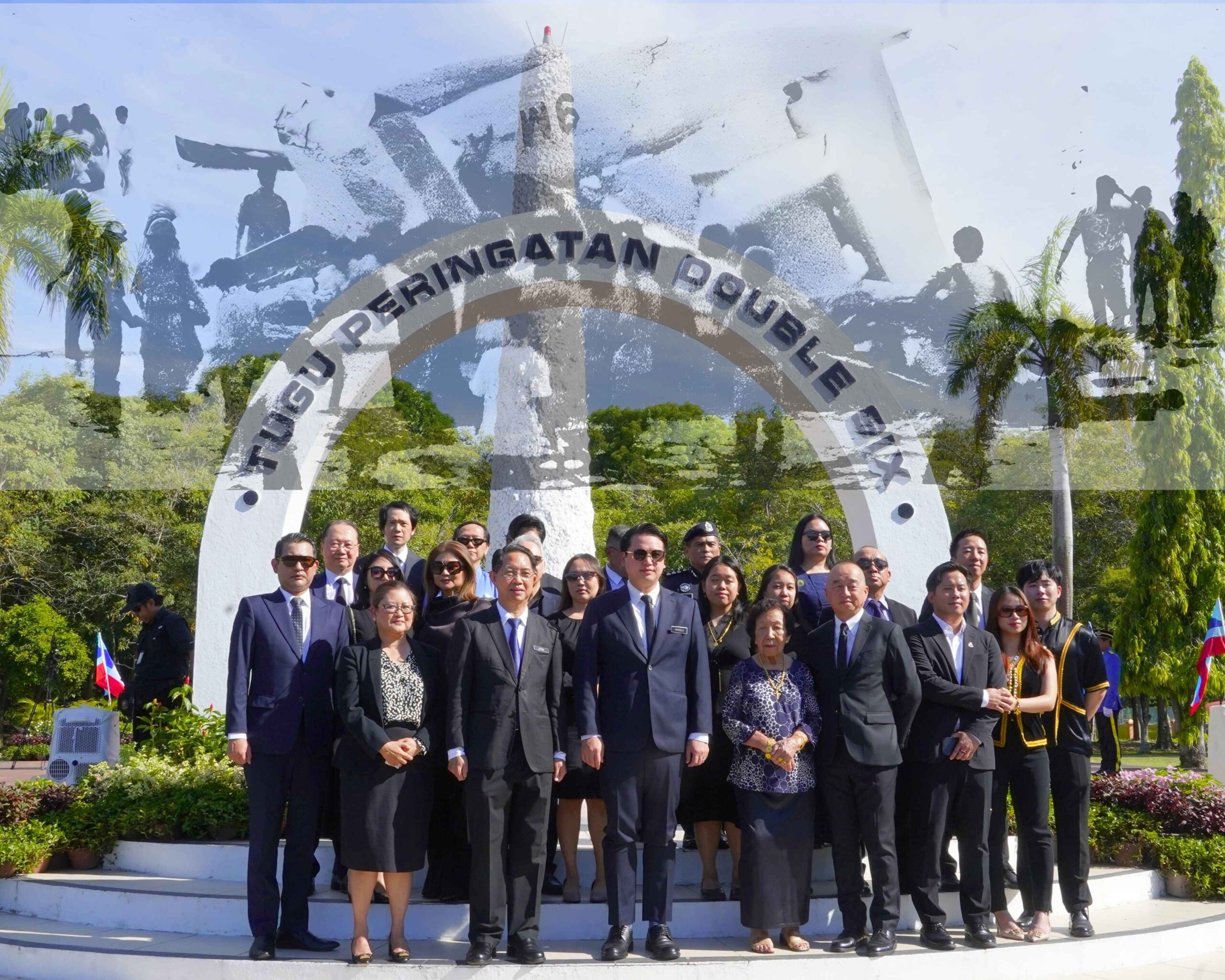
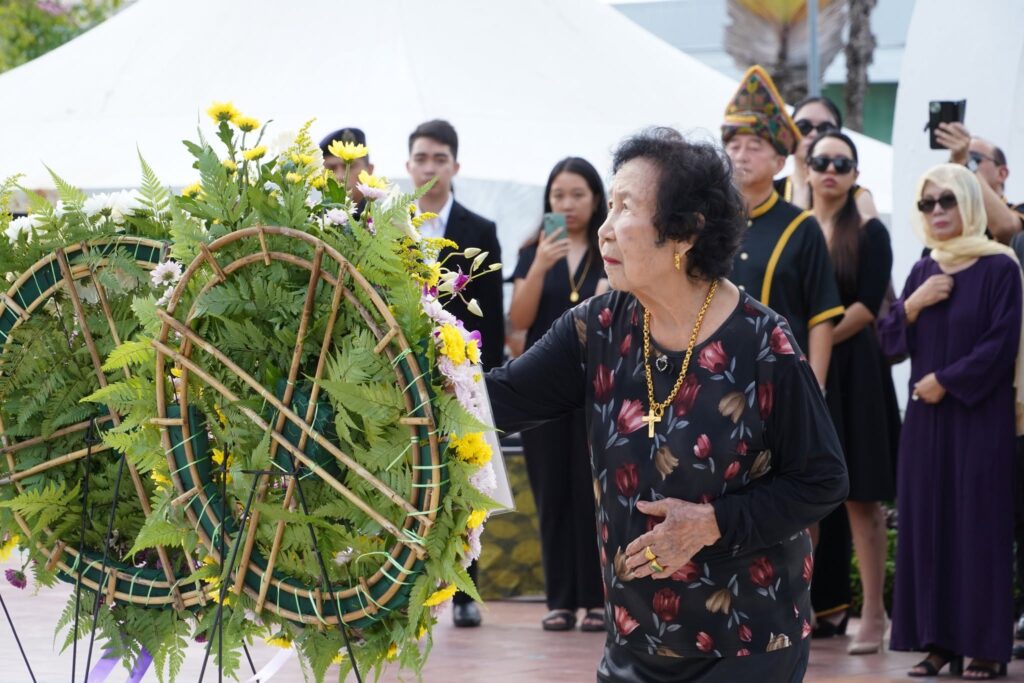
From simple gatherings and prayers to elaborate ceremonial parades, the commemoration of the “Double Six” tragedy has evolved over the last five decades, yet the grief—and the questions—remain as raw as ever for many Sabahans. The crash on June 6, 1976, which claimed the lives of 11 people, including the then Chief Minister Tun Fuad Stephens and several key state ministers, left a painful legacy that has gradually demanded greater historical recognition, not just for the families but for the entire nation. It was a tragedy that altered the state’s course overnight.
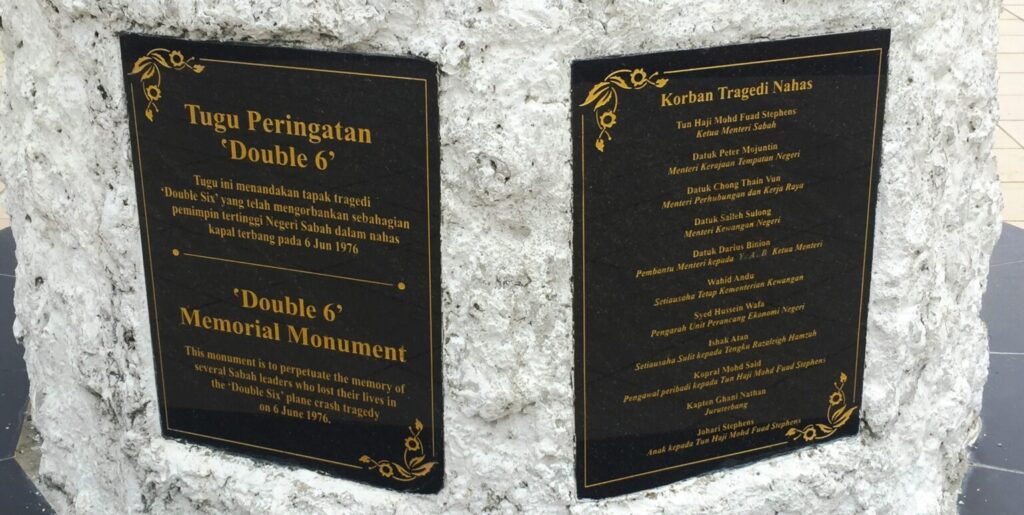
Those who perished were Chief Minister Tun Fuad Stephens, ministers Datuk Peter Mojuntin, Datuk Chong Thien Vun, Datuk Salleh Sulong, assistant minister Datuk Darius Binion, key government officials Datuk Wahid Peter Andu and Dr Syed Hussein Wafa, pilot Capt Ghandi Nathan, security personnel Ishak Atan and Said Mohammad, and Fuad’s son, Johari Stephens.
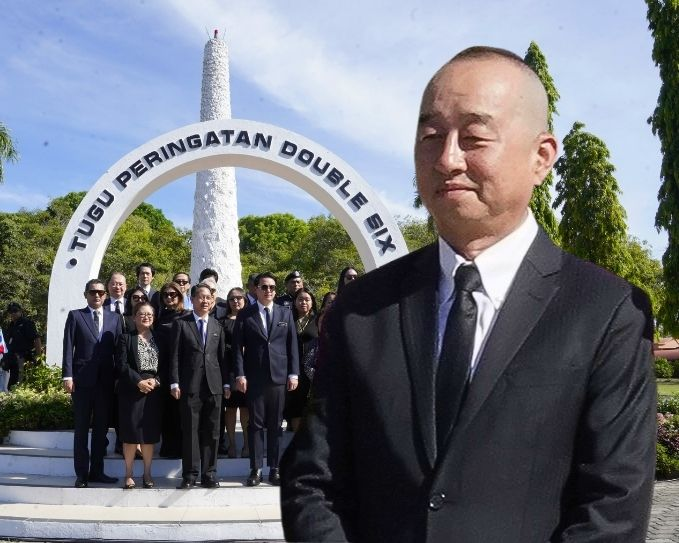
Sembulan resident Affendi Surat, 57, recalls how he was among the many who gathered around the crash site when it happened. “I saw how things have evolved around the historical site,” he said. Over the years, the quiet prayers of small groups gave way to a formal landmark, and now an arch and a monument stand at the site. The Double Six Memorial Park, complete with a gallery, was opened 15 years ago. “Now you can see many young people visiting the place, unlike before when it was rather neglected. It is only right. They were important people, someone’s relative. This was a tragic event.”
A political vacuum and a struggle for truth
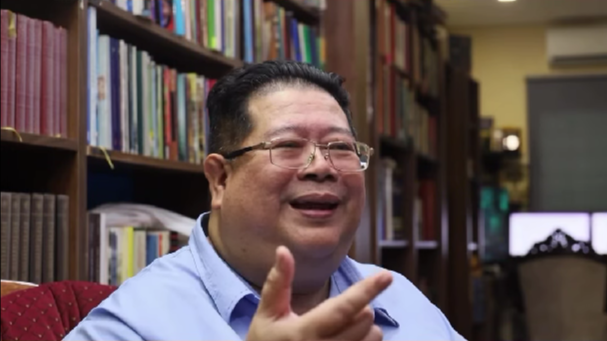
The crash decapitated a government only 53 days into its mandate. “This sparked a legacy of political upheaval, deep-seated conspiracy, and an unfinished quest for answers that endures to this day,” said Dr Shari Jeffri, founder and president of the Borneo History Society. The sudden loss created a political vacuum and altered the direction of Sabah’s governance. Just eight days after the crash, a federal delegation arrived to finalise a petroleum agreement. The resulting deal saw Sabah surrender its oil and gas rights to the federal government in exchange for a 5% royalty. “For many Sabahans, this left a lingering sense of injustice, losing half of the cabinet members and oil rights in one day,” Dr Shari noted.
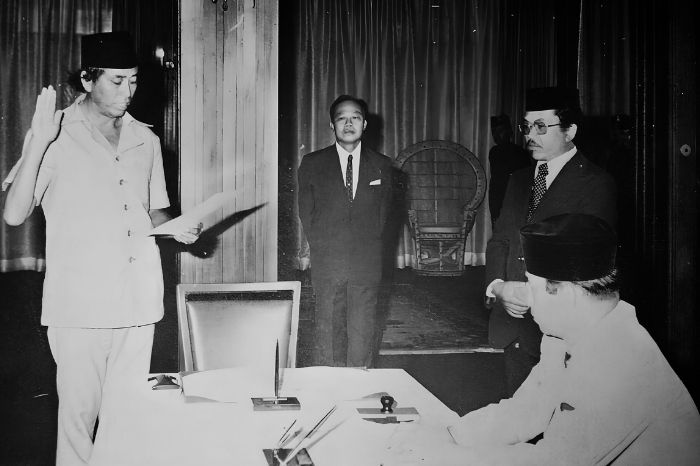
For nearly half a century, the official investigation report remained shrouded in secrecy under the Official Secrets Act 1972 (Act 88). This classification only deepened public suspicion, fueling persistent conspiracy theories and a decades-long struggle for answers.

The declassification: a moment of transparency
After decades of public pressure and a court order secured by former Sabah Chief Minister Tan Sri Harris Salleh, the federal government finally agreed to declassify the final investigation report. On April 5, 2023, Prime Minister Datuk Seri Anwar Ibrahim announced the Cabinet’s decision. The report was declassified in accordance with Section 2C of the Official Secrets Act 1972 and made public the following week.
“We feel we owe it to the people, more so the people of Sabah and the families concerned, to release the report,” Anwar said at a post-Cabinet press conference. “I don’t believe that findings like these, which affect the families, the state and general public, should be kept under the Official Secrets Act”. He further stated that the decision was made in the interest of the victims’ families and in line with the Unity Government’s policy of openness and transparency. “All this while, the government has not decided to make it public,” he said.
The Malaysian report, signed by then accidents chief inspector Omar Saman, concluded that the probable cause of the crash was a centre of gravity (CG) position well outside the approved rear limit due to improper baggage loading. The report stated there was no evidence of sabotage, fire or explosion. It also highlighted that the pilot, Capt Gandhi Nathan, had exceeded his duty time and that the operating procedures for Sabah Air pilots were “not of professional standard”.
Suspicions linger: an ‘unfinished quest’
The declassification, however, has not provided the closure many had hoped for. Instead, it has raised new questions and left many Sabahans, including victims’ families, deeply unsatisfied.
Datuk Donald Mojuntin, whose father Datuk Peter Mojuntin was killed in the crash, expressed mixed feelings. “We are happy that Prime Minister Datuk Seri Anwar Ibrahim agreed to declassify and make public the findings, but it has raised additional concerns not only among the victims’ families but Sabahans in general,” he said. “I think it’s very obvious that if you classify a report for nearly 50 years and then it comes out as straightforward as it is, questions about why it was classified will be raised. What national interest was being protected?”
The family of the late Tun Fuad Stephens has been particularly vocal, casting doubt on the Australian investigation report declassified around the same time. The Australian report was prepared by the Government Aircraft Factories (GAF), the manufacturer of the Nomad aircraft. “There is clearly a conflict of interest here. The situation is akin to someone being the judge on a murder trial in which they are a suspect,” said Faridah, one of Fuad’s surviving children. She argued that GAF, which had a financial motive to protect its aircraft, could not be expected to produce an unbiased report, and that the released documents appeared to be an internal memo rather than a final investigation.
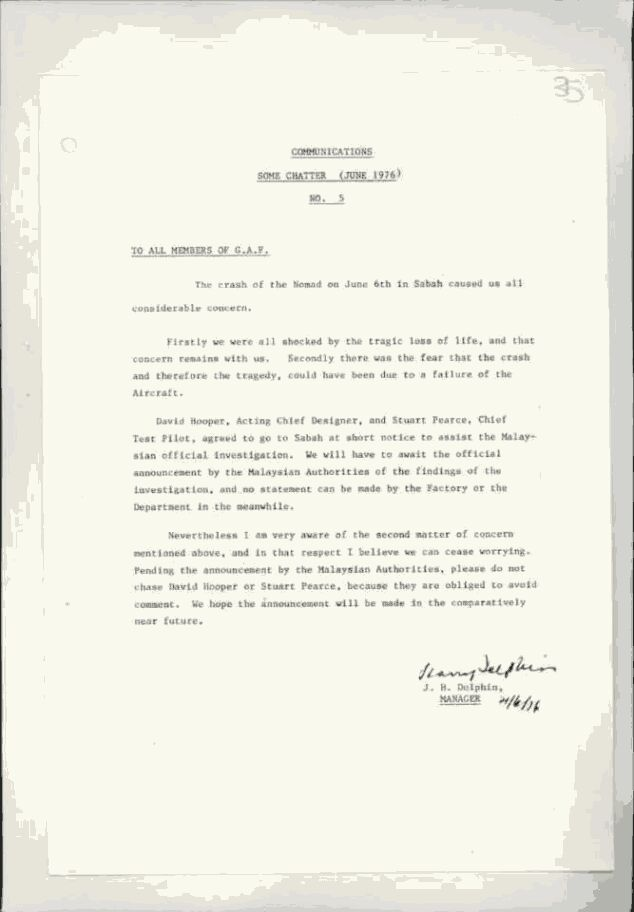
Adding to the intrigue, the two GAF representatives who were part of the Australian investigation team—Chief Test Pilot Stuart Pearce and Chief Designer David Hooper—died in a separate Nomad plane crash just two months later, on August 6, 1976, in Melbourne. This coincidence has only deepened suspicions in Sabah.
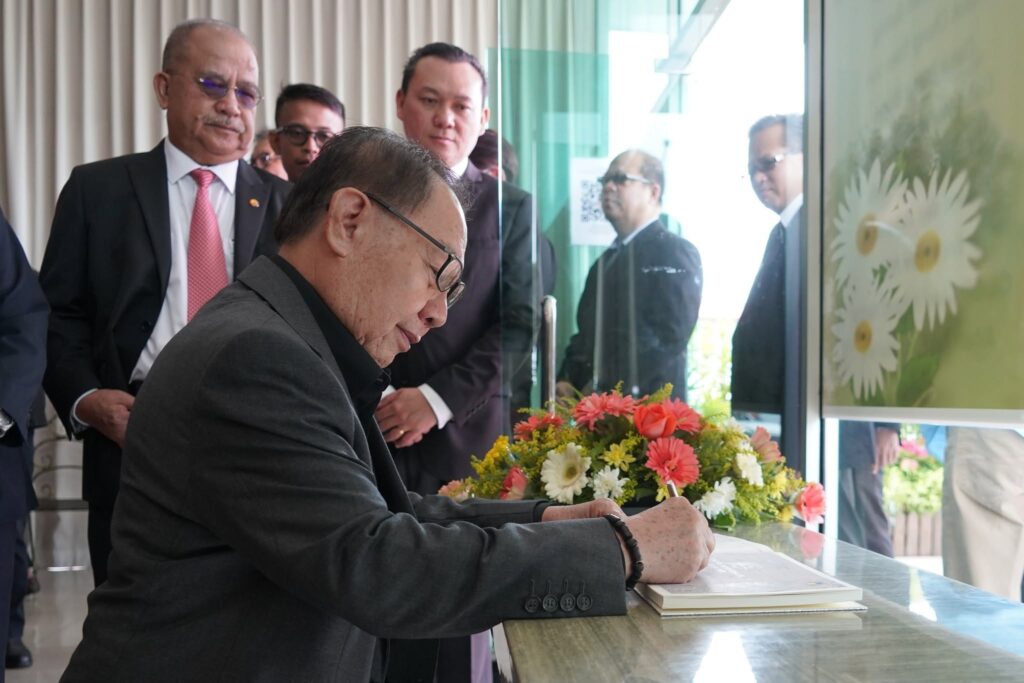
In 2023, the then Deputy Chief Minister of Sabah, Datuk Seri Dr Jeffrey Kitingan, also voiced persistent doubts. He questioned why, if there was no foul play, it took nearly 50 years to declassify the report. “Because of that, the people of Sabah are still doubtful and waiting for the answers,” he said on the 47th anniversary of the crash. He also highlighted the mystery of the missing black box. “What happened to the black box? Where is it?” he asked. He noted that all aircraft are typically required to have one, and its absence has prevented a full understanding of the plane’s final moments. Even in 2024, a year after the declassification, Kitingan stated that the reports had not provided a clear picture and remained mysterious, telling the media that the government would continue to demand stronger explanations from the federal government.
The unfinished business with Australia
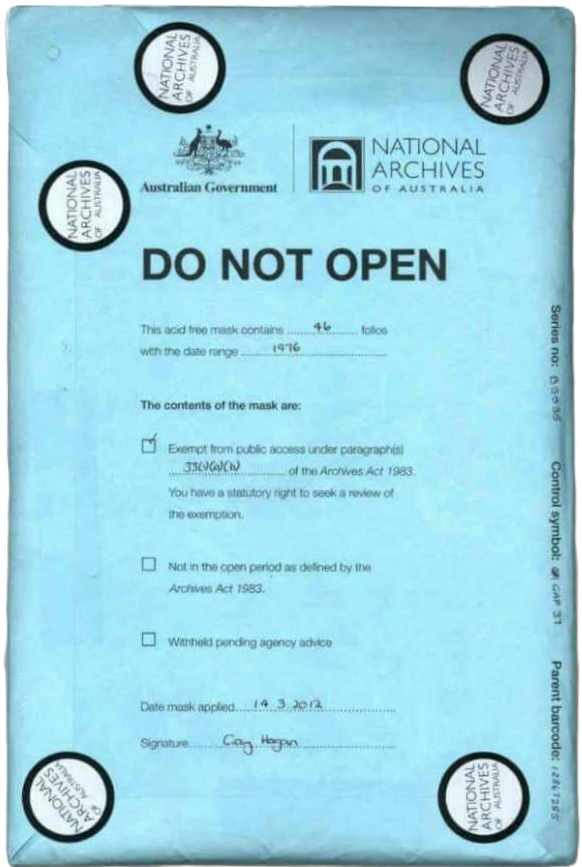
The search for the full truth has also become an international affair. The Australian government, whose report concurred with Malaysia’s findings, initially withheld parts of its records, with its National Archives citing concerns that releasing the information could damage international relations. This led to calls from Sabah leaders, including former Chief Minister Datuk Yong Teck Lee, for the full, unredacted reports to be made public. “Only the release of the full reports, in both Malaysia and Australia, can bring closure to this extremely painful chapter of Sabah’s history,” Yong said.
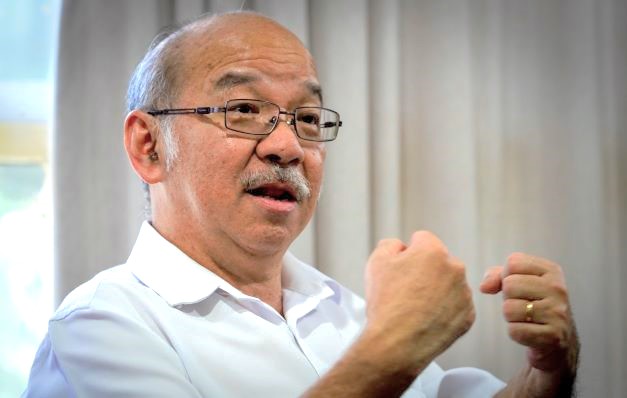
In 2023, following Malaysia’s lead, Australia agreed to declassify its own records, and its Transport Minister Anthony Loke stated that the Malaysian government had no objections to Australia releasing its full set of documents. Yet, as recently as June 2025, families of the victims have reportedly shelved plans for legal action against Australia, citing prohibitive legal costs and fatigue after decades of waiting.
For many in Sabah, the ‘Double Six’ tragedy is not a closed chapter but a living wound. The declassification of the reports, after nearly half a century, was a necessary step, but it was not the final one. As the 50th anniversary approaches, the journey for answers—for a full and transparent accounting of that fateful day—continues. The monuments may stand and official reports may be read, but for those who lost leaders, family, and a sense of justice, the story of the ‘Double Six’ remains heartbreakingly unfinished.
Sources:
Penantian keluarga mangsa berakhir – utusannews@mediamulia.com.my http://lib.perdana.org.my/PLF/News_2023/Apr_23/UM/UM_080423.pdf
Laporan akhir insiden nahas Sabah Air – Utusan Borneo Online, 5 April 2023
Double Six tragedy, 50 years on – New Strait Times, 6 June 2026
Sabahans commemorate 1976 Double Six tragedy – nst.com.my, 6 June 2026
Lebih banyak persoalan kenapa laporan dirahsiakan – Sabah Baru News, 14 April 2023
Fuad Stephens’ family suspicious or report – Borneo Post Online, 30 April 2023
Double Six tragedy questions remain unanswered – 6 June 2026
Mising black box could shed light on Double Six Tragedy – NST Online, 6 June 2023
Laporan akhir siasatan kemalangan udara nahas pesawat Sabah Air Model GAF N-22B Nomad 9M-ATZ, Kota Kinabalu, 6 Jun 1976.
by David E.
The journalistic content in this article is solely the responsibility of the author and does not reflect the official position of the news agency.