
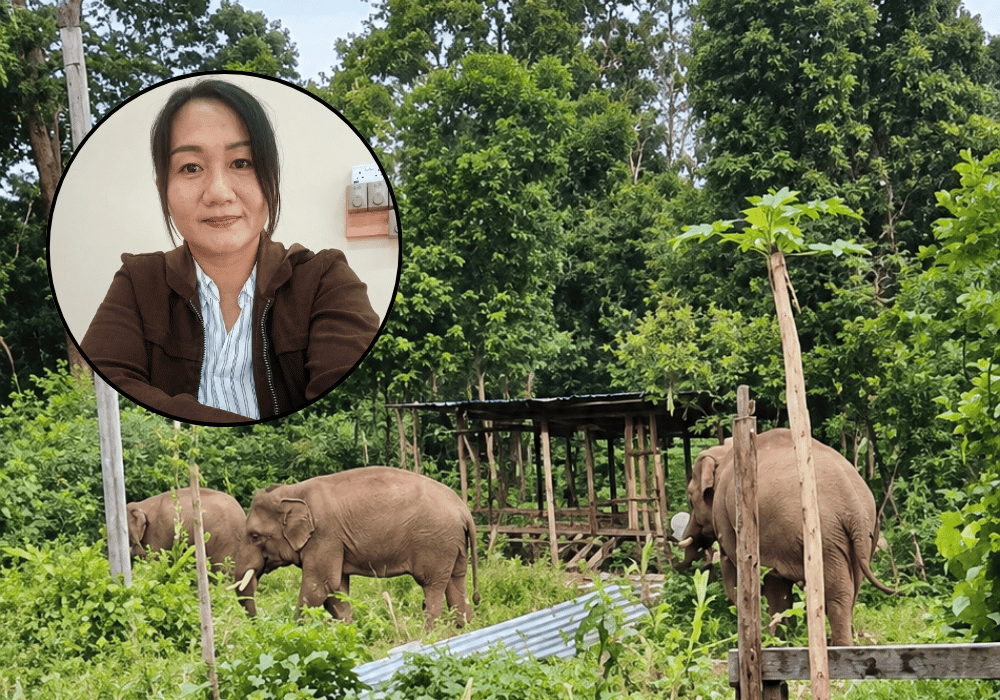
TELUPID: The presence of wild elephants entering Kampung Gambaron since 2019 is no longer seen as a seasonal nuisance, but has increasingly become a threat to the safety and livelihoods of local residents.
Elephant sightings occurred from 2019 to 2022 before recurring continuously from early 2024 until now, with the animals even approaching residential areas and farms in search of food.
Kampung Gambaron Village Development and Security Committee (JKKK) chairperson Diana Kudus said crops have been among the main casualties, with oil palm plantations, fruits, bananas, pineapples, cassava and various vegetables sustaining damage.
She said crop losses for oil palm alone are estimated to exceed RM5,000 for some plantations, while the total overall loss has yet to be accurately determined.
“Residents are very fearful and no longer dare to go to their farms as they used to, for fear of encountering the elephants,” she said.
Another resident, Jassicea, said the uncontrolled presence of elephants has brought various negative impacts to the community in the village.
“The elephants’ path passes through residential areas when they come and go in search of food, and the animals have even attempted to enter people’s homes,” she said.
She added that the situation has kept residents in a constant state of anxiety, especially when they need to go out to their farms.
Meanwhile, Johnny Chong said various complaints have been made repeatedly, including police reports and reports to the Wildlife Department (JHL), but residents claim the problem persists without a comprehensive solution.

Local residents feel that existing measures, such as the installation of electric fence wires, have not been effective and that the problem will continue to recur unless more thorough steps are taken.
They want the authorities to increase monitoring, relocate the elephants to areas further from settlements, and repair the fences or electric wires that previously served as barriers.
Other suggestions include the construction of trenches along the electric fence perimeter to strengthen control, as well as creating a designated elephant settlement or habitat that could potentially be developed as an ecotourism attraction.
Diana also proposed safe elephant-deterrent methods carried out under the supervision of authorities, including the use of specific sounds, to prevent more serious human-wildlife conflicts.
The issue is no longer merely about crop damage, but touches on the safety of residents and the survival of a community that depends on farms as their source of income.