
By: Roodwill
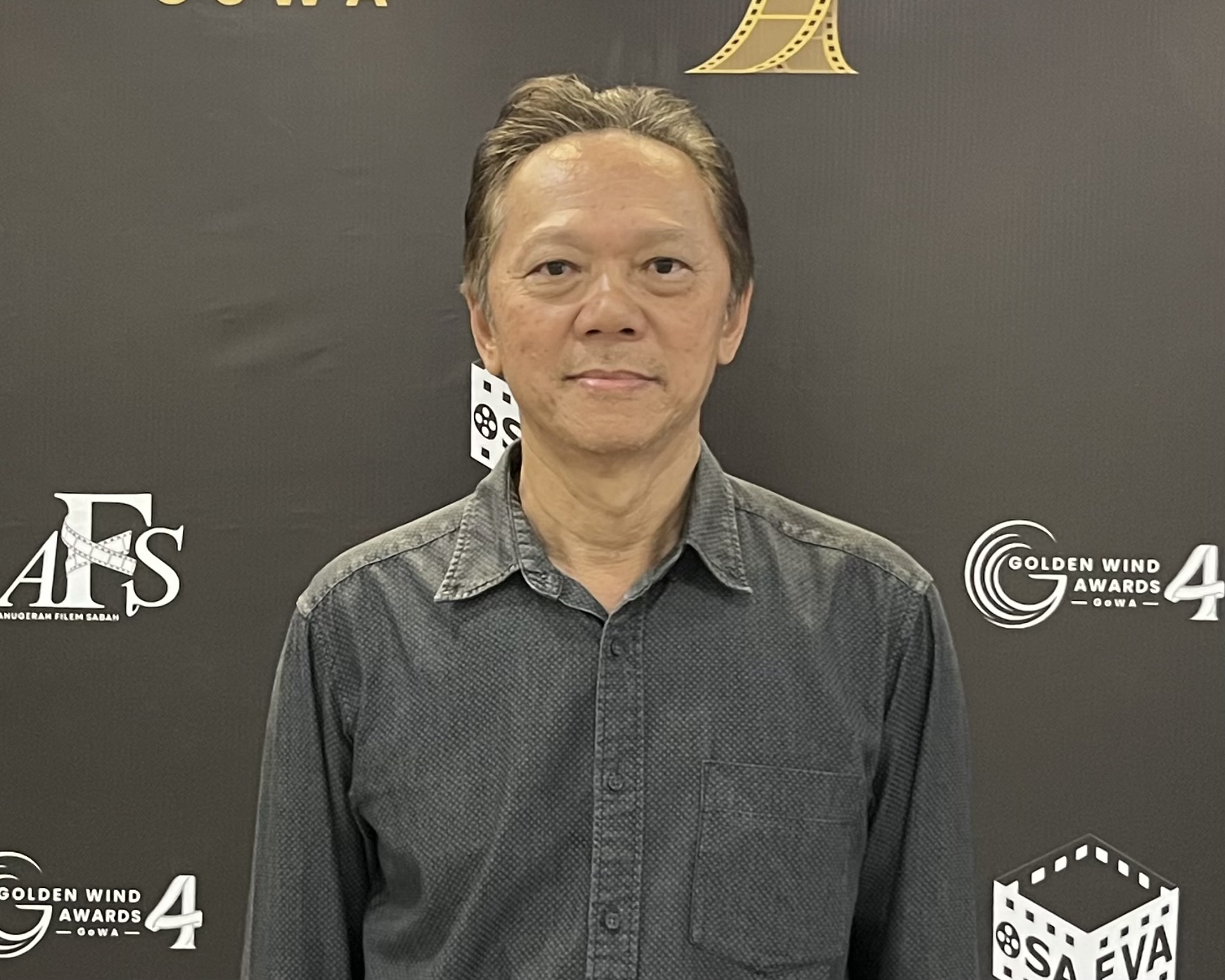
KOTA KINABALU – Change in the film industry does not begin with cameras, budgets or technology, according to director and screenwriter William Chiang. Instead, filmmakers must first have the courage to change the way they think and see the world before they can produce a work that truly resonates.
“We need to break out of our shells,” he told reporters after a workshop organised by the Sabah Film and Visual Association (SAFVA). “If we want the creative industry to move forward, we also need to change the way we think.”
The best stories come from personal experience
For Mr Chiang, the foundation of a good script does not start with imagination.
“The most authentic way to write a script is to tell your own story. Through that experience, we can understand a story in greater detail because we have lived it,” he said.
When a writer truly understands the story they want to tell, he added, it becomes easier to translate it into script form.
He was also struck by a comment from Professor Zairul Anwar, who reminded participants of where writing begins. “We need to return to our origins. For me, that is the best starting point.”
“We need to know ourselves first. We need to understand our own life stories before trying to tell other people’s stories.”
It is not about the budget, but how we tell the story
For Mr Chiang, the main difference between local films and those from abroad does not lie in budget or technology. Rather, it depends on how a story is translated from script to screen.
“Most of the stories we produce are actually not very different from those abroad. What sets them apart is the way they are told.”
He said local filmmakers need to pay attention to narrative techniques – whether using linear or non-linear structures – so that the final product truly meets audience expectations.
“I see that many of our films have not yet fully met the tastes of cinema-goers.”
He believes Malaysia needs more individuals who have worked in the international film industry or been involved in globally recognised productions to share their experiences.
According to Mr Chiang, a film’s strength ultimately depends on how the story is translated from script to screenplay.
“The screenplay is the medium that brings a story to life. Everything written in the script is translated into the screenplay before being presented to audiences in cinemas.”
Screenwriters need more space
Mr Chiang argued that Malaysia does not actually lack good stories. However, the final output often fails to meet audience expectations when translated to the screen.
“It may sometimes be due to budget constraints, but for me the main issue is how the story is translated from script to film.”
He said screenwriters should be given more room to voice their opinions on the stories they create – including casting choices, plot development and how the script is brought to the screen.
“When writers are given the space to develop a work together, the story has a greater chance of meeting audience expectations,” he said.
Sabah film industry must dare to break out of its ‘shell’
Commenting on the development of Sabah’s film industry, Mr Chiang said many positive changes had taken place over the past decade. However, the real challenge, he said, was taking the industry to the next level.
“If we look at developments over the past 10 years, I think Sabah’s film industry has actually grown quite rapidly. The progress is clear.”
Nevertheless, he said industry players must be brave enough to assess their own weaknesses before thinking about the next step.
“The question is how we move beyond our current level. We need to identify our weaknesses first. Only when we know where we are weak can we know how to grow.”
Among the things that need to change, he said, is the tendency to stay within the same circles.
“We need to step out of our groups and our ways of thinking. Sometimes we get too comfortable in our own circles, exchanging only similar ideas and perspectives.”
Change begins with how we think
For Mr Chiang, the “shell” he refers to is not just about staying within one’s own group, but about a mindset still shaped by old ways of thinking.
“Sometimes we are still influenced by what I would call colonial thinking.”
He said the colonialism he meant was no longer physical, but rather the way society sees the world and creates works.
“The real colonialism is colonialism of the mind. It does not mean that there is still someone controlling us today, but the way we see the world is still influenced by inherited thinking.”
In the arts, he said, everything begins with how a person thinks.
“How we think determines how we create. If we want our creative industry to move forward, then we also need to change the way we think.”
He acknowledged that breaking out of that framework is not easy, because daily life also shapes how a person sees themselves.
“Every day we are influenced by various things – political news, our surroundings, family and daily life. All these experiences shape our perceptions, sometimes making us feel we are lacking.”
According to Mr Chiang, every individual must dare to find their own path if they want to produce better work.
“We need to dare to separate ourselves from that way of thinking and find our own path. That path is always there. It is just that each individual needs to find their own way.”
The industry can only grow if it moves together
Looking ahead to the next 10 years, Mr Chiang believes Sabah’s creative industry has great potential for growth. However, he said change would only happen if industry players were willing to cooperate and support one another.
“We must come together. We cannot move alone or think that only our way is right and refuse to work with others.”
He said programmes such as those organised by SAFVA were not just workshops, but efforts to build a stronger industry ecosystem.
“Such programmes are not just about holding an event, but about preparing us for the future of the creative industry.”
“We need to see ourselves as a community, not as individuals moving alone.”
He said if all parties could unite, Sabah’s film industry would not need to wait 10 years to see change.
“If possible, within the next five years we can already see significant change. Ten years is too long.”
What is lacking is not activities, but support
Mr Chiang believes Sabah does not lack workshops or industry development programmes. Instead, the main challenge is getting participation and support from industry players themselves.
“Actually, I think we are not short of activities. There are plenty.”
“The question is, are industry players and the arts community truly ready to come together to support those activities?”
“Not just programmes organised by us, but also those organised by other organisations, associations or companies.”
He encouraged artists to get involved in various creative fields, as they are all interconnected in forming a stronger arts ecosystem.
“If there are music, poetry, literary or other arts programmes, we should also take part because they are all part of the same arts ecosystem. We need to support each other.”
Filmmakers need to understand people, not just cameras
For Mr Chiang, making films is not just about learning shooting techniques or producing attractive visuals. Instead, filmmakers must constantly draw knowledge from various fields.
“We need to read. We need to see how others tell stories.”
He said filmmakers should not limit themselves to the world of film alone. Instead, they should engage with other fields such as music, poetry and literature, because each offers a different perspective on storytelling.
“Go and look at the music industry, because films also need music. Meet with literary figures, because they have very profound ways of telling stories.”
From such people, he said, filmmakers can learn how a story is built with deeper emotion and meaning.
Beautiful visuals alone are not enough
Mr Chiang said the rise of social media today makes it easy for people to produce visually appealing videos. However, he argued that visuals alone were not enough to create a work that truly resonates.
“Today we can see many videos on YouTube or TikTok that have beautiful visuals. But sometimes they are only beautiful in terms of pictures. They do not carry deep meaning.”
He said a film needs to offer more than just pleasing images.
“As filmmakers, we need to go deeper than that. We need to produce stories that are not only beautiful to look at but also have meaning.”
He said when audiences leave the cinema, they should not only remember the visuals but also understand the story and the message being conveyed.
It all begins with the mind
For Mr Chiang, every form of art comes from the same source – the way a person thinks.
“Actually we all use the same thing – the mind. The only difference is how we express those thoughts.”
He said some choose film, some choose writing, and some convey stories through music. But the goal remains the same – to share a story that can touch people.
“Some express it through video. Some through writing. Some through music. But the source remains the same. What differs is only the medium used to tell the story.”
He believes whatever field of art one chooses, they all demand the same sacrifice, discipline and hard work.
“In the end, whatever form of art we choose, they all require the same sacrifice, discipline and hard work.”