by David E.
KOTA KINABALU: Oct 14, 2026 – The Securities Commission Malaysia (SC) is intensifying efforts to mobilise capital for Sabah businesses, aiming to move them from basic production into higher-value, technology-enabled activities.
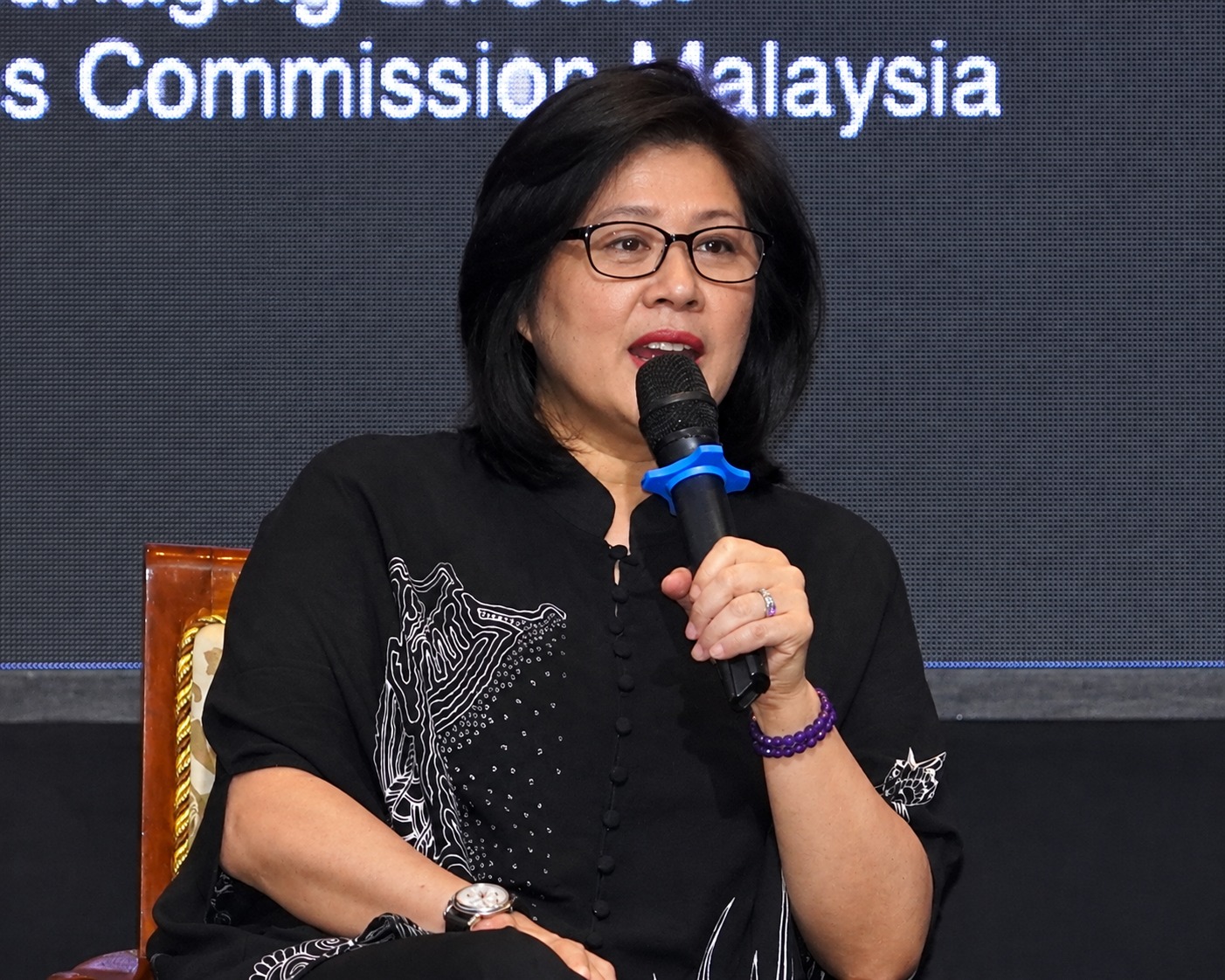
Speaking at the Kembara Borneo 2026 Sabah Edition here today, SC managing director Datin Paduka Azalina Adham said Sabah’s strengths in agriculture, tourism, logistics and manufacturing must be leveraged for greater regional dynamism.
“These strengths must be leveraged to create greater value and dynamism both locally and regionally. This means enabling more businesses and entrepreneurs to move beyond basic production and services… into higher-end processing, manufacturing and technology-enabled activities,” she said in her welcome remarks.
The event, themed “Enterprise to Expansion: Connecting Sabah Businesses with Growth Opportunities”, brings together businesses, investors and ecosystem partners to raise awareness of alternative financing options.
Azalina said the SC’s developmental agenda, a key component of its Capital Market Masterplan 2026-2030, aims to build a more inclusive and accessible capital market. She highlighted the “funding escalator” concept, which offers pathways from equity crowdfunding and peer-to-peer financing for early-stage firms to private equity and eventually corporate bonds and the stock market.
She cautioned that access to the right capital depends on business readiness, with investors assessing management capability, growth strategy and financial reliability.
On sustainability, she said ESG should not be viewed solely as a compliance requirement.
“Stronger sustainability practices can improve operational resilience, manage risks, enhance your value across local and global supply chains,” she said.
Azalina also pointed to government initiatives to catalyse private funding, including the NIMP CoSIF with MITI and the forthcoming KE-CIF with the Ministry of Economy, supported by a RM270mil allocation under Budget 2027.
“We are very, very encouraged by that. We think that will really help accelerate the scaling up of the SMEs and mid-tier companies,” she said.
In an interview with reporters, Azalina said: “One of it is about reaching out and making capital market financing more accessible and easy for SMEs and mid-tier companies to get funding. For them to grow, for them to scale their business, for them to grow regionally.”
She explained that capital financing covers banking facilities such as term loans, revolving credit and overdraft, while alternative financing involves platforms such as private equity, venture capital and crowdfunding. Under the co-investment model, the Government matches funds raised on a one-to-one basis.
“If you raise RM1, I will match you at RM1,” she said, adding that if a company raises RM50,000, the Government will deploy another RM50,000 once the fundraising is completed.
“Malaysia is the only country in ASEAN that has that. Because the government actually puts money inside as a co-investment rather than a grant. It’s a very low cost.”
She said MITI’s programme is priced at 2.5%, while private investors typically seek 12% to 13%, resulting in a blended rate.
“If I add that up, it’s about 14.5%. That means if I halve it, the company gets it for 7%, or 5% to 6%,” she said.
MyCIF is open to any SMEs and medium-sized companies, including smaller firms, although certain preferences carry higher ratios, she added. Platforms can deploy funding within a month, sometimes less, for short-term financing. The programme also covers aquaculture, she said.
The SC’s outreach efforts have expanded beyond the Klang Valley, with previous roadshows in Perak, Penang, Johor and Sarawak engaging over 700 businesses. In Sabah, the MyCIF Nationwide Roadshow and GROwMatch 2025 in Kota Kinabalu attracted around 300 participants.
“We hope that this platform will provide the momentum for Sabah businesses to move from enterprise to expansion and contribute to Malaysia’s growth story,” she concluded.