
By Roodwill
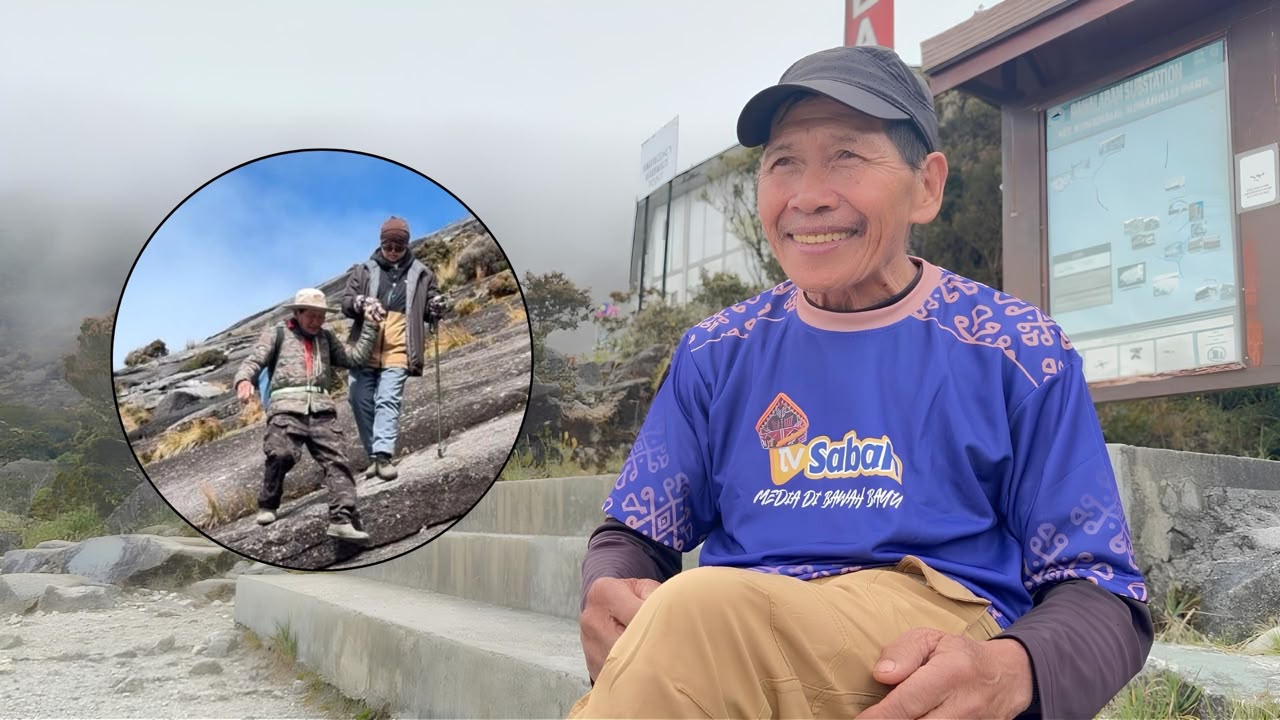
KOTA BELUD — At 75, most people have retired. Ginsos Magiau is not most people. He is a child of the mountain, raised around high ground, cold air and steep trails. Mount Kinabalu is not just his workplace but it is his home. He is still committed to his work as a malim gunung, or licensed mountain guide, on Malaysia’s highest peak and Southeast Asia’s third-highest mountain.
For Ginsos, the chance given by Sabah Parks to continue working is an honour. He wants to keep climbing as long as he is healthy and able. It is no longer just about earning money. The job has become part of his life.
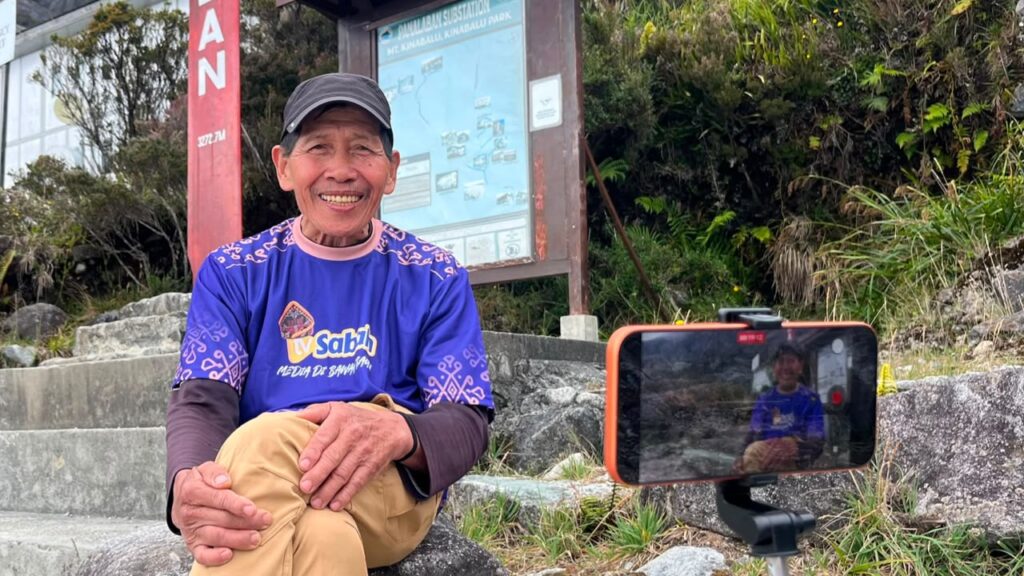
“I am very grateful to Sabah Parks because even now, at 75, I am still given the chance to continue working because my health is still good,” he says.
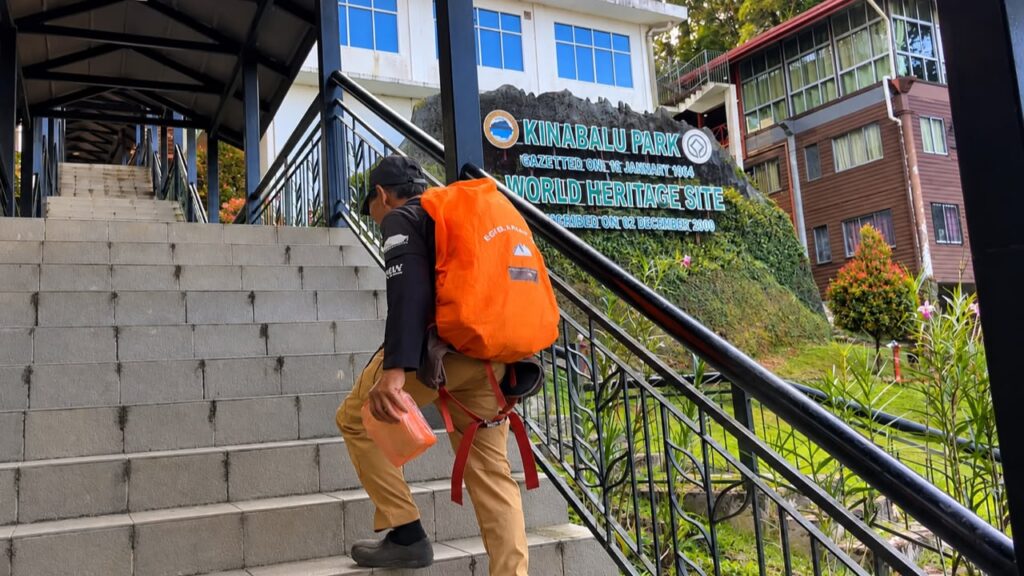
Sabah Parks, or Taman-Taman Sabah, is a statutory conservation body established in 1964. Mount Kinabalu has been a UNESCO World Heritage Site since 2000.
A Child of the Mountain
Ginsos is not a city dweller who suddenly decided to try mountain climbing. He has been on the mountain since the 1970s, when he worked as a labourer for Sabah Parks, helping to build buildings in the mountain area.
“At first, I worked with Sabah Parks to build buildings in the 1970s. Back then, my daily wage was only RM3 a day,” Ginsos recalls.
During the construction work, getting food was a major challenge. Workers took turns going up and down the mountain to get food. While doing this, Ginsos had the chance to help a mountain guide carry a tourist’s belongings.
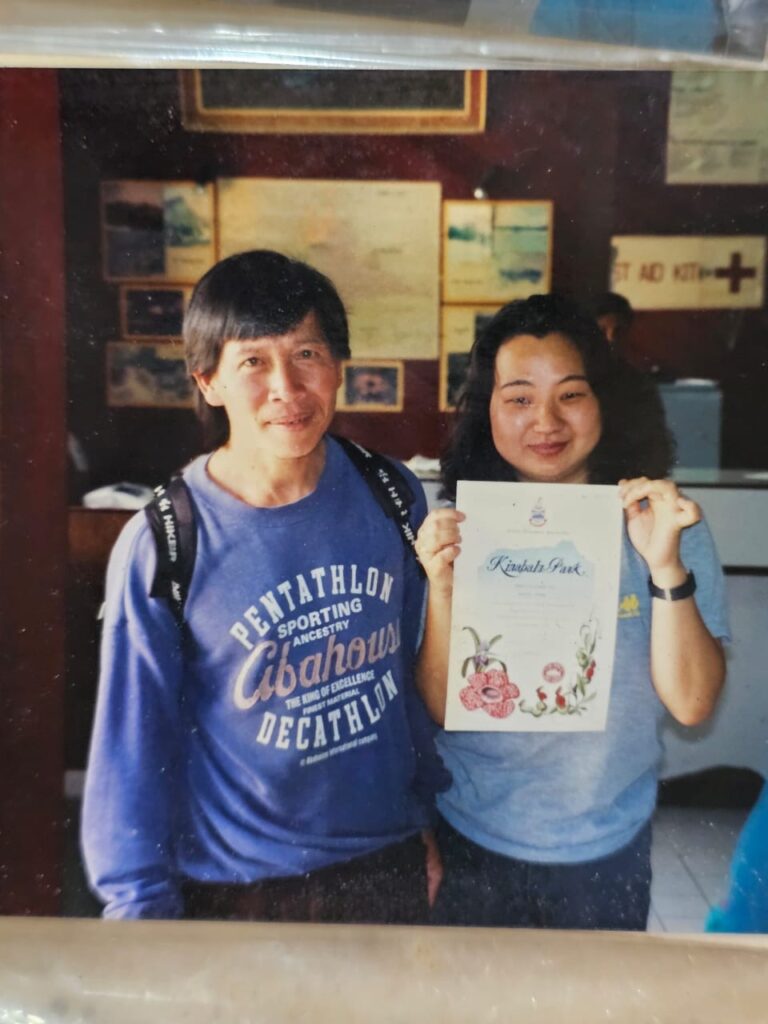
“At that time, there were tourists asking for porters. Because the mountain guide could no longer carry his load, he asked for our help. That was how I started to get used to the work before starting my career as a mountain guide,” he says.
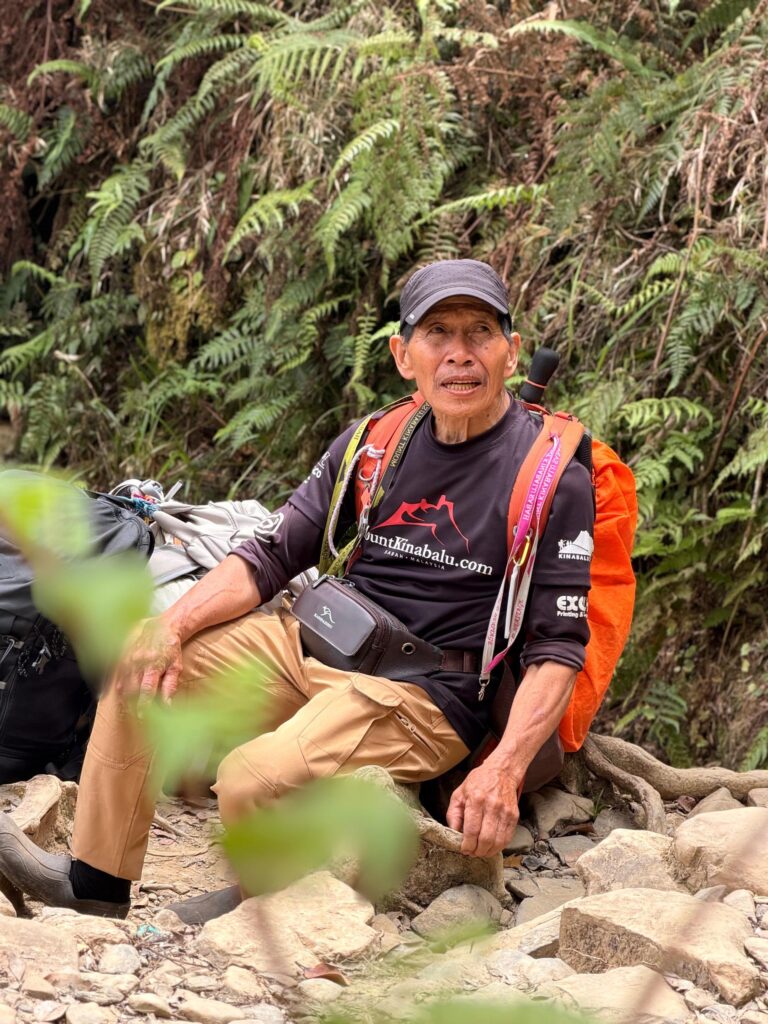
“At the same time, the pay as a porter was higher RM15 per climb. In the 1970s, RM15 was considered very high compared with working for Sabah Parks, which paid only about RM150 a month.”
After the building project was completed, Ginsos focused on working as a porter before applying to the rangers to become a certified mountain guide. Now, after decades on Mount Kinabalu, the work has become part of his life.
A Body Forged by the Mountain
One thing people may not understand about Ginsos is that he is not an ordinary elderly city dweller who rarely moves and has suddenly decided to climb a mountain. Ginsos has lived in a mountain environment for decades. His body has been shaped by the high altitude, cold weather and years of hard work.
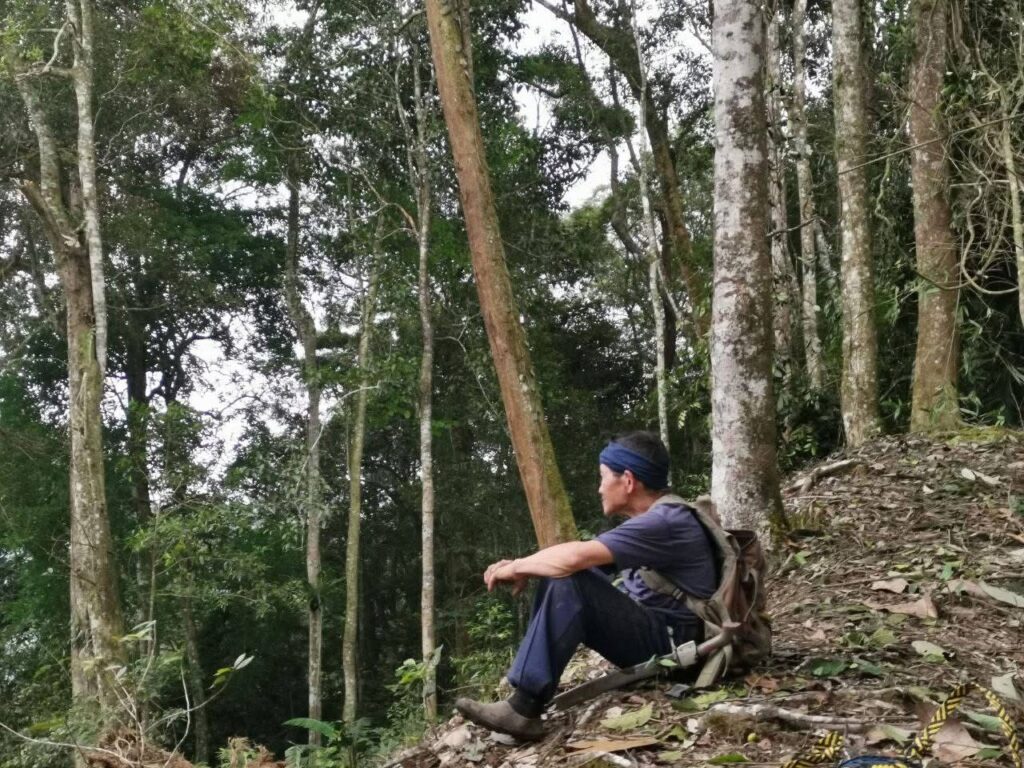
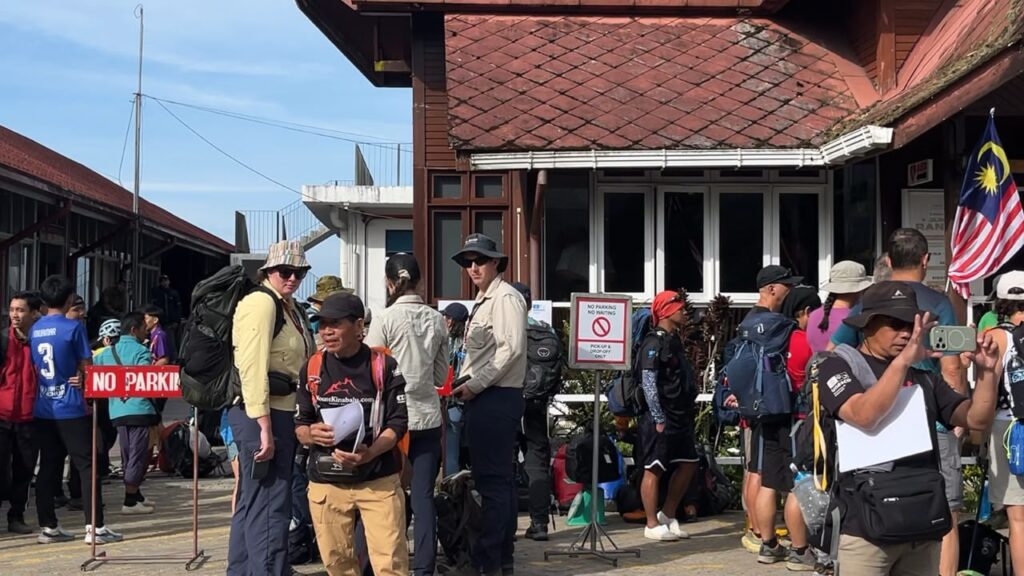
Each day, he starts as early as 6:30 a.m. at Kinabalu Park. He checks documents and climbing tags and manages bags with the porters.
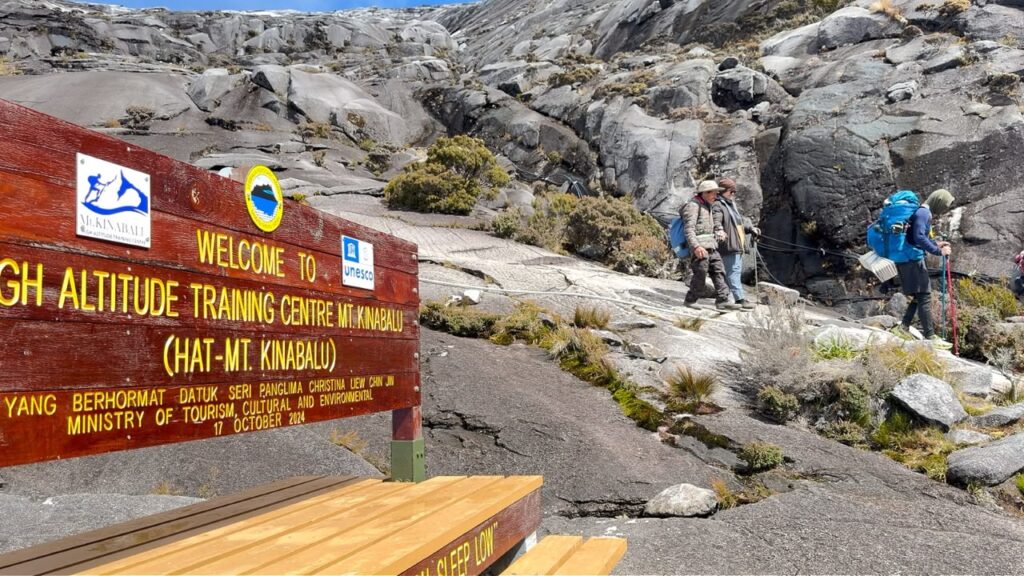
The first day’s climb begins at Timpohon Gate and heads to Panalaban. The 6-kilometre route has thousands of steep steps. Climbers have to walk through wet, slippery and muddy trails, especially when it rains. After the Layang-Layang station at KM4, the path becomes steep and is covered with dark granite rocks. Once above 2,500 metres, the air becomes thinner, making climbers tired and causing them to have difficulty breathing. But for Ginsos, this is part of his daily routine.
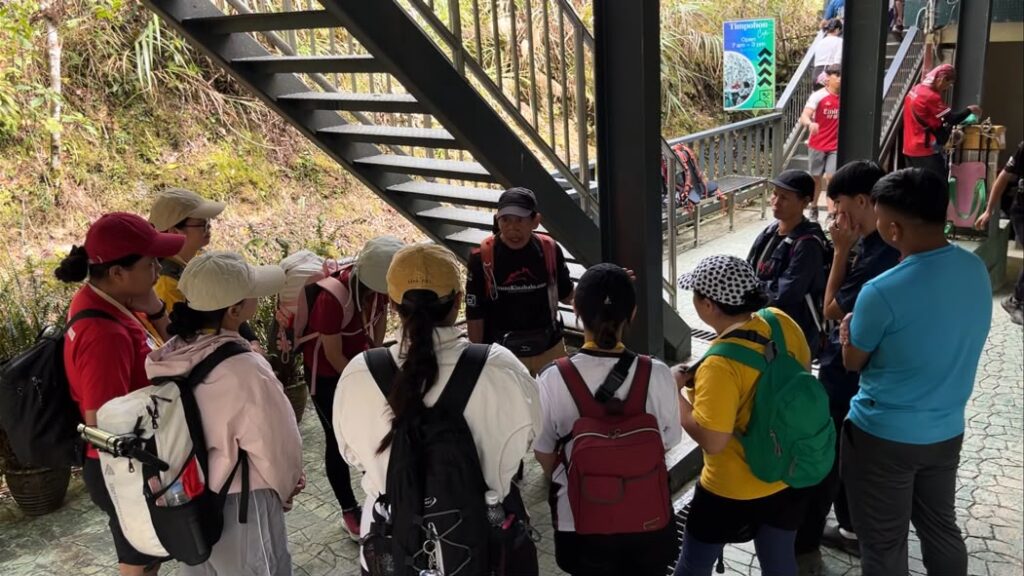
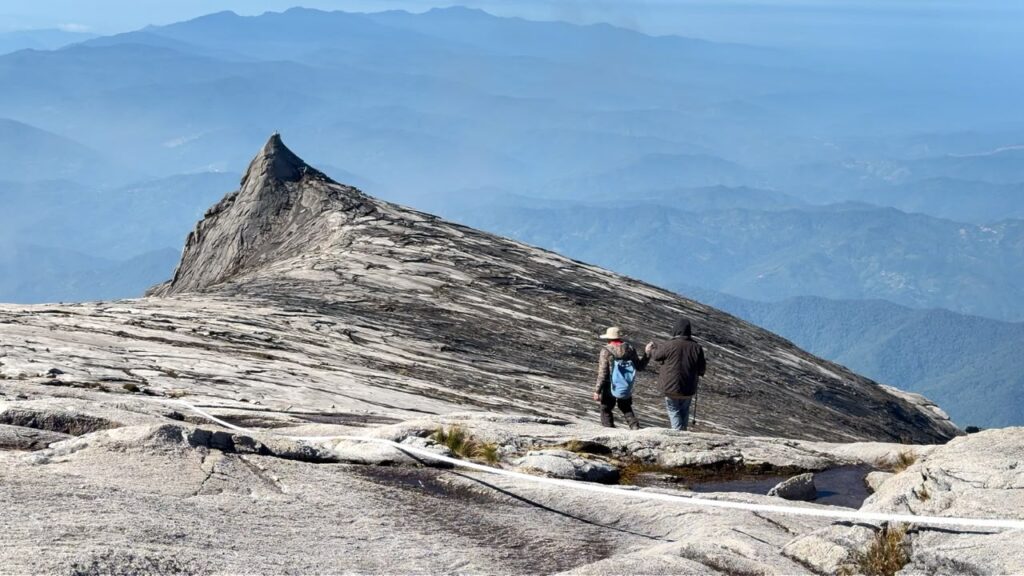
The second day’s climb to Low’s Peak is even harder. The climb starts as early as 2:00 a.m. in the dark. After steep wooden steps, climbers enter the White Rope Zone. On bare and slippery granite, they have to hold on to ropes to pull themselves up. They face cold temperatures of between 2°C and 10°C, together with strong winds. In the final 100 metres, climbers have to carefully climb over large rocks before reaching the highest summit sign.
For Ginsos, this is not a test. It is his routine. It is his life.
Not a Weak City Elder
Concerns about elderly people climbing mountains often come from the image of older city dwellers people who move little, eat processed food and do not exercise.
But Ginsos grew up in a village where food came from the land. His vegetables were grown at home without chemical fertiliser, while meat came from hunting in the forest.
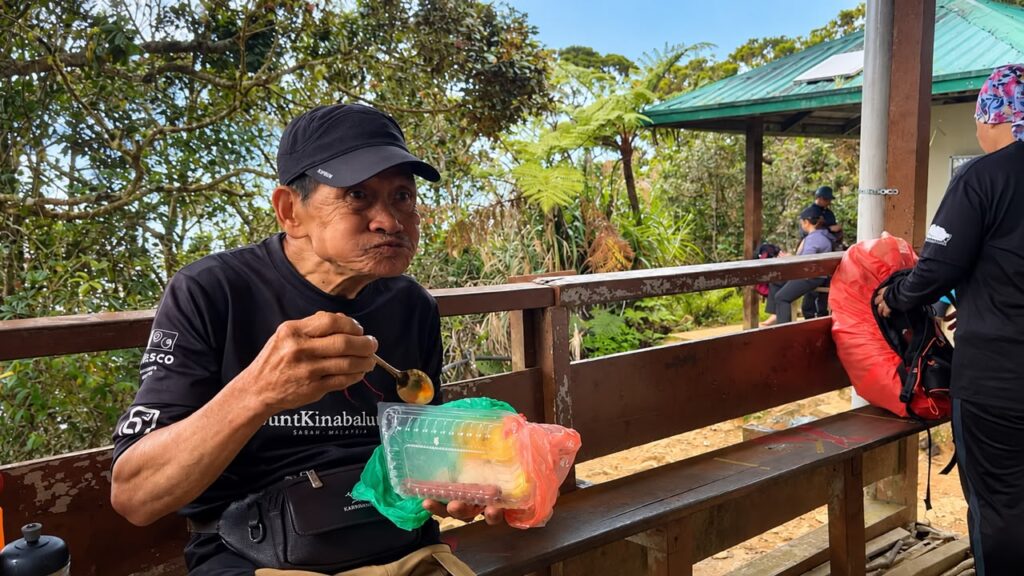
“We ate the same food, like rice, but there was a slight difference in the vegetables. In the village, the vegetables we ate were usually grown ourselves and did not use chemical fertiliser, unlike the vegetables bought in cities today,” he shares.
Since he was young, Ginsos has never stopped moving. He built buildings on the mountain. He became a porter. He became a mountain guide. His body has never had a long rest. This is what sets him apart from urban seniors who only start climbing in their 70s.
Respected by Fellow Guides
Ginsos’s work is also recognised by other mountain guides. Wilson Thaddeus, Deputy Chairman of the Guides, who has seen Ginsos work firsthand, describes him as calm, disciplined and experienced.
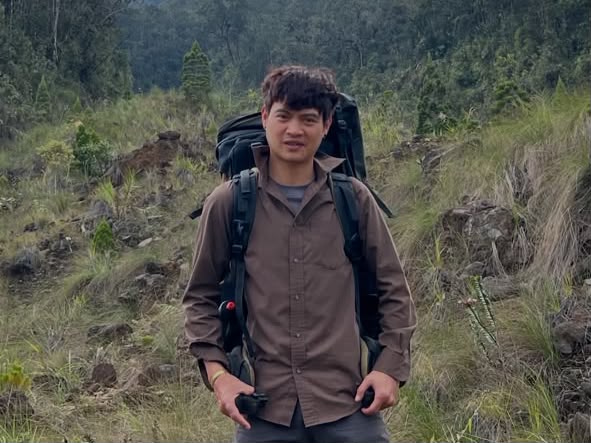
“His way of working does not depend much on words or showing off. It is more about observation, attention to detail and experience built over decades on Mount Kinabalu,” Wilson says.
“He knows when to slow down, when to encourage, and when to act for the safety of climbers. For Ginsos, a guide’s job is not just to take people to the summit, but to make sure climbers reach it and return safely.”
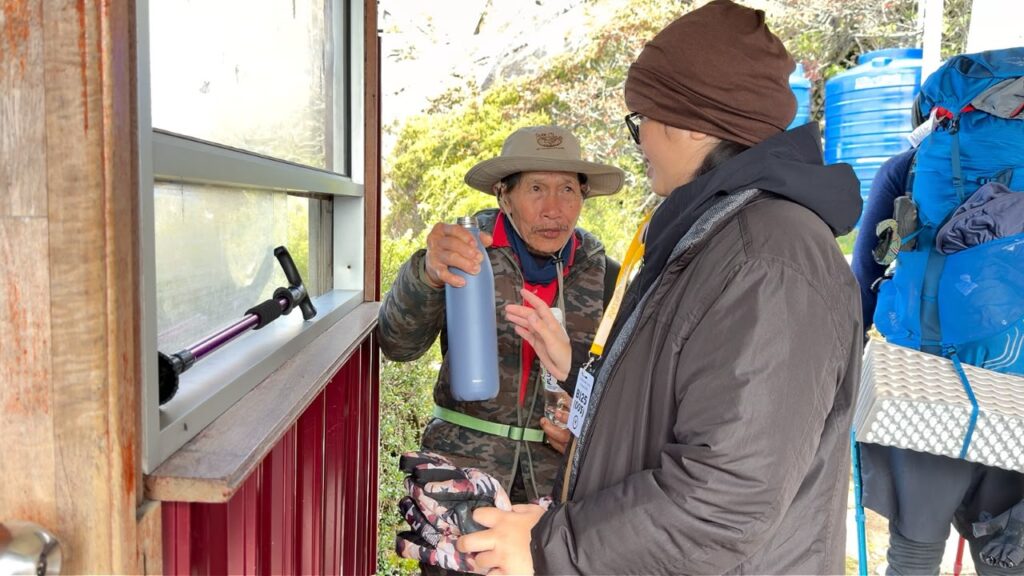
“Every climber has different abilities. Some are strong, some are slow, some are afraid, some lose confidence when they reach difficult areas. But Ginsos has his own way of handling that. He does not panic easily. He calms climbers, encourages them and stays with them. It is not about who reaches the summit fastest, but who can look after climbers throughout the journey and make sure they do not feel left behind.”
Wilson also calls on younger mountain guides to learn from Ginsos’s experience.
“So take the energy of the young, but inherit the wisdom of the old,” he says.
Family: Pride Mixed With Worry
Ginsos’s decades of hard work as a mountain guide helped raise 14 children. Today, all of them have their own careers.
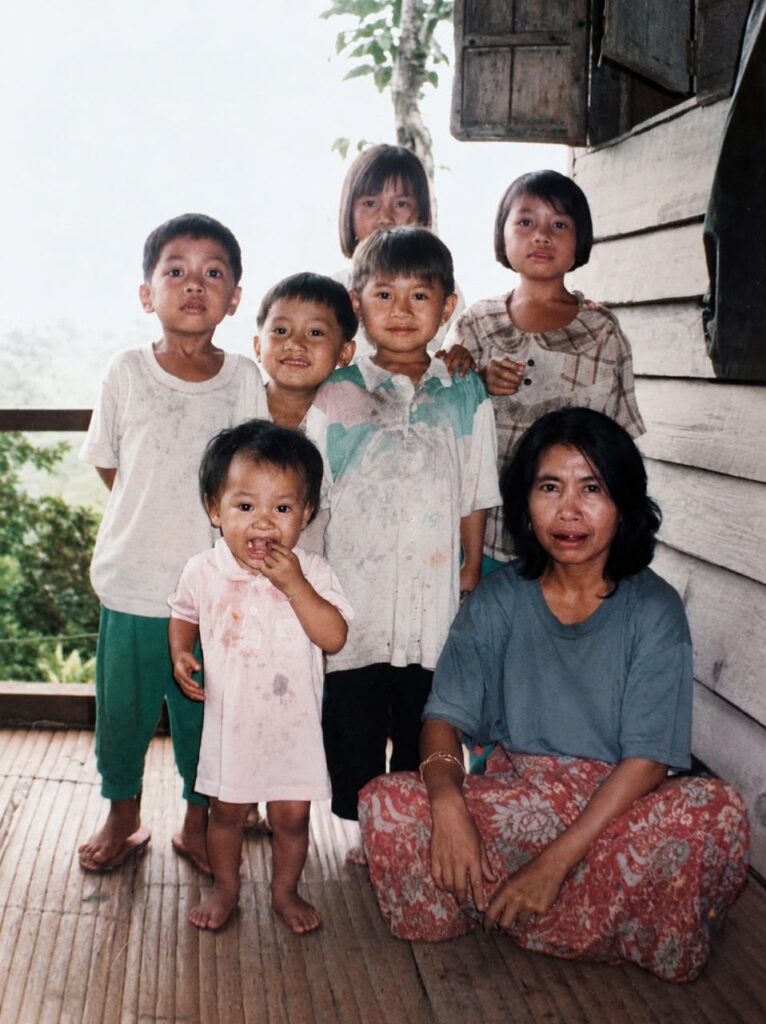
“My children say I no longer need to work because they all have jobs. But I still want to continue this work,” he says.
Among his children are Frisca, a teacher at SMK Tambulion, and Friskila, a nurse at Hospital Sultanah Aminah Johor Bahru.

Frisca sees her father’s work with both admiration and sadness.
“First, his spirit. Even though he is older, as long as his health allows, my father is still very excited to do this work. That is how much he loves his job. Second, I still remember when I was little, every time he came back from the mountain, he always had a story. His face never looked tired,” she says.
Still, Frisca admits she has mixed feelings.
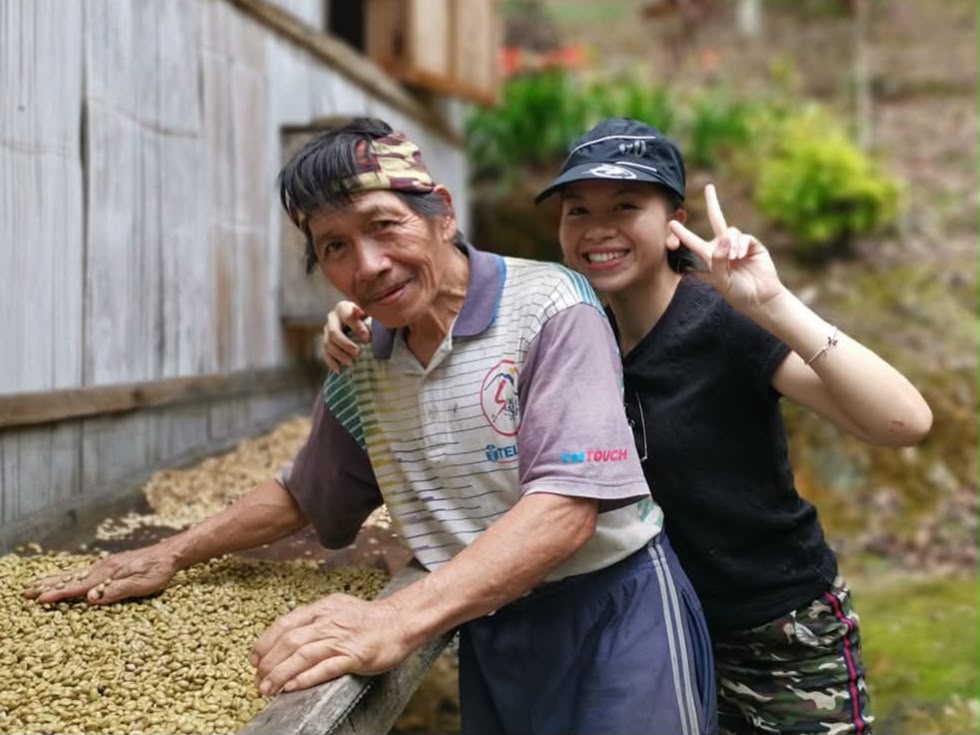
“Seeing my father still so passionate and loyal to this work at 75 certainly makes me sad. I believe all children want their parents to rest from heavy work at this age. But at the same time, I see my father as an example of the saying, ‘While there’s life in me, I’ll give it my all.’”
Friskila also expresses concern about her father’s physical condition.
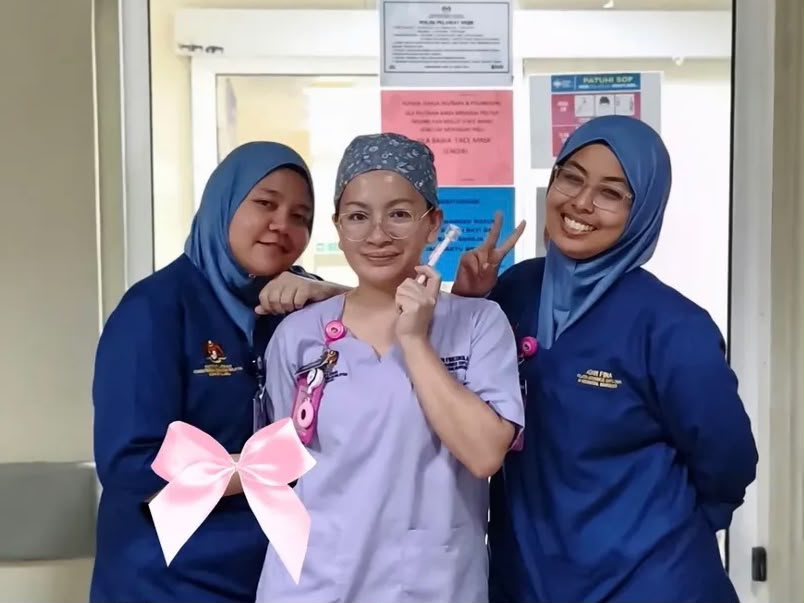
“Honestly, as a child, I am very impressed by my father’s spirit. From when I was small until I became a mother myself, he has been doing the same thing. Age has never been a reason for him to stop,” she says.
“Even I, still young, sometimes feel tired, let alone my father at 75. If I could take away some of his tiredness, I would. If I could exchange my energy for his, I would,” she says softly.
Although she often asks Ginsos to reduce how often he climbs for his own safety, Friskila chooses not to stop him completely.
“For me, as long as my father is still able and it is something he loves, I will keep supporting him. For my father, being a mountain guide is not just about taking people up the mountain. It is about safety, helping others and making sure they reach their destination safely,” she adds.
Tourists Can’t Believe His Age
Ginsos’s age often surprises tourists who meet him for the first time. Some are initially unsure about his ability, but their reaction changes when they learn how old he really is.
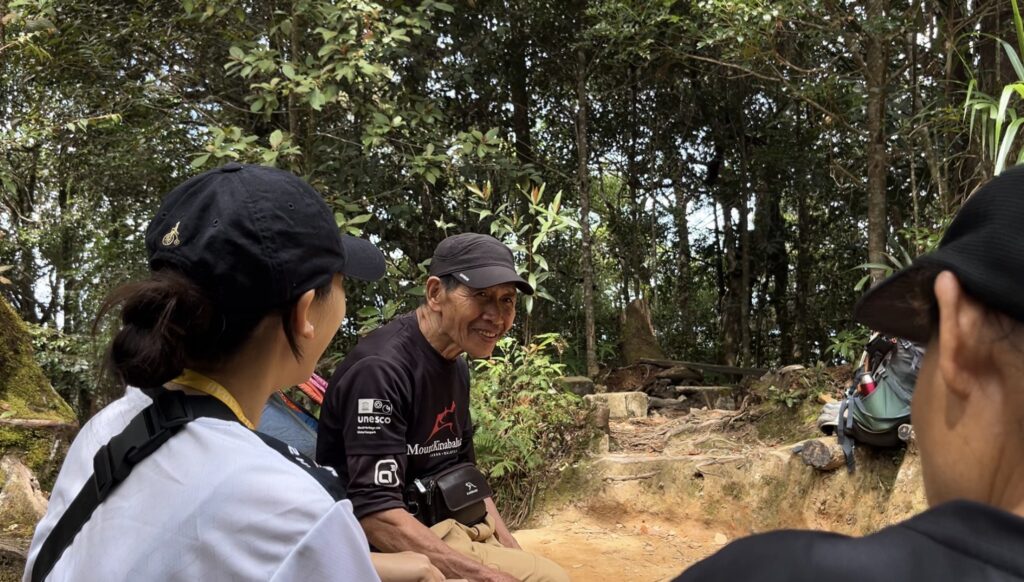
“When I tell them my real age, they are very shocked, and some simply do not believe it. Some even say, ‘No way. Let me see your identity card,’” Ginsos says with a smile.
City tourists may be surprised. But for mountain people like Ginsos, age is just a number. What matters is health, experience and a spirit that never dies.
Joyena, one tourist who once climbed with him, says the journey was always fun.
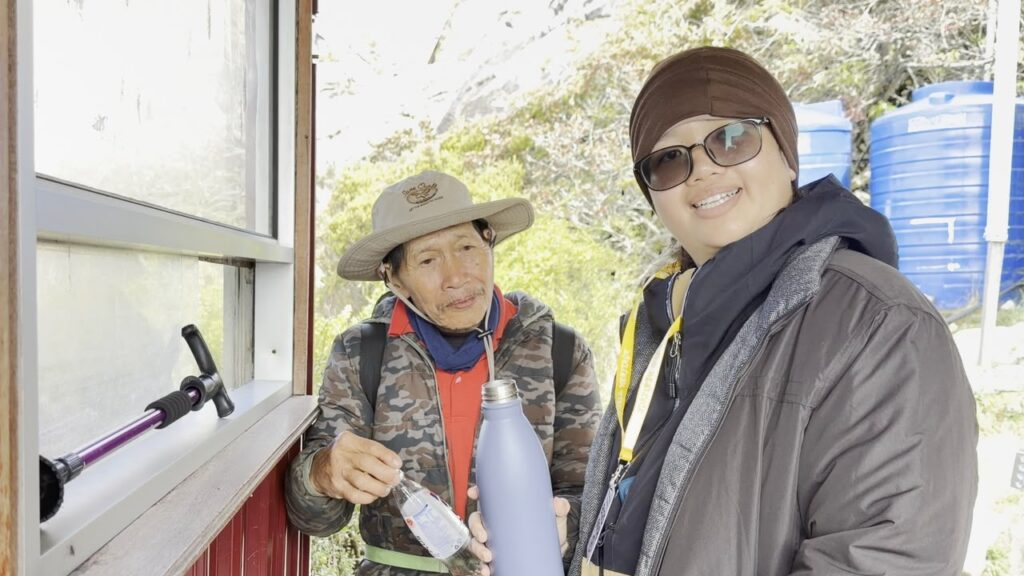
“It was so much fun and never boring with him, because there were always stories about interesting experiences or riddles to entertain us along the way,” Joyena says.
She adds that Ginsos is very caring. He never gets tired of helping, even offering to pull tired group members by the hand so they can keep moving towards the summit.
“To young people, if he offers to carry your bag, just let him and don’t protest. He knows what he can handle.”
Joyena’s most touching moment came during the descent. The 6-kilometre route from Panalaban back to Timpohon Gate on the same day can be very hard on the knees and thighs.
Because of severe leg pain, Joyena fell behind and became the last climber in her group. While the others were far ahead, Ginsos stayed by her side.
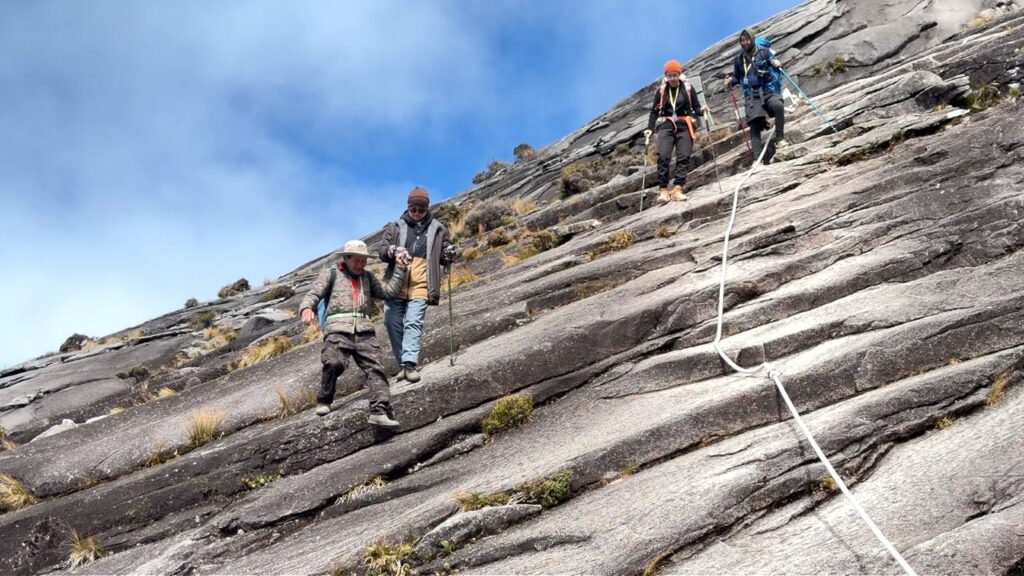
“Like a father who loves his child, he waited for me, held my hand and guided me all the way until we safely reached Timpohon Gate,” Joyena recalls.
“When I was almost ready to give up, he would tell funny stories so I would not get bored and would keep going until the end.”
He Understands Their Dreams
His experience with climbers has made Ginsos see his job as more than just taking tourists to the summit. He understands that some climbers have dreamed for years of climbing Mount Kinabalu.
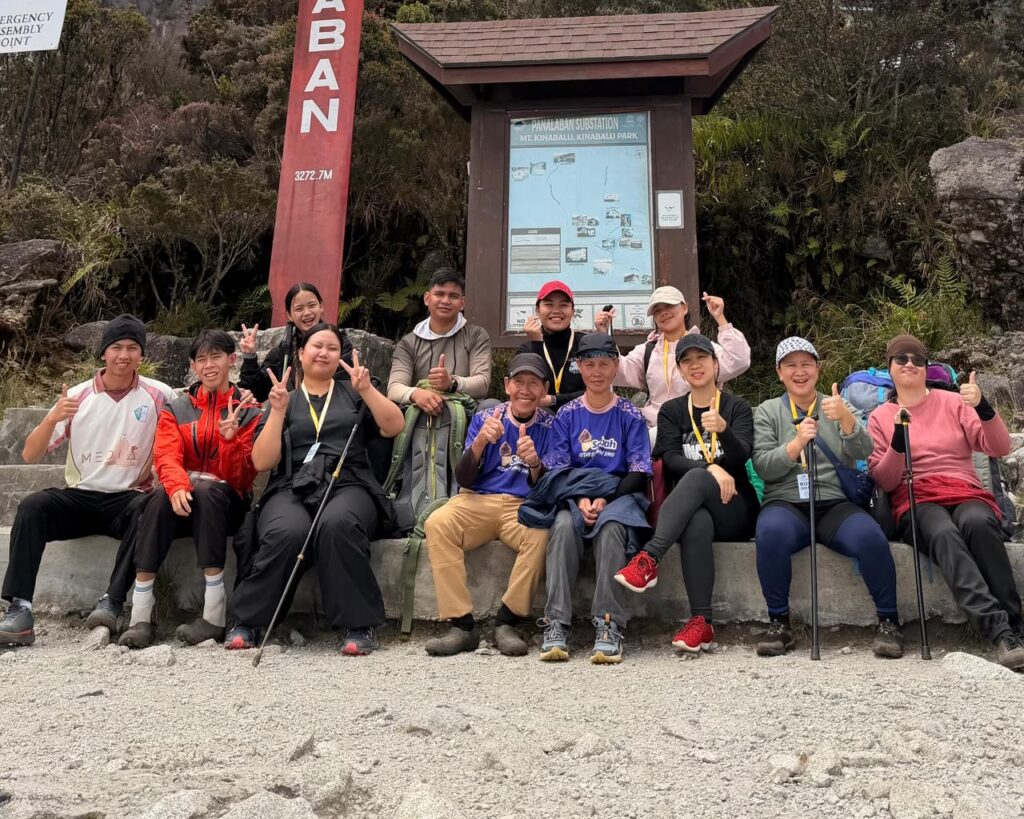
“If we think about them, they are actually just like us. They really want to climb Mount Kinabalu, but maybe they have no time or face financial problems,” Ginsos says with concern.
According to him, some climbers save for years to make that dream come true.
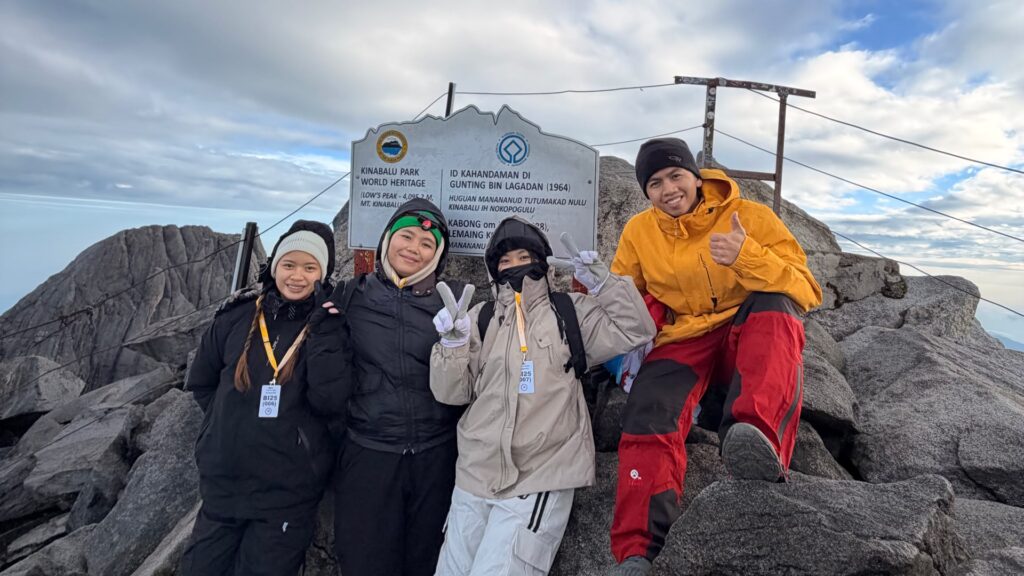
“When they are older, they try to climb Mount Kinabalu, but in the end they do not make it to the summit. If that happens, the thousands of ringgit they spent can be wasted just like that. That is what I feel very sorry about.”
Because of this, Ginsos always pays attention and tries to help climbers achieve their dream of reaching the summit of Mount Kinabalu. He also advises climbers not to force themselves if they have physical problems during the long climb.
“As long as you are healthy, keep going even if you walk slowly. The important thing is safety. Do not hide problems like foot pain, because if your feet are already hurting, you really cannot force yourself to go up.”
As Long as He’s Healthy, He’ll Keep Climbing
After decades of climbing Mount Kinabalu, Ginsos’s joy at reaching the summit has never changed.
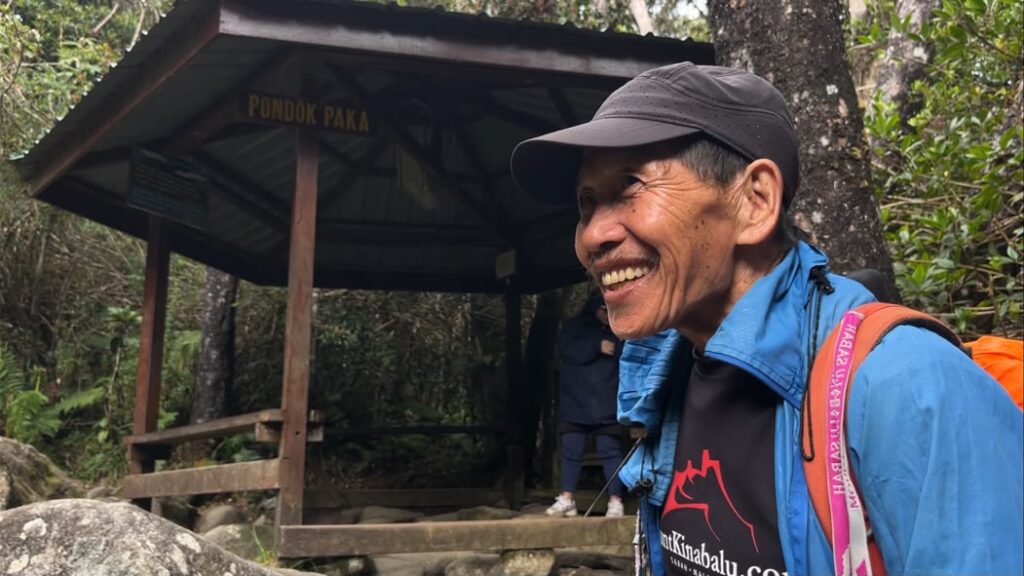
“Every time I reach the summit, my heart feels very happy, especially when I am still healthy. It is even more joyful when the tourists I bring also make it to the summit,” Ginsos says.
For Ginsos, working as a mountain guide has become part of his daily routine.
“I don’t find it tiring. To me, it’s like walking to my garden,” he says.
At 75, Ginsos has not chosen to retire. Mount Kinabalu is still the place where he works, and as long as his health allows, he wants to keep climbing to help other climbers realise their dreams.
According to Juhin Duaneh, an assistant medical officer at Queen Elizabeth Hospital, muscle strength generally declines and the risk of brittle bones increases at an advanced age such as 75. This means a higher risk of injury while climbing and going down the mountain. It can also put more pressure on the heart and lungs as they work to supply oxygen to the body.
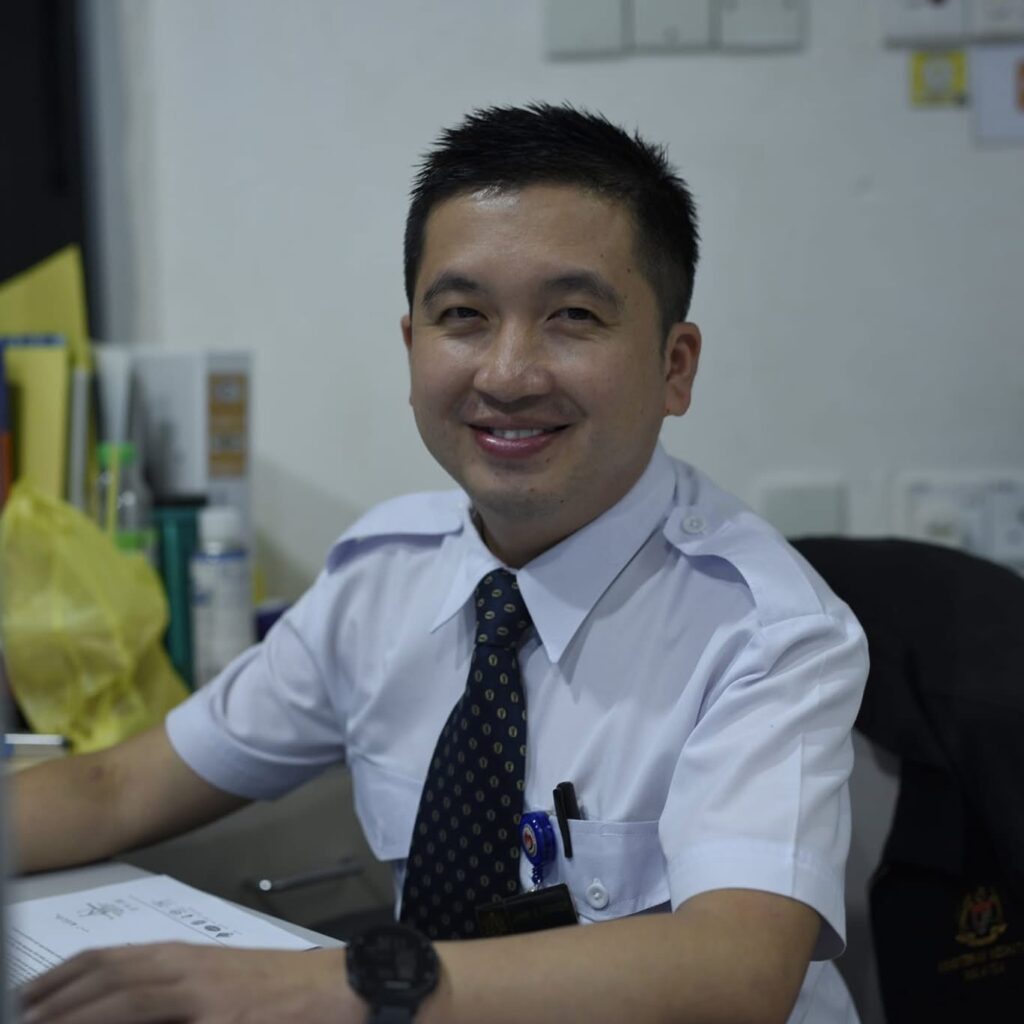
Ginsos himself undergoes regular health screenings at Stanley Chong Clinic & Surgery. He stresses that good health and careful preparation are important, and he does not encourage other seniors to follow in his footsteps without proper preparation.
Ginsos’s story is not just about an old man who refuses to stop working. It is about a child of the mountain whose life has been shaped by the mountain since he was young, someone who never knew the meaning of giving up because the mountain itself has become part of him.