KOTA KINABALU: July 22, 2026 – The Sabah state government has insisted that its RM1.612 billion Supplementary Supply Bill – representing 25% of its annual budget – is not an indication of flawed planning for Budget 2026, but rather a necessary financial mechanism to accommodate expenditure needs that could not be determined when the annual budget was originally drawn up.
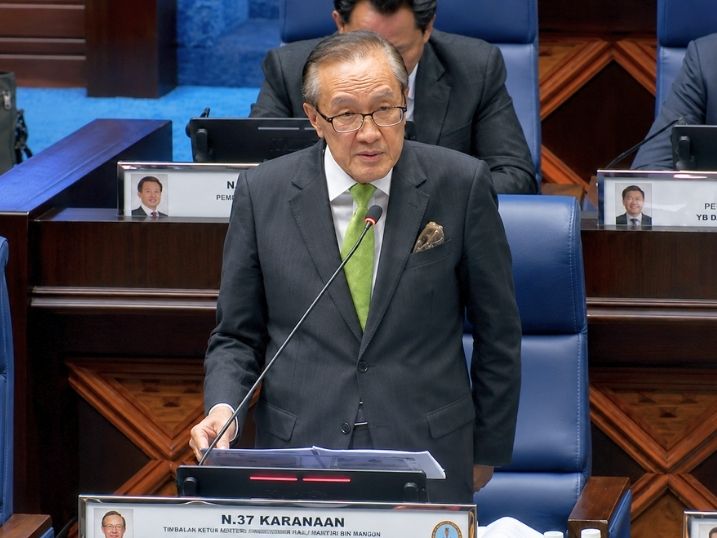
Deputy Chief Minister II and State Finance Minister, Datuk Seri Panglima Haji Masidi Manjun, said the supplementary allocation allows new requirements that emerge after the budget’s approval to be considered in an orderly and transparent manner. He stressed that each application undergoes rigorous scrutiny based on actual need, spending performance, the government’s fiscal capacity, and its importance to public services and public welfare.
He made the remarks in his winding-up speech for the Supplementary Supply Bill 2026 during the Sabah State Legislative Assembly sitting on Tuesday.
Government ready to give special briefings to new assemblymen
Mr Masidi said his ministry is prepared to give special briefings to all assemblymen, particularly newly elected ones, on budget and financial management. The move, he said, aims to deepen understanding of the various types of state government accounts, budget discipline, and the overarching principles of financial governance.
Development account deficit does not mean project losses
Addressing questions raised by the assemblymen for Usukan, Sekong, Sungai Sibuga, Tanjung Papat and Likas regarding the deficit in the Development Fund, Mr Masidi clarified that a deficit in the Development Account is distinctly different from losses incurred by development projects. He noted that this situation has persisted for decades and has frequently drawn observations from the National Audit Department.
He drew a comparison with the Federal Government’s Development Fund, which also recorded a deficit of RM10.217 billion in 2023. This, he argued, demonstrates that such deficits are a common feature of government financial management and do not imply that development projects are making losses.
Spending ratio improves as development is bolstered
Mr Masidi acknowledged that operating expenditure still exceeds development expenditure, a long-standing reality due to Sabah’s relatively modest revenue collection. However, he said that as the state’s financial position has strengthened, the government has raised the development allocation ceiling under the 13th Malaysia Plan to RM12 billion over five years, up from RM4 billion under the previous plan.
The ratio of Supply (operating) expenditure to Development expenditure has also improved, from 80:20 in 2025 to 76:24 this year – reflecting a significant increase in the share of development funding.
He explained that supply expenditure remains high because a large portion of state assets – including buildings, roads, bridges and drainage systems – are in the maintenance phase. Such maintenance costs are classified as supply expenditure.
State reserves reach RM7.6 billion
Mr Masidi stressed that the Sabah government adheres to a prudent fiscal policy, guided by the principle: “Spend what you have, not what you don’t have.”
He informed the house that the total actual requirement to cover Supply and Development spending for 2026 stands at RM7.97 billion, against projected revenue of around RM6.4 billion. Fiscal discipline, he said, has enabled the government to increase its reserves to more than RM7 billion by the end of 2025. By way of comparison, the balance in the Consolidated Revenue Account in 1998 stood at just RM70 million, rising to RM7.6 billion by the end of 2025.
RM856 million for statutory funds – no cash outflow
Replying to questions from the assemblymen for Senallang, Tambunan, Sekong and Tanjong Papat, Mr Masidi explained that the RM856 million allocation for contributions to statutory funds involves no cash outflow. Rather, it is intended to meet commitments under the relevant trust funds, including: RM700 million for the Development Fund; RM66 million for the State Government Trust Fund; and RM90 million for the Road and Bridge Maintenance Trust Fund.
The road and bridge trust fund is used for maintenance works across Sabah, covering state roads, municipal roads, housing estate roads, village roads and agricultural roads registered under the MARRIS/MyInfra system.
Mr Masidi stressed that these contributions do not involve distributions to state-linked companies (GLCs) or state statutory bodies, as had been questioned by the Sekong assemblyman.
Project delays attributed to multiple factors
Responding to a query from the Sebatik assemblyman, Mr Masidi listed several factors behind development project delays, including: site-related issues; weaknesses in planning and initial design that do not match actual site conditions, necessitating work-change orders; volatility in building material prices due to global market factors; contractors’ competence in managing cash flow; technical constraints such as unstable soil conditions; and delays in utility relocation processes.
He said the government has strengthened monitoring mechanisms through the Sabah Project Economic and Development Information System for tracking physical and financial progress. State and district-level development action committees have also been optimised.
RM210 million equity investment – not a bailout
Mr Masidi clarified that the RM210 million equity investment allocation involves two Sabah government-linked companies:
Sabah Development Bank Berhad (SDBank) – RM200 million: This is not a new cash injection or cash outflow, but a phased accounting adjustment to convert the state government’s existing fixed deposits into Redeemable Preference Shares (RPS), aimed at strengthening the bank’s capital position. Prior to conversion, the fixed deposits offered an interest rate of 2.95% over nine months. Through the conversion to RPS, the state government stands to potentially earn dividend returns at a rate of 3.15% per annum, subject to the issuance terms and SDBank’s financial performance.
POIC Sabah Sdn. Bhd. – RM10 million: This allocation represents additional equity to fund management costs and support the company’s operational continuity as the developer of the integrated industrial park in Lahad Datu, thereby strengthening efforts to attract investment and stimulate economic growth on Sabah’s east coast.
Mr Masidi stressed that every investment proposal is evaluated by the State Public Agencies Investment and Loan Committee (SALIC) before recommendations are submitted to the state cabinet. Therefore, he said, it is inaccurate to characterise the allocation as a bailout for underperforming GLCs.
Dividend target for GLCs set at minimum 10%
The Sabah government has set a dividend payout target for GLCs with state equity holdings of at least 10% of after-tax profits, subject to each company’s financial position, operational requirements and development plans.
Detailed information on the financial performance of recipient companies over the past five years – including sales revenue, profit or loss, debt levels, cash flow and total dividends paid – will be submitted in writing, as a full oral presentation would require excessive time in the assembly.
RM10 million for Jetama water concession
Replying to a question from the Senallang assemblyman, Mr Masidi explained that the RM10 million allocation for the water concession is to pay a portion of arrears owed to Jetama Sdn. Bhd., in line with the Privatisation Concession Contract Agreement (PCCA) and the Settlement Agreement already signed.
The remaining arrears owed by the Sabah government are being settled in phases for the period from 2013 to 2033, subject to current fiscal capacity and financial position. Jetama Sdn. Bhd. is also required to continue providing bulk water supply services and to meet its obligations under the concession agreement.
Special committee formed on diesel subsidy issue
On the issue of diesel subsidy implementation in Sabah, Mr Masidi informed the house that the state government has formed a committee chaired by the State Secretary to review all counter-proposals. Other issues not falling under the purview of the Finance Ministry, he added, will be answered by the respective line ministries.