KOTA KINABALU – A diving club in Sabah has welcomed the enforcement of new fisheries amendments and called for stronger safeguards for marine life, saying recent incidents highlight the need for greater public awareness and stricter penalties.
The Sabah Squad Dive Club, known locally as Deus Diving Club, said it fully supported the Fisheries (Amendment) Act 2025, which took effect on 15 June. The legislation introduces fines of up to 250,000 ringgit for offences involving interference with aquatic mammals and sea turtles.
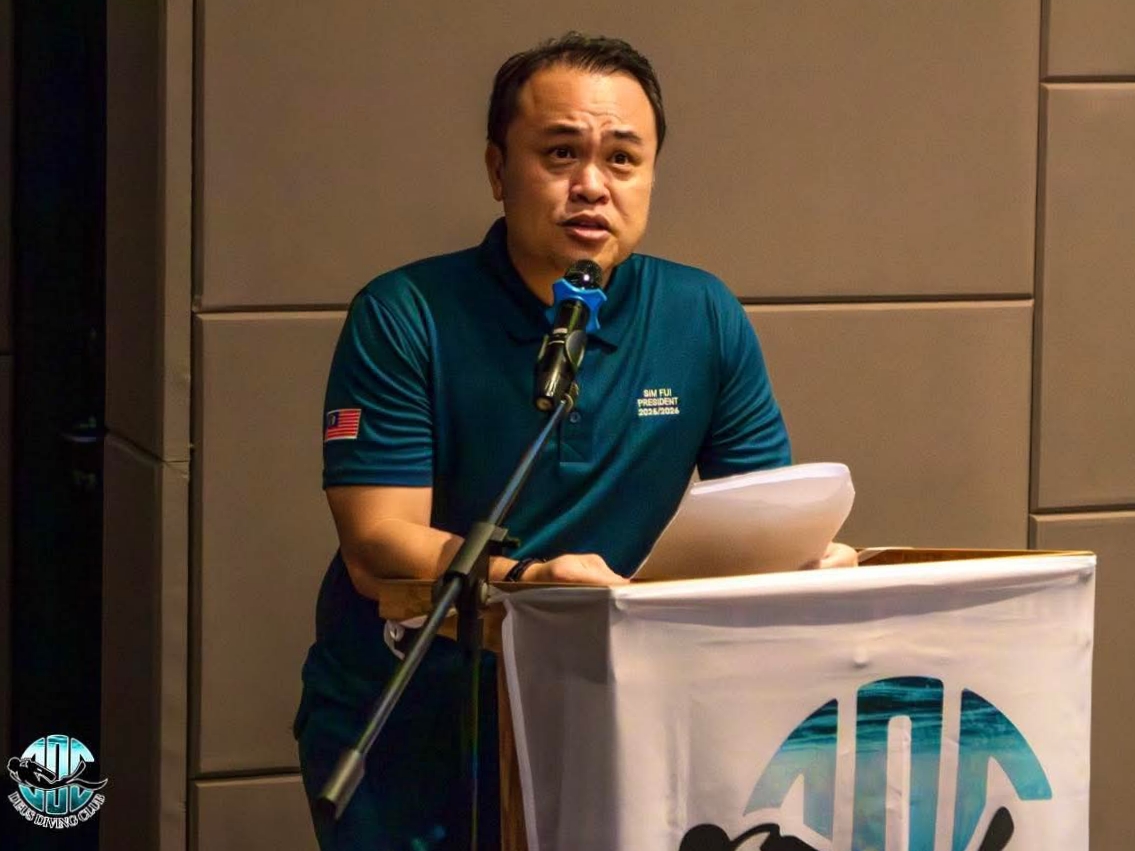
In a statement released on Friday, the club’s president, Sim Fui, said the tougher penalties were a “proactive step” but warned that enforcement alone would not be enough.
“Many people wrongly assume that touching, chasing or posing with marine life does no harm,” he said. “In reality, such actions can cause stress, injury, behavioural changes, disrupt feeding patterns and reduce reproductive success.”
Mr Sim, who also serves as a Justice of the Peace, stressed that sea turtles played a critical role in maintaining healthy marine ecosystems. He said any disturbance to their feeding, resting, mating or nesting activities could have serious consequences for their survival.
The club operates across several key marine sites in Sabah, including Sipadan, Mabul, Kapalai, Semporna, Tun Sakaran Marine Park, Tunku Abdul Rahman Marine Park and Turtle Island.
Its call for action comes after a series of widely shared videos sparked public anger. In March this year, a group of divers was filmed splashing water at and holding a sea turtle while taking photographs. Authorities later imposed fines on several individuals and dive operators.
In a separate incident, divers were recorded catching and harassing a whale shark, prompting condemnation from conservation groups and responsible dive operators.
The club also pointed to ongoing threats to critically endangered hawksbill turtles in Semporna, including illegal harvesting and wildlife exploitation, which it said underscored the urgency of stronger protective measures.
To address these challenges, the club proposed a series of additional steps. These include mandatory marine conservation briefings for all first-time divers and snorkellers, and more comprehensive awareness programmes at dive centres, resorts and tourism operators across the state.
It also called for the production of educational materials in English, Bahasa Malaysia, Mandarin and other major languages to help international visitors understand responsible marine interaction. The club further recommended mandatory reporting mechanisms for dive operators who witness wildlife disturbance or illegal fishing, and greater cooperation between government agencies, marine parks, tour operators, NGOs and local communities.
Mr Sim reminded tourists and diving enthusiasts of the basic principles of responsible diving: observe without touching, maintain a safe distance, do not chase, feed or ride marine life, avoid standing on or damaging coral, and follow the instructions of certified professionals and marine park rules.
“Protecting our oceans is not just an environmental duty,” he said. “It is an investment in our future, our food security, our tourism industry and the legacy we leave for our children.”
The club reiterated its commitment to working with government bodies, conservation organisations and local communities to promote ethical diving and environmental education.
It said it believed that conservation, enforcement and education must advance together if Sabah was to maintain its global reputation as a leader in sustainable marine tourism, while safeguarding its marine heritage for generations to come.
Source: Sabah Squad Dive Club (Deus Diving Club)