by David E.
KOTA KINABALU: July 30, 2026 – The Sabah state government has set aside more than RM100 million this year for its state scholarship programme, benefiting thousands of students across various levels of study, particularly in science, technology, engineering and mathematics (STEM) fields.
Chief Minister Datuk Seri Panglima Haji Hajiji Haji Noor said the allocation covers both existing recipients and new sponsorships for 2026, involving 2,182 students at diploma, undergraduate and postgraduate levels.
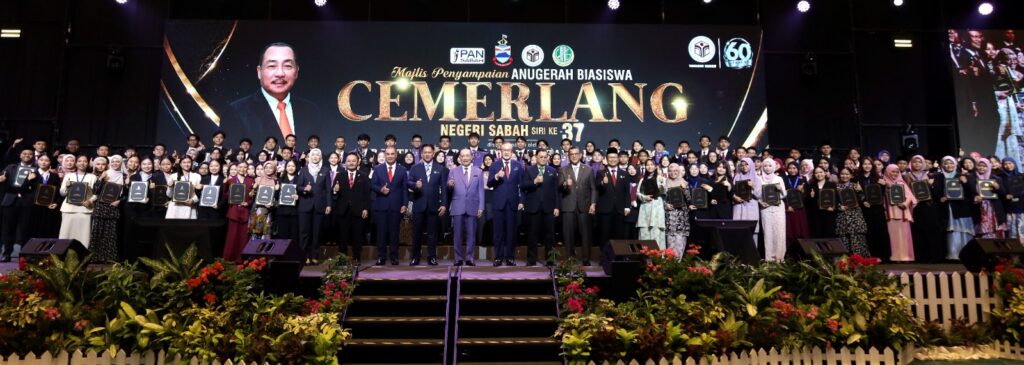
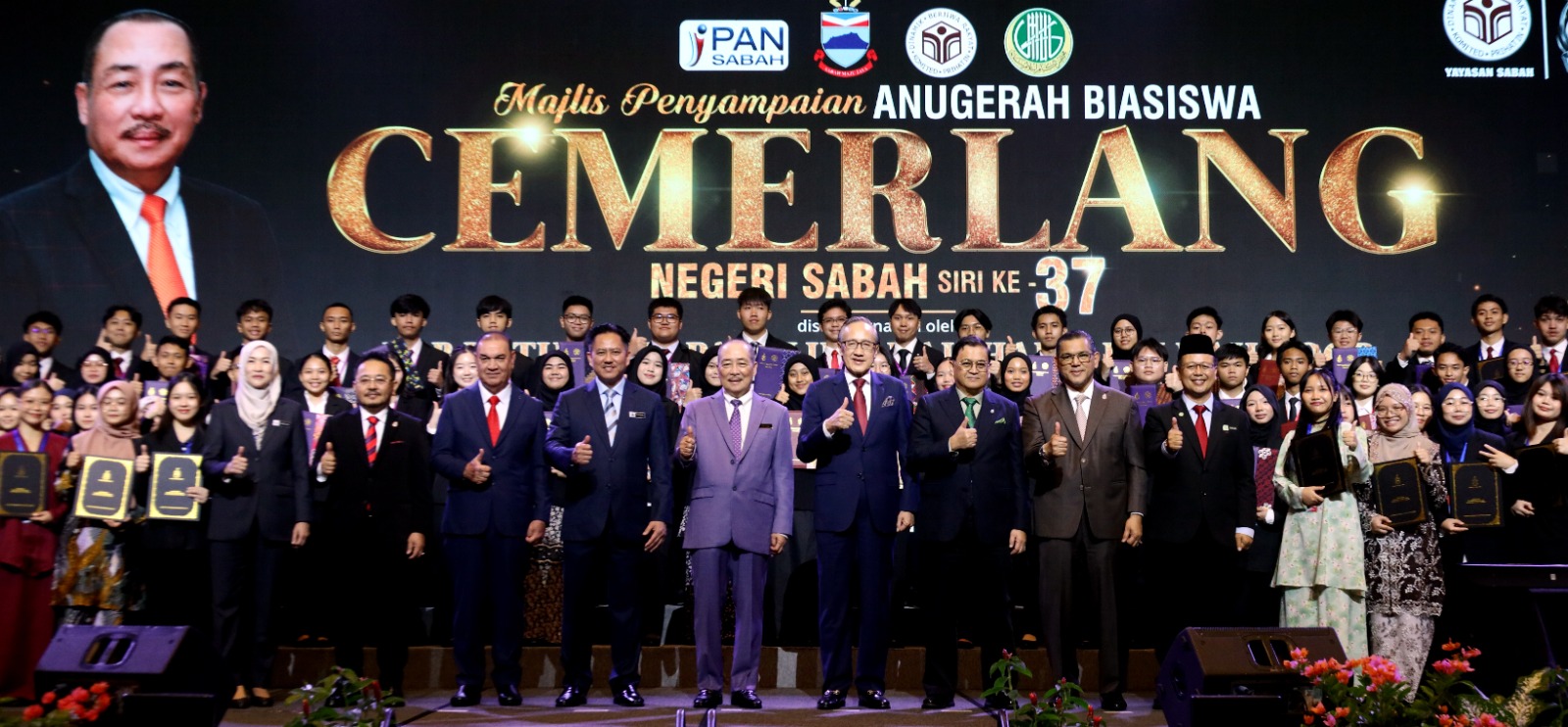
Chief Minister Datuk Seri Panglima Haji Hajiji Haji Noor and other guests posing for a photo with the Sabah State Excellence Scholarship recipients at the 37th series award ceremony at Sipadan Hall, Sabah International Convention Centre (SICC), today.
To date, 13,389 students have received support under the Sabah State Government Scholarship (BKNS) scheme. Hajiji said the state government was serious about ensuring more Sabahans gained access to quality education.
“The state government always prioritises education development because it is a fundamental pillar in producing knowledgeable, skilled and competitive human capital,” he said in a speech at the 37th Sabah State Excellence Scholarship Award ceremony at the Sabah International Convention Centre (SICC) on Thursday.
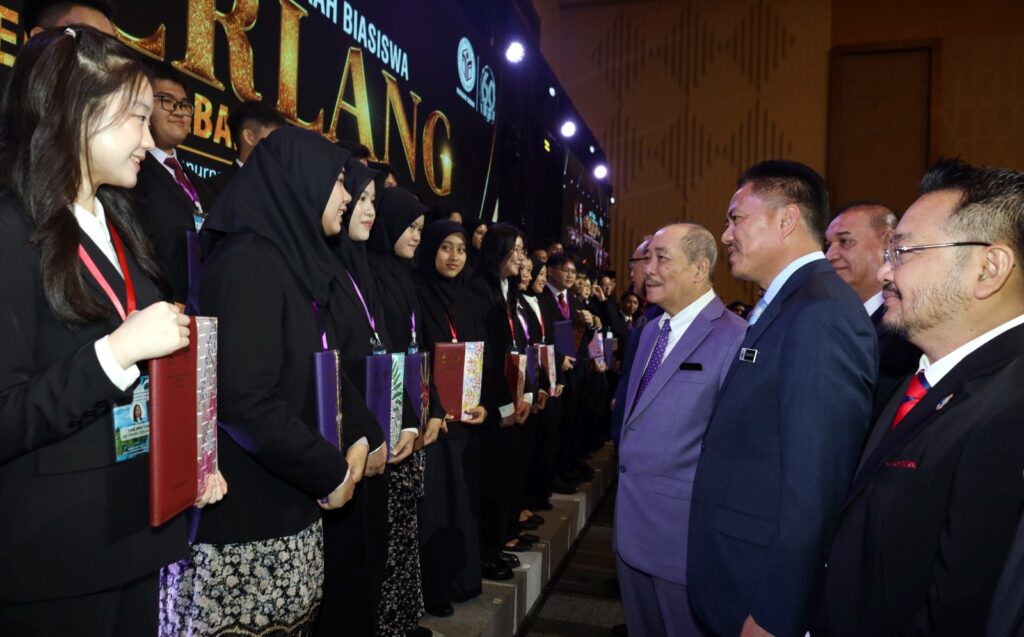
Chief Minister Datuk Seri Panglima Haji Hajiji Haji Noor interacting warmly with the Sabah State Excellence Scholarship recipients at the 37th series award ceremony at Sipadan Hall, Sabah International Convention Centre (SICC), today.
Hajiji, who also chairs the Sabah Foundation Board of Trustees, said the BKNS scheme had added 10 recipients to this year’s Excellence Scholarship Award, bringing the total to 60.
The state government also offers several main schemes, including the Tuan Yang Terutama Yang di-Pertua Negeri Sabah Award Scholarship, the Premier Scholarship, the Excellence Scholarship, and the B40 and Rural Programme Scholarship.
Meanwhile, Sabah Foundation increased the number of Excellence Scholarship Award recipients from 40 to 50 this year, in recognition of students’ academic achievements.
In the health sector, the government has expanded educational opportunities by selecting 30 Sabahan students for a talent development programme. This covers diplomas in Medical and Health Sciences, Physiotherapy, and a Bachelor of Science in Cardiovascular Technology.
The programme is the result of a strategic collaboration between the Sabah Foundation Group, the National Heart Institute (IJN) and IJN University College, following a memorandum of understanding signed in April. The initiative aligns with Sabah’s need to increase skilled manpower in the health sector.
At the same time, 15 Sabahan students are currently following a Patient Care Assistant programme at IJN University College through Sabah Foundation and the University College Sabah Foundation (UCSF).
The state government also provides various other educational assistance schemes to ease the financial burden on students and families. Hajiji said the Sabah State Government Excellence Scholarship had benefited 835 recipients, with spending of RM141.29 million.
The Sabah State Education Fund, launched in 2022, has helped 15,629 recipients with allocations exceeding RM25 million.
The Sabah Islamic Religious Council, through its Zakat and Fitrah division, has disbursed educational assistance including enrolment fees and flight tickets, with spending of more than RM12.7 million for the period from January to June this year.
The office of the Deputy State Secretary (Special Duties) has continued 14 educational initiatives since 2021, including the One-Off IPT Registration Cash Assistance, Special Examination Assistance, Computer Assistance Grant, Student Flight Ticket Subsidy, and the Higher Education Student Contribution scheme for those studying within Sabah.
Hajiji also described the state’s improving educational performance as a positive sign. The 2025 SPM (Malaysian Certificate of Education) results recorded a state average grade of 4.85, compared with 5.00 the previous year. This was the first time Sabah had recorded an average grade below the 5.00 mark.
He urged students to maintain their excellence and to explore strategic fields such as oil and gas, energy, technical and vocational education and training (TVET), and artificial intelligence, which he said would drive the state’s economic development in future.
Source: Pejabat Media dan Komunikasi JKM