By David E.
PENAMPANG, Oct 1 — The Kadazandusun Cultural Association (KDCA) has stressed that the acceptance of Kadazandusun as a shared identity does not erase the ethnic and sub-ethnic identities under its umbrella.
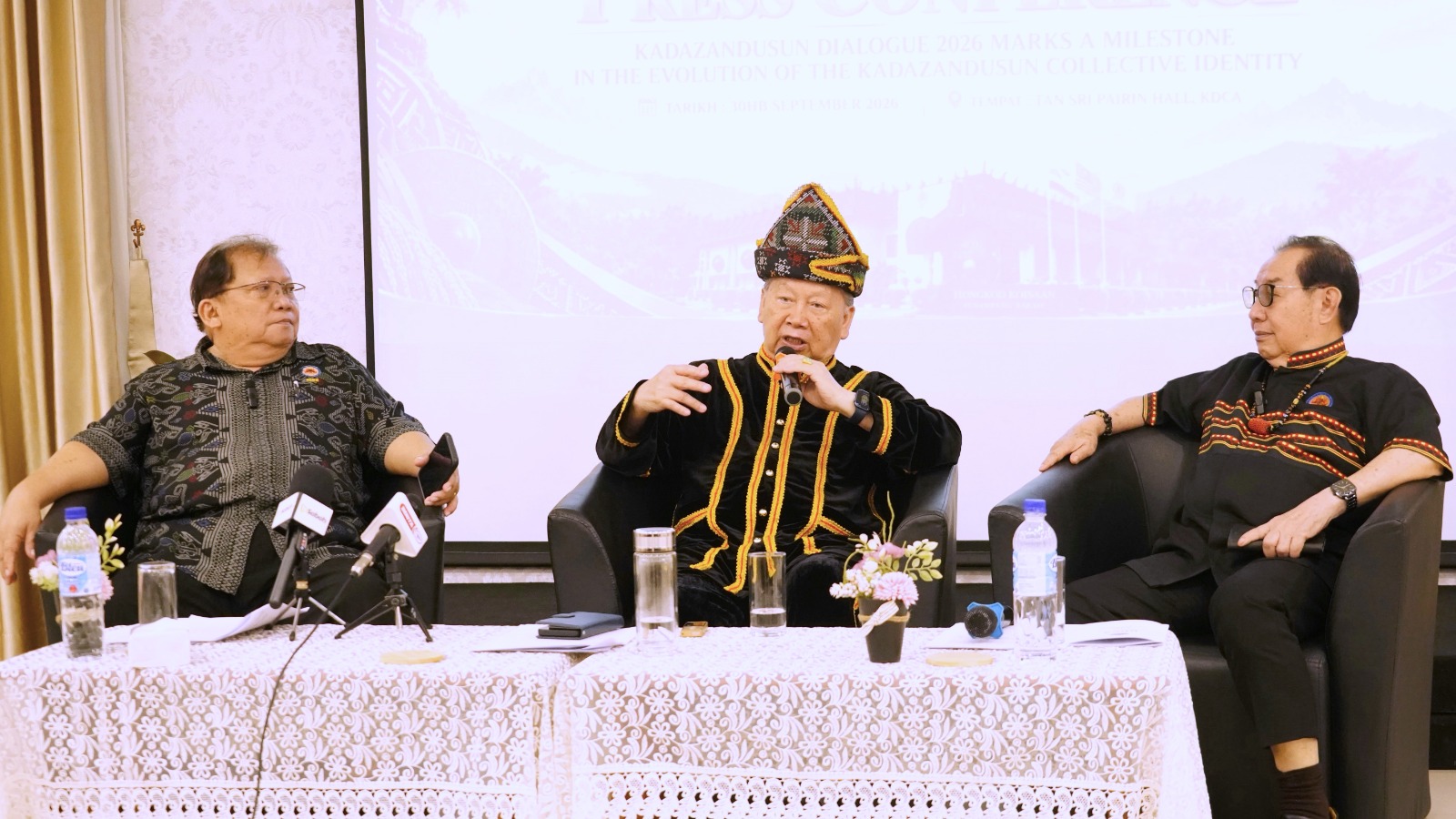
The media conference panel on Sept 30, 2026 comprised KDCA Deputy President Datuk Seri Panglima Dr Jeffrey G. Kitingan, KDCA President Huguan Siou Tan Sri Datuk Seri Panglima Joseph Pairin Kitingan, and KDCA Deputy President Datuk John Anthony.
The Kadazandusun Dialogue 2026 was held at Hongkod Koisaan, Penampang, on Sept 19, 2026. It was attended by 153 participants representing 40 ethnic and sub-ethnic groups.
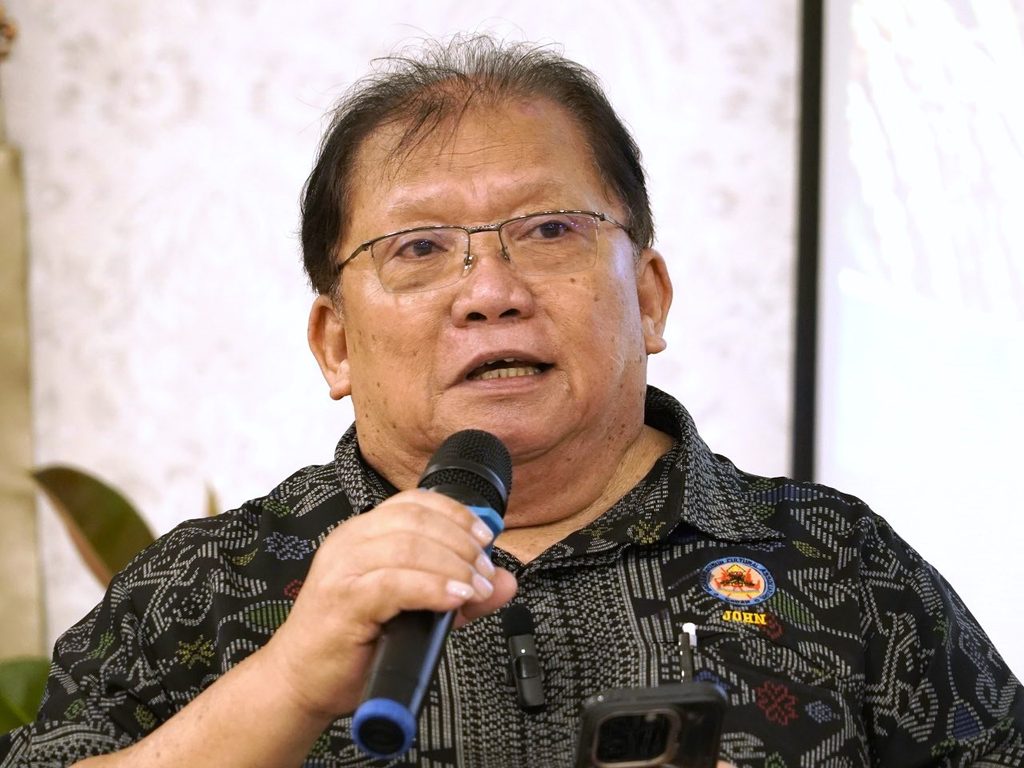
KDCA Deputy President Datuk John Anthony
Datuk John Anthony welcomed the presence of the media and guests representing KDCA.
“We greatly appreciate the media’s presence and interest in the efforts, aspirations and development of the Kadazandusun community,” he said.
He said the conference was an important opportunity for KDCA leaders to brief on the background, objectives and outcomes of the dialogue.
“The community needs to be informed about this dialogue, especially our efforts to promote peace while respecting and protecting the identity, landscape and culture of every community under the KDCA umbrella,” he said.
During the question-and-answer session, Dr John Anthony explained KDCA’s strategy to strengthen the community.
“KDCA has a strategy to be financially self-reliant. We need to build assets and systems capable of supporting the future,” he said.
He said if KDCA is strong and has capital, it can offer educational assistance, entrepreneurship and training to the community.
“We have established Kadazandusun Development to help in business, education and charity. Our target is to ensure KDCA has sufficient funds through asset building, thereby helping the community overcome economic problems,” he said.
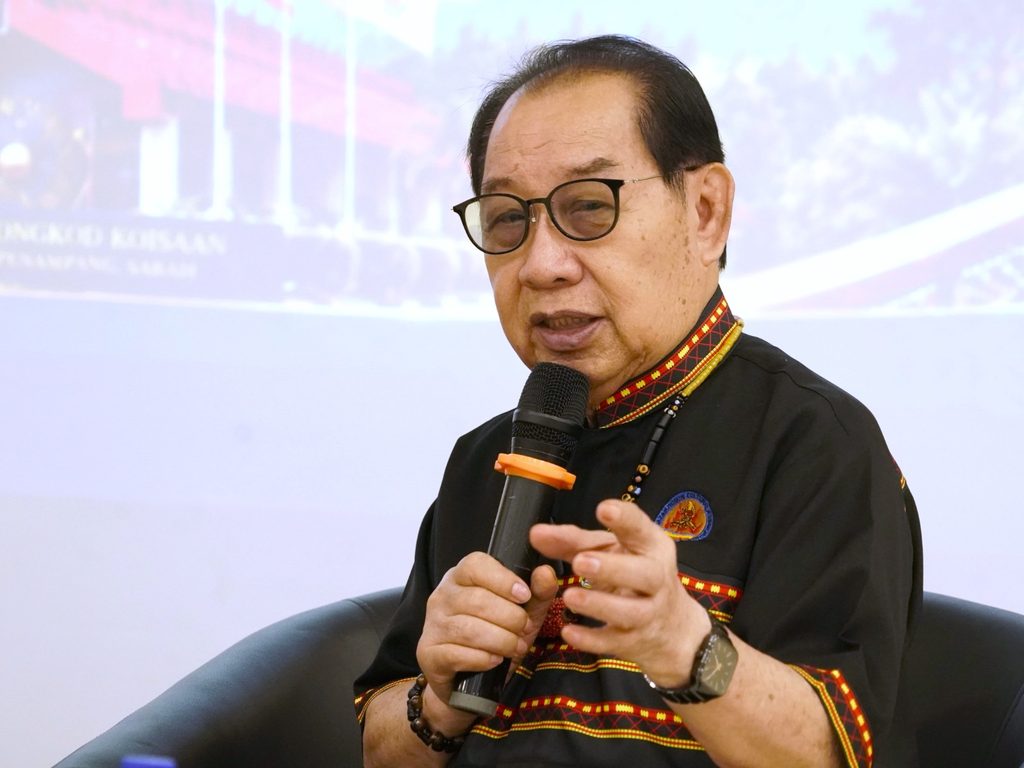
KDCA Deputy President Datuk Seri Panglima Dr Jeffrey G. Kitingan
Dr Jeffrey said the Kadazandusun community comprises various ethnic and sub-ethnic groups. Each has its own identity, language, dialect, customs, culture, history and heritage.
This diversity is a source of strength that must be preserved, not erased or standardised. History shows the need for a shared identity on matters of common interest.
He described the relationship through three elements: ethnic identity is the root; Kadazandusun is the shared identity; KDCA is the institutional umbrella.
Ethnic identity reflects each community’s origins, history and heritage. Kadazandusun connects the communities. KDCA provides an institutional space for cooperation and for championing common interests.
Accepting a shared identity does not mean any community has to abandon its name, language, dialect, customs, culture, history, association or right to manage its own affairs.
“We do not need to be the same to be united,” said Dr Jeffrey.
The dialogue was also a platform for participants to hear views, revisit shared history, understand the development of the shared identity, address misunderstandings and find common ground.
Dr Jeffrey stressed the dialogue was not a contest between names or identities.
“The question we need to answer is: How can we continue to be ourselves and, at the same time, stand firmer as one community?” he said.
Lasting unity must be based on sincere, inclusive and continuous understanding, not merely on numerical support.
The dialogue supports the KDCA Strategic Direction 2025-2028 and Vision 2034 to strengthen acceptance, respect and pride in Kadazandusun as a shared identity.
The identity was shaped by history, struggle and consensus, and serves as a symbol of unity and continuity between generations.
Presentation papers examined the development of the shared identity, the KDCA umbrella concept and the role of Kaamatan.
Efforts to form the shared identity went through four key events: 1961, 1989, 1995 and 2004.
The first event was the First UNKO Conference on Aug 6 and 7, 1961 in Jesselton. Delegates from Kudat, Keningau, Ranau, Tawau, Labuan, Brunei and 19 other districts attended.
A resolution accepted “Kadazan” as the shared identity at the time, including the Murut people.
In 1989, the use of the names Kadazan and Dusun again became a major issue. Presentation materials cited cases of members of the same family having different identity classifications in official documents.
Parents were recorded as “Dusun” in birth certificates before 1961, while their children were recorded as “Kadazan”. Kadazan and Dusun were later combined into Kadazandusun.
The matter was unanimously approved at the 5th KCA Delegates Conference on Nov 4 and 5, 1989. The association’s name was changed to KDCA.
In 1995, a language agreement between KDCA and the United Sabah Dusun Association (USDA) accepted Kadazandusun as the official name of the language for mother-tongue instruction. Other dialects continued to be used.
Bunduliwan was set as the base dialect for standardisation on April 11, 1995. The Kadazandusun language began being taught in 15 primary schools in 1997.
In 2004, the Second Kadazandusun Resolution called for Kadazandusun to be used in official government documents.
The dialogue also examined efforts for official recognition of Kadazandusun as a common identity. Letters dated July 3, 2016 and Dec 7, 2022 were submitted to the Chief Minister seeking the gazetting of “Kadazandusun” as the official common identity of the Kadazandusun community. As of Sept 19, 2026, KDCA had yet to receive an official decision.
KDCA was registered on April 29, 1966 as a non-political organisation.
Under Article 6 of the KDCA Constitution, the Kadazandusun community comprises 49 ethnic and sub-ethnic groups. Each community has its own history and identity that must be respected, protected and passed down.
The umbrella concept is based on unity in diversity. It does not require all communities to become uniform, nor does it erase or replace ethnic identities. Each community retains its own identity. The shared umbrella unites all.
Under the KDCA umbrella, ethnic identity and shared identity exist as two mutually complementary layers.
Each community continues to use its name, preserve its language, practise its customs, safeguard its culture and determine its own development direction. Each association maintains its own organisation, leadership and programmes.
Cooperation strengthens joint efforts in cultural and language preservation, education, youth development, entrepreneurship, employment and training, cultural tourism, community networking and advocacy.
Article 7(1)(c) of the KDCA Constitution allows eligible associations to join KDCA as Affiliate Members without giving up their identity or autonomy.
Affiliate membership provides a platform to build relationships, share expertise, implement joint programmes and strengthen the community’s collective voice.
A separate paper proposed that Kaamatan become a shared cultural platform. Each community has a meaningful role and a sense of belonging.
Kaamatan can celebrate the uniqueness of each community and the ties between them, while opening economic opportunities through dedicated heritage exhibitions.
Kaamatan can demonstrate that the heritage roots of each community are protected under the shared Kadazandusun identity.
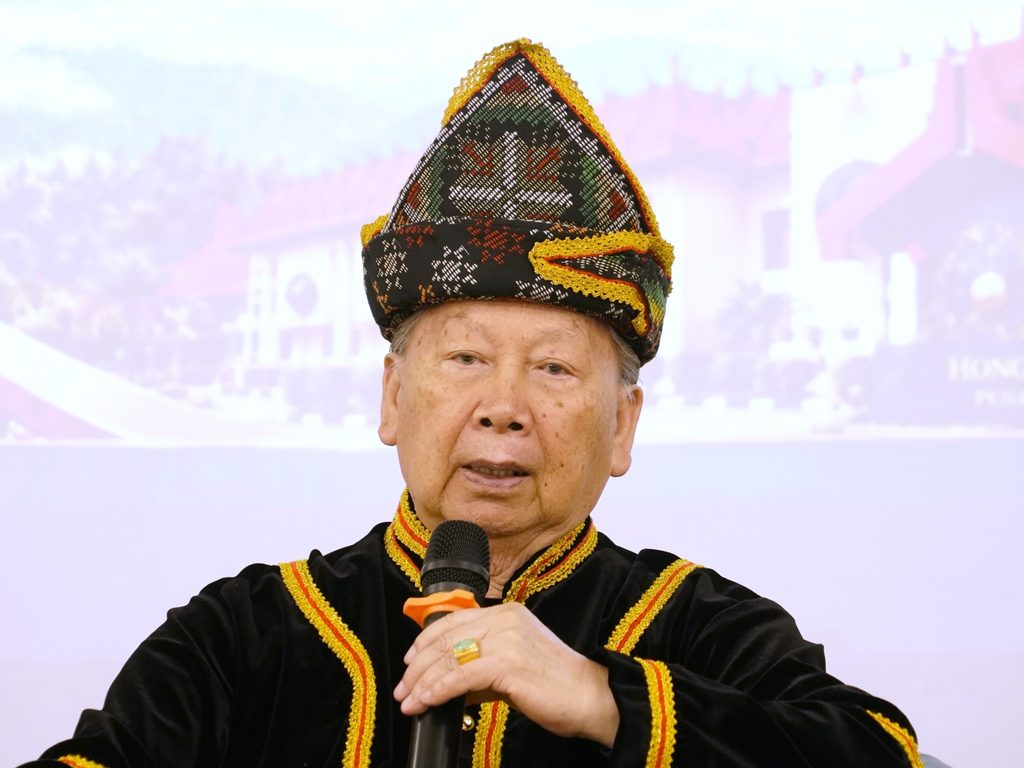
KDCA President Huguan Siou Tan Sri Datuk Seri Panglima Joseph Pairin Kitingan
In his closing speech, Pairin stressed that accepting Kadazandusun as a shared identity does not mean original ethnic or sub-ethnic identities are set aside.
Every community can continue to preserve ancestral heritage, including its name, language, customs and culture.
As these communities stand together as one family, they also have a shared identity that unites diversity.
“Kadazandusun is the umbrella of our shared identity. We have a shared identity, and we also have a foundation to build one shared voice,” said Pairin.
The KDCA umbrella was created to protect, unite and strengthen the various communities. Each community retains its own identity, history, language and culture while gaining a shared platform to address common interests.
The dialogue ended with the signing of a Unity Charter by leaders and representatives of 40 ethnic and sub-ethnic groups.
They were Bundu, Gana, Idaan, Kimaragang, Kolobuan, Kuijau, Liwan, Lotud, Lundayeh, Malapi, Mangkaak, Murut Binta, Murut Tahol, Murut Paluan, Murut Nabai, Murut Tangala, Paitan, Rumanau, Rungus, Sinobu, Sukang, Sungai, Tatana, Tangara, Tidong, Tobilung, Tombonuo, Tuhawon, Subpan, Tinagas, Tompizos, Luba, Kuizou, Dusun Segamo, Dusun Nunuk Ragang, Begak, Sogilitan, Turavid, Dusun Labuk and Tompulung.
Pairin described the signing as more than a ceremony. It symbolised a commitment to remain united, respect one another, continue dialogue, deepen cooperation and move forward together under the KDCA umbrella.
He hoped the Charter would be translated into action through closer cooperation between communities, joint programmes, the sharing of knowledge and experience, and more opportunities for the younger generation.
Addressing representatives of 49 ethnic and sub-ethnic groups, Pairin said the Kadazandusun Dialogue 2026 was not an end but a beginning.
“I call on participants to bring the spirit of the dialogue back to their respective communities and continue building trust, understanding and cooperation,” he said.
After more than six decades, beginning with the 1961 resolution and the acceptance of Kadazandusun in 1989, followed by the 1995 language agreement, the 2004 resolution and subsequent efforts for official recognition, the 2026 dialogue is the latest milestone in the development of the Kadazandusun shared identity.
The dialogue ended with a reminder that identity is a trust carried across generations. It is more than a name; identity encompasses history, struggle, consensus and shared responsibility for the future.
Pairin ended his speech: “Many ethnic groups, one umbrella. Many heritages, one family. One shared identity. One shared voice. And one future we build together.”
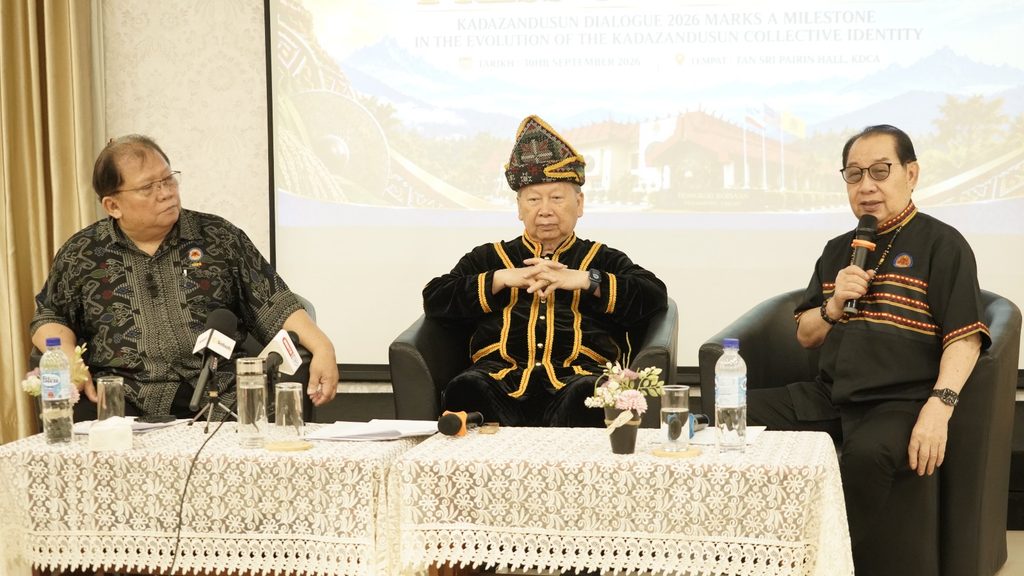
The media conference also touched on economic matters. Dr Jeffrey said that if the community moves as one large organisation, it can create a joint forum to discuss economic problems and seek solutions.
“Our community is rich in land, but the question is whether the land generates profit. If we combine and cooperate to develop the land, financial institutions will see us as a large organisation,” he said.
That strength can be used to convey requests to the government and help the community.
On technology, Dr Jeffrey reminded that the use of AI must be accompanied by accurate knowledge.
“AI can help if the formula is right. If humans supply information with the wrong formula, AI’s answers will also be wrong,” he said.
Asked about calls by certain quarters for the community to be known as Momogun, Dr Jeffrey said there is nothing wrong with the name.
“However, we have gone through a long journey since 1961, 1989, 1995, 2004 and until now. We have discussed, agreed and built the Kadazandusun shared identity,” he said.
Creating another identity after this could confuse the public and divide the community. Kadazandusun has become an identity that is practised and institutionalised.
The focus must be on strengthening the shared identity and involving all sub-ethnic groups in key programmes.
Dr John Anthony added that KDCA has a strategy to be financially self-reliant. It needs to build assets and systems that support the future.
“If KDCA is strong and has capital, it can offer educational assistance, entrepreneurship and training. Kadazandusun Development was formed to help in business, education and charity,” he said. The target is to ensure KDCA has sufficient funds through asset building, while helping the community overcome economic problems.
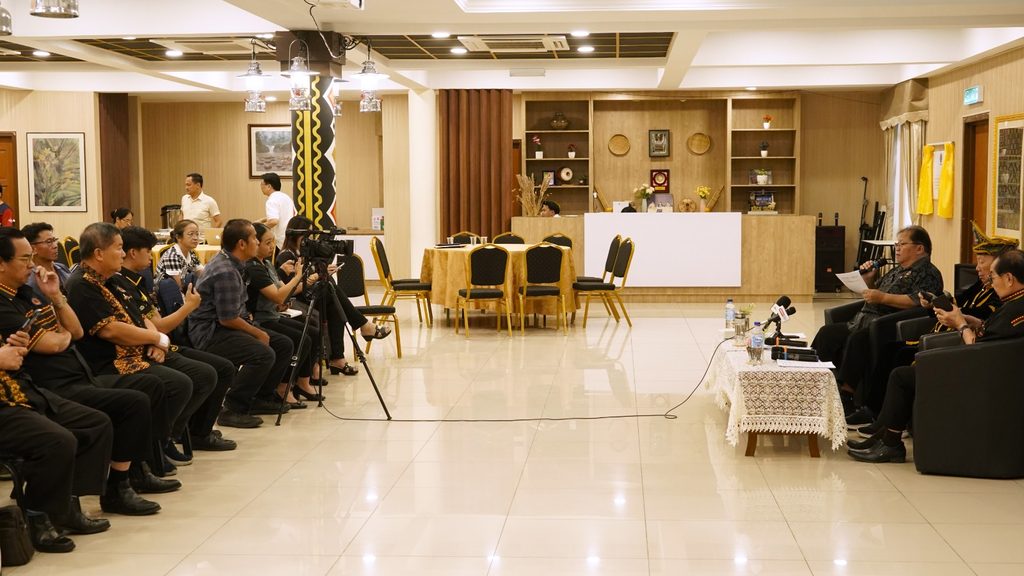
Media conference on Sept 30, 2026