By: Roodwill
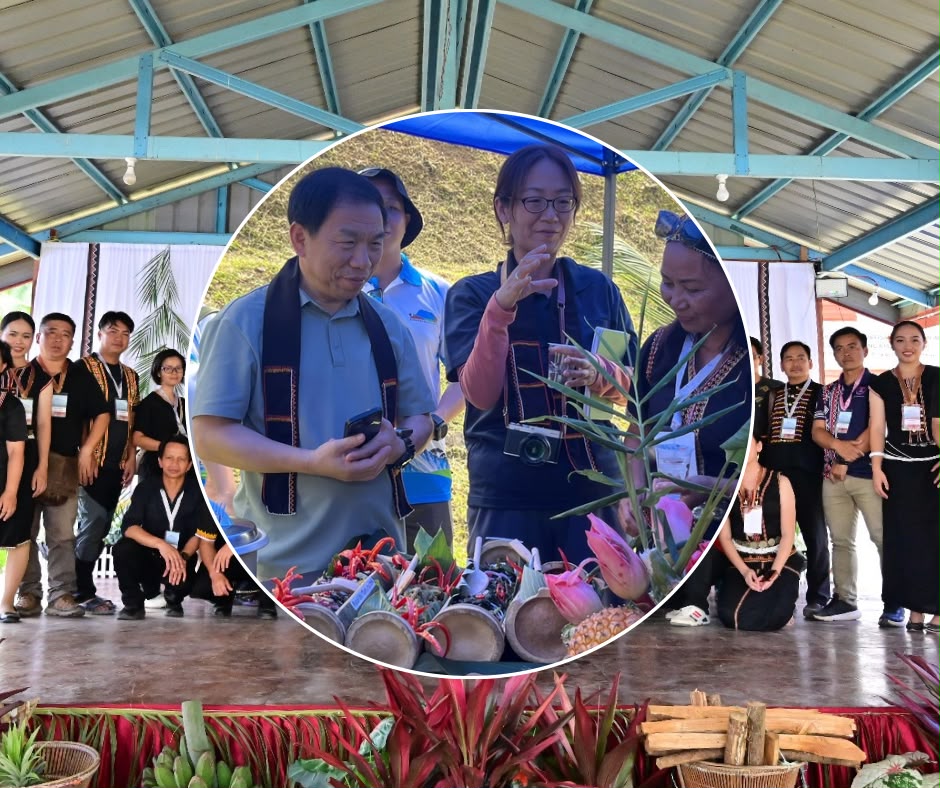
KOTA BELUD: August 12, 2026 — Kampung Kiau Nuluh in Kota Belud did more than just display cultural heritage to two assessors during the Kinabalu UNESCO Global Geopark (KUGGp) reassessment mission on August 11, 2026. Instead, the village guided them through the living practices, knowledge, and community life that continue to be preserved to this day.
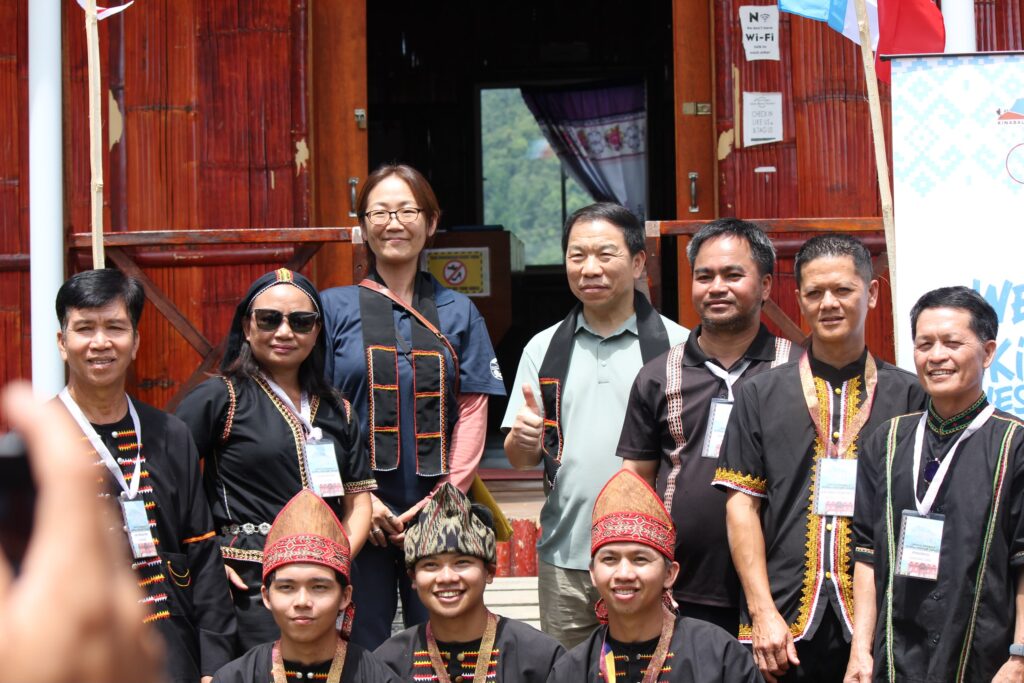
Dr. Atsuko Niina and Dr. Zhang Yuanhal, the two assessors involved in the reassessment mission, were taken to witness various elements of the Dusun Kiau community’s heritage. Their journey began with a cultural welcome before proceeding to Walai Mitapus, where they explored community products, rice processing, traditional coffee preparation, parang-making, and galleries showcasing language, customs, and handicrafts.
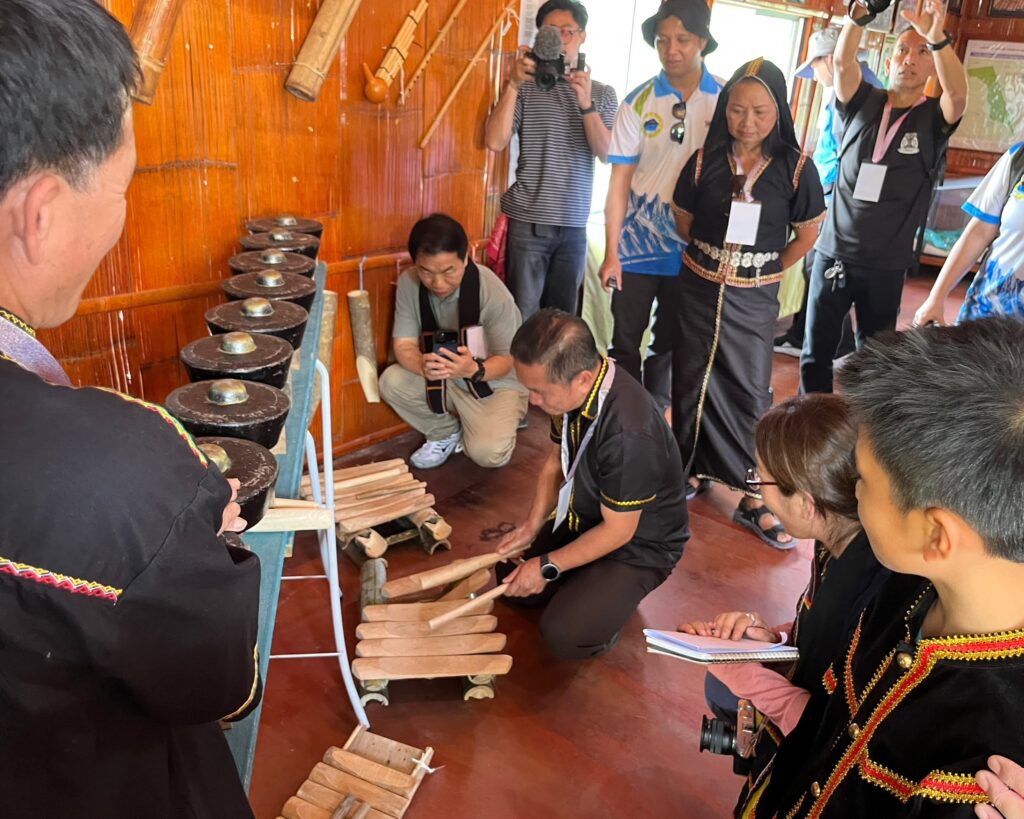
What the community highlighted was not merely cultural diversity, but the fact that this heritage remains actively practised, learned by younger generations, integrated into community-based tourism, and continues to shape the identity of the Dusun Kiau people.
Heritage in welcome ceremonies and traditional music
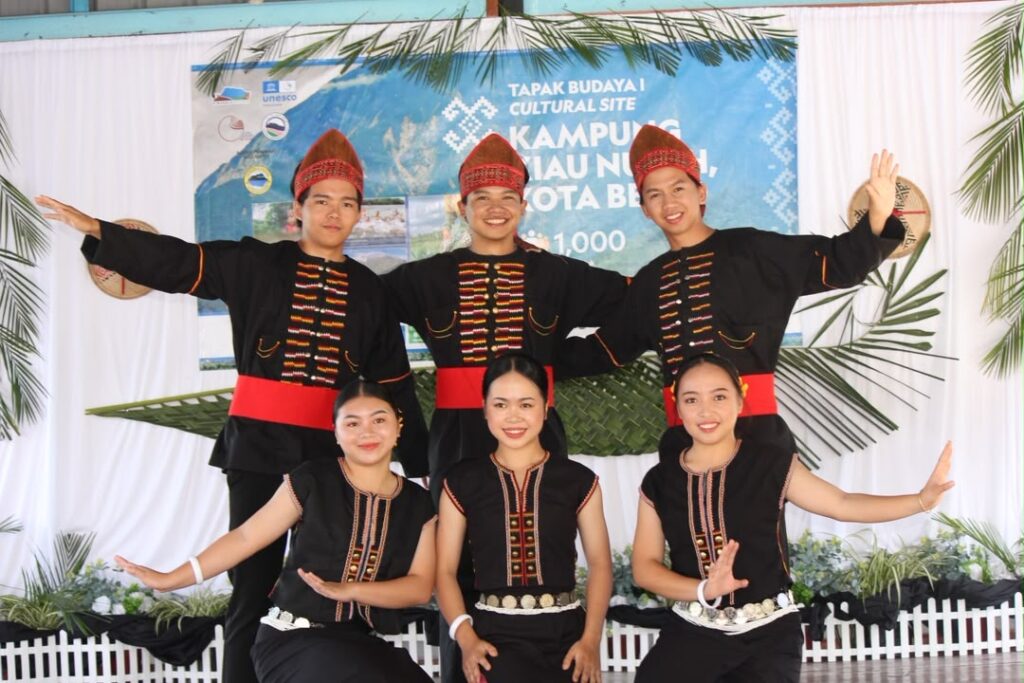
The assessors’ journey began with a cultural welcome that carried its own message. The resonant sound of gongs accompanied the arrival of the delegation, followed by the presentation of Togunggak, Rinongkitan garlands, and a traditional welcoming dance.
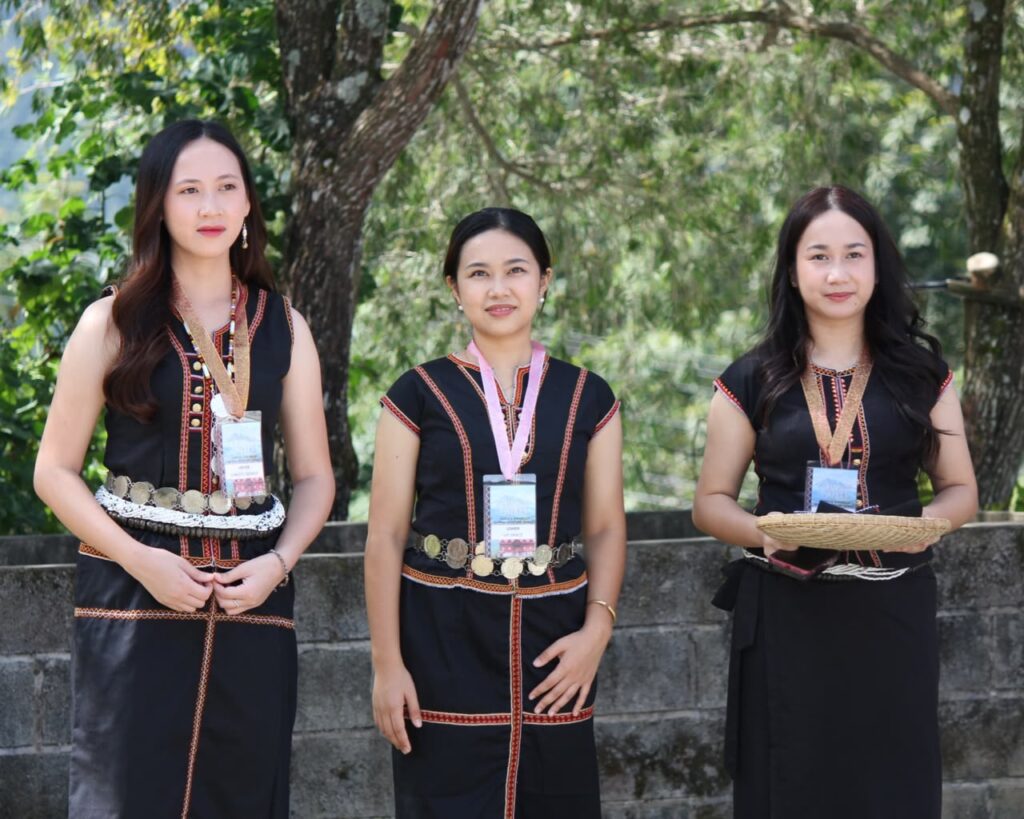
The Kiau community regards the Tagung (gong ensemble) as more than just music it serves as a symbol of history, unity, and cultural continuity being passed down to younger generations.
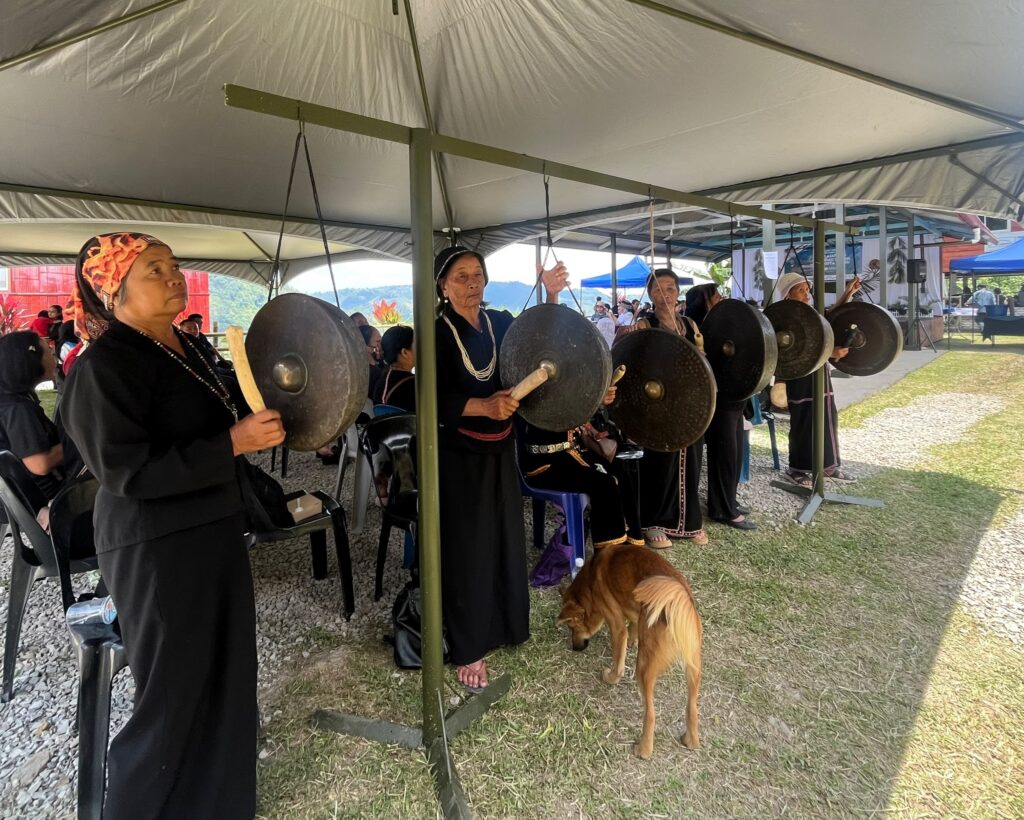
Kampung Kiau Nuluh Village Head, Joseph Gimbu, emphasised that community unity forms the foundation for ensuring the village remains peaceful and prosperous.
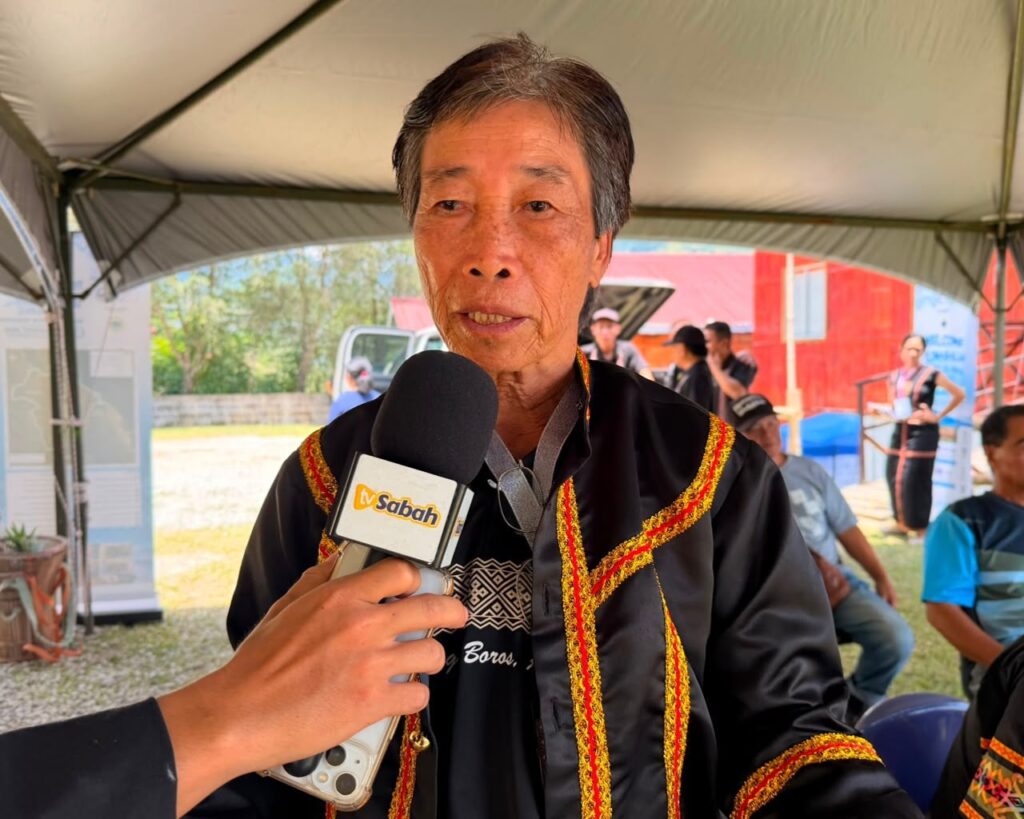
“My advice to the villagers is that we are one large family. I want all residents to abide by the rules and regulations so that we can live in peace and harmony. This aligns with our vision to make this village peaceful, prosperous, and to nurture a united and competitive community,” he said.
The welcome continued with the Sayau Kiau, Sumonggol, and Mongigol dances performed by the Dusun Kiau Youth, each carrying values of courtesy, respect, gratitude, and community solidarity.
Gompito Chairman, Duin Limundok, stressed the importance of collaboration between older and younger generations in ensuring the community’s efforts continue moving forward.
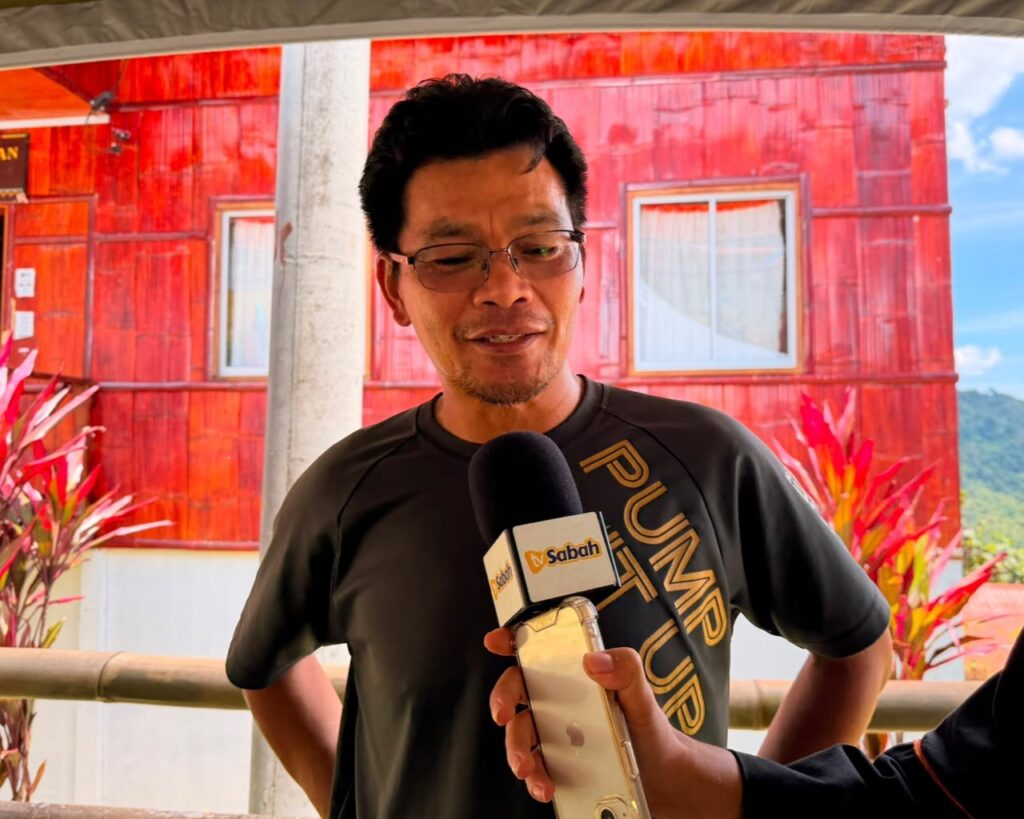
“My hope for every association and Gompito member is that we can work together across all levels of society, from the older generation to the youth, especially the young people,” he said.
Walai Mitapus: A centre for learning and community tourism
The assessors’ journey then moved to Walai Mitapus, which functions as a learning and research centre as well as a visitor reception area supporting community tourism development.
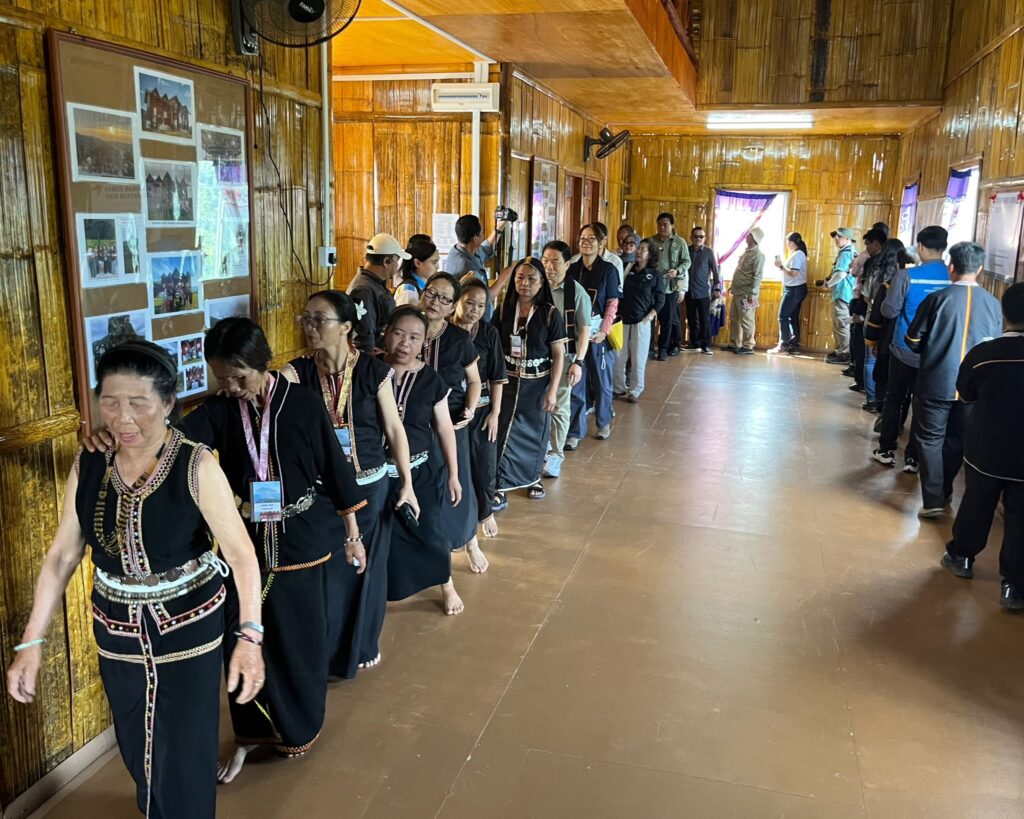
Here, the assessors were introduced to Monogulu Walai or Mamanggor Walai, a traditional blessing ceremony for the homes of the Dusun Kiau community.
In this custom, a house is not merely a shelter but a living space that must be blessed before occupation. The ceremony is conducted by a Bobolian (traditional priest) who circles the house seven times while performing mamajok (ritual chants) to seek protection and blessings.
Sokiong Sani, Chairman of the UNESCO Kinabalu Global Geopark Reassessment Main Committee and JKK Kampung Kiau Nuluh, said that cultural heritage aspects were among the key messages to the assessors.
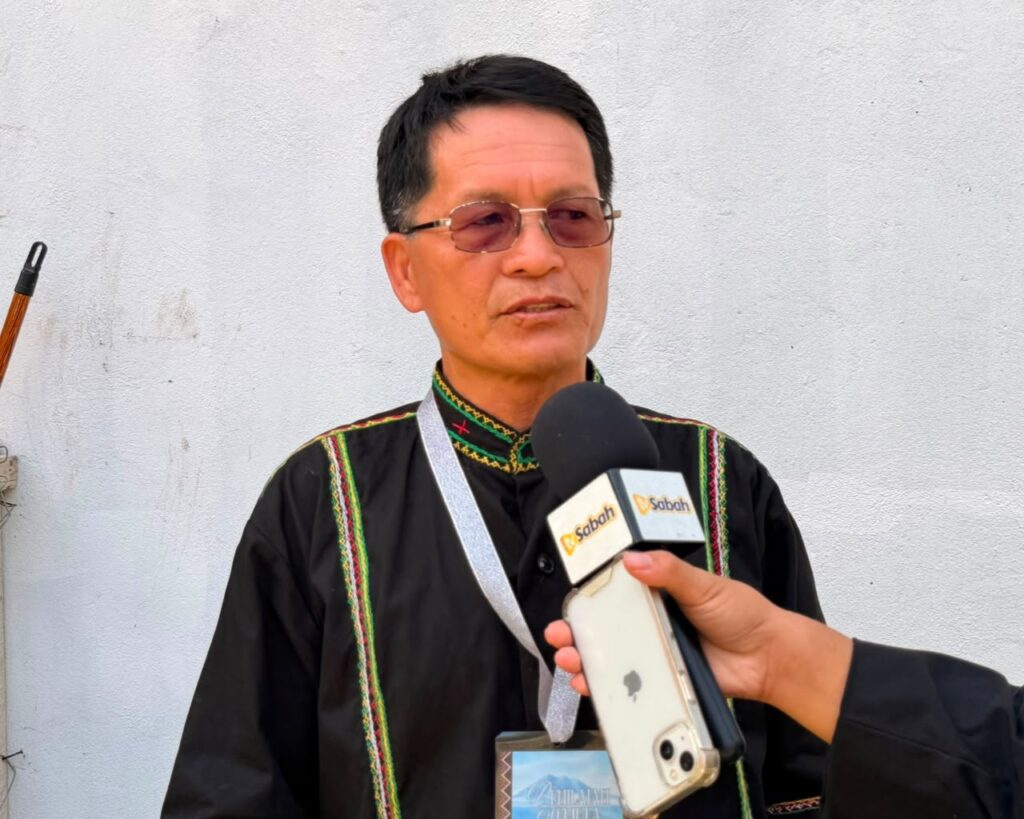
“The main message we wanted to convey to the assessors was to remind everyone about the importance of Dusun Kiau cultural heritage,” he said.
Community products: From farm to tourist experience
At Walai Mitapus, the assessors were shown village products encompassing agricultural produce, downstream products, handicrafts, and tourism offerings.
Agricultural products on display included Kiau Arabica Coffee, pineapple-based sambal, highland vegetables, and seasonal fruits.
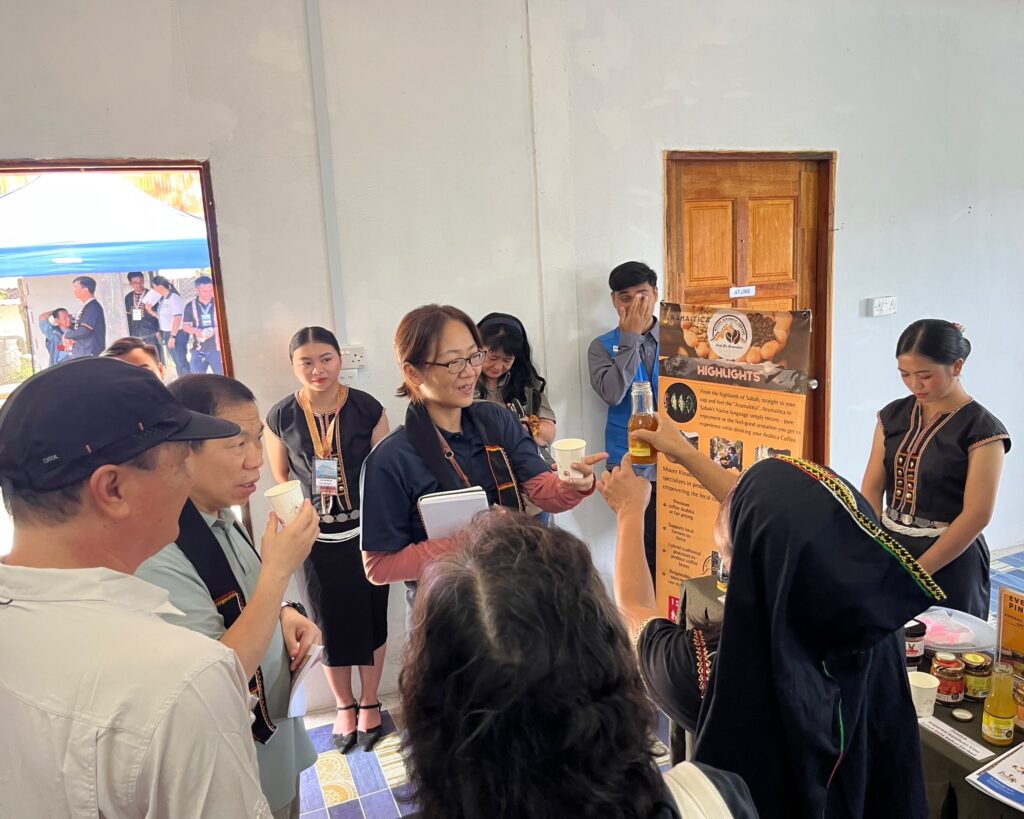
Downstream products included stingless bee honey, processed Arabica coffee, lihing (traditional rice wine), rice tapai (fermented rice), and various food products made from local ingredients. Handicraft products included traditional Kiau parang, various plant-based products, and local souvenirs.
Stingless bee honey is not only sold as a product but also serves as a nature-based tourism attraction. Visitors have the opportunity to learn about stingless bee farming, the importance of bees in pollination, and sustainable honey harvesting processes.
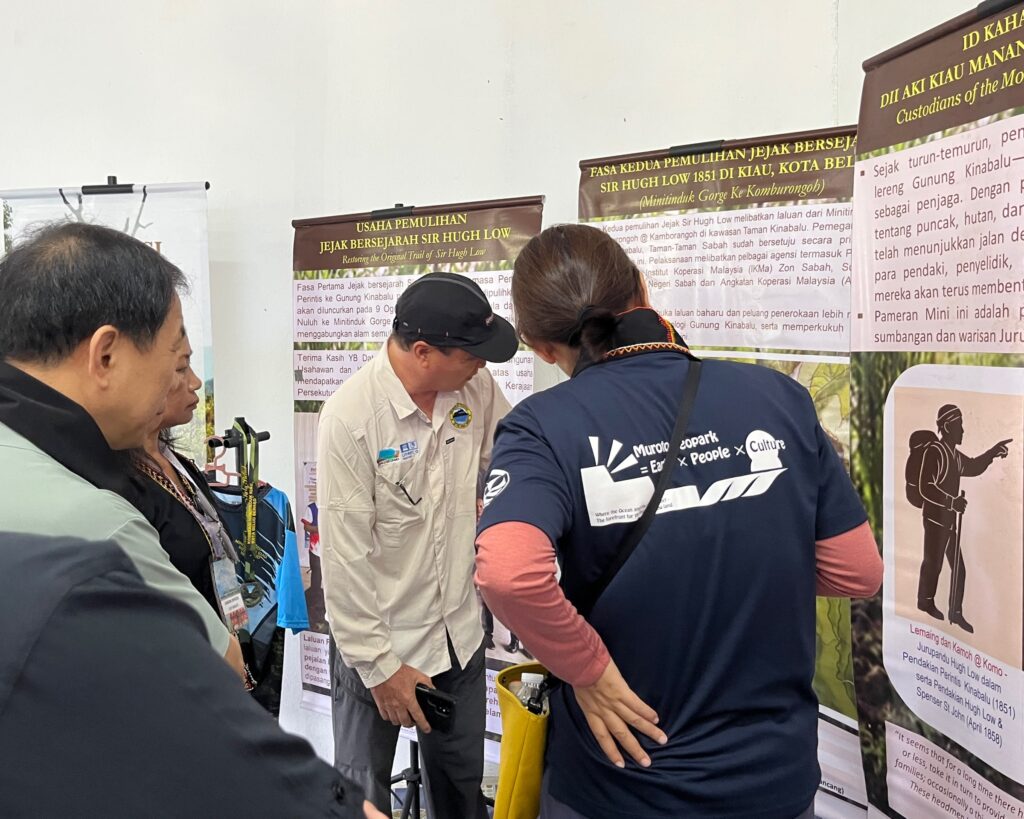
For the tourism sector, the community offers homestays, Community-Based Tourism packages, nature trails, parang-making demonstrations, coffee-picking and processing experiences, as well as visits to stingless bee farms and honey-tasting activities.
Pounding and winnowing: Heritage that teaches life values
The journey continued with a demonstration of rice processing through the traditional methods of pounding, winnowing, and sieving.
Rice has been the primary crop of the Dusun Kiau community since ancient times. Before the use of modern machinery, the entire rice processing cycle was done manually using traditional equipment such as mortars, pestles, and winnowing baskets.
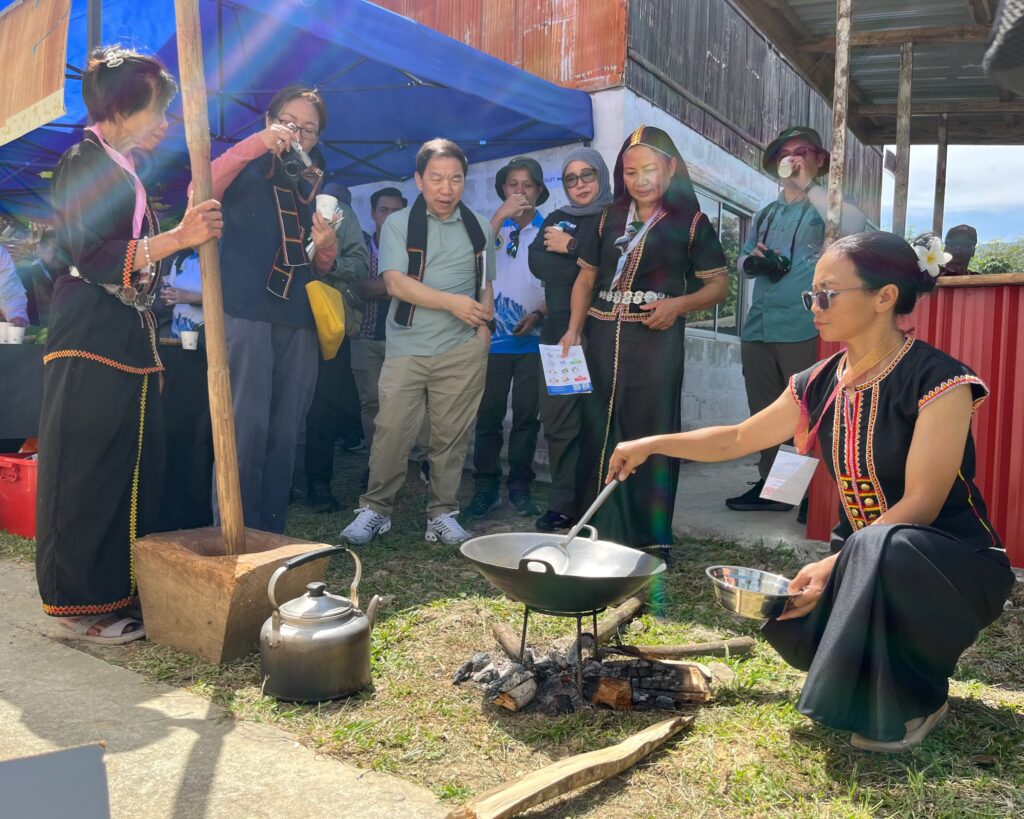
The first process involves pounding rice using a wooden mortar and pestle to remove the husk, turning it into rice. This work requires skill and cooperation, as each swing of the pestle must be done in turn and with proper rhythm.
This process teaches values of mutual assistance, patience, thoroughness, cooperation, gratitude, and appreciation for the earth’s bounty.
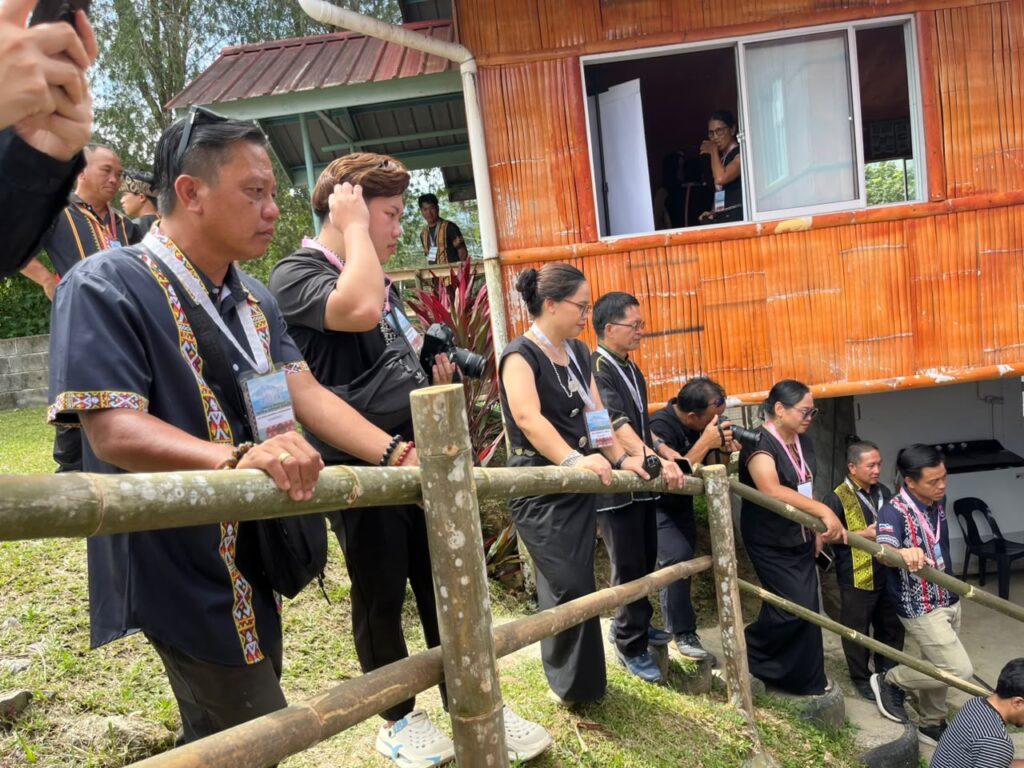
It also demonstrates how the Dusun Kiau community has practised sustainable resource use since ancient times, using equipment made from wood and bamboo while harnessing human labour and wind power without producing pollution.
Arabica coffee: From missionary heritage to agrotourism
At the next station, the assessors witnessed traditional coffee preparation and had the opportunity to try it themselves.
Kampung Kiau Arabica coffee has a long history. According to oral tradition, this coffee was introduced around the late 1950s by Dutch Catholic missionaries as a cash crop to improve the community’s standard of living.
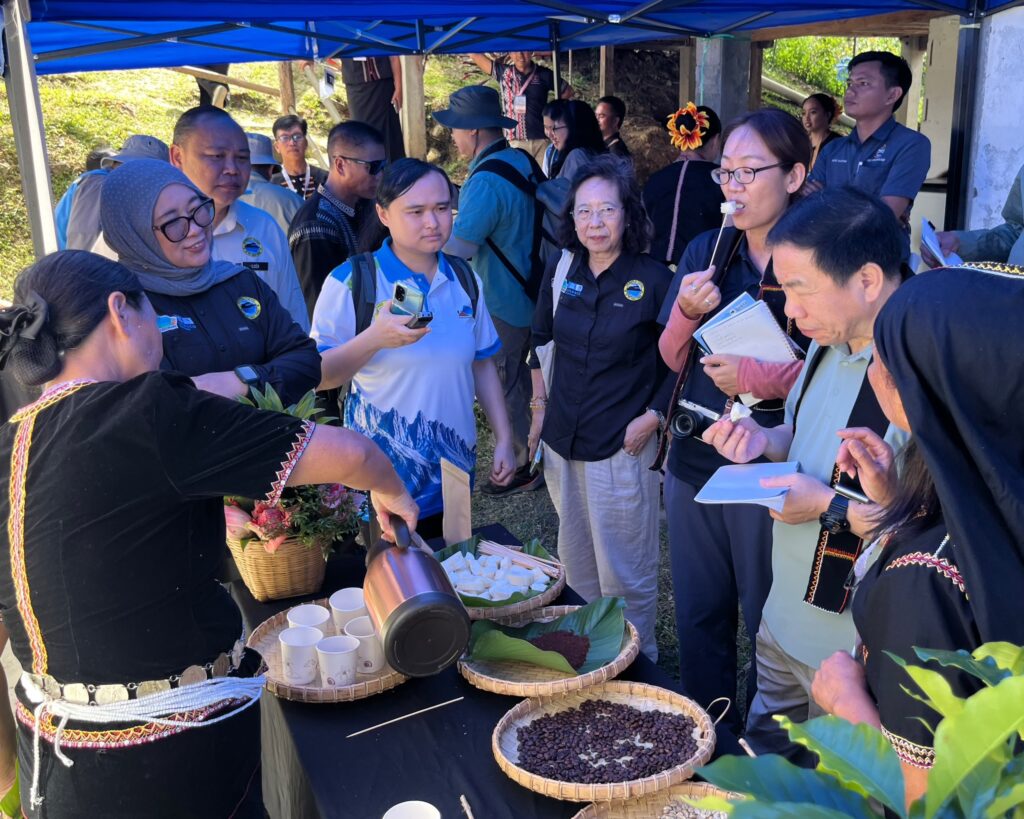
In the 1980s, over 60 per cent of Kampung Kiau Nuluh residents cultivated Arabica coffee, making it a primary income source and community identity.
However, falling market prices caused this enterprise to decline, and many plantations were abandoned.
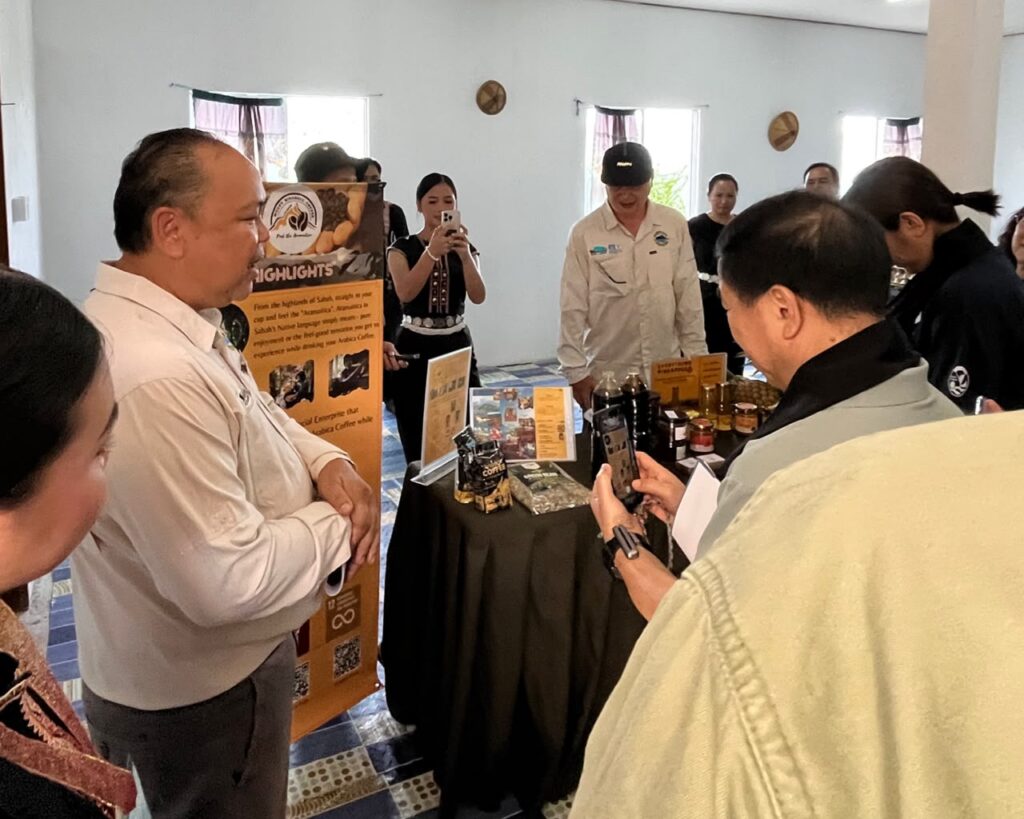
Since 2021, Arabica coffee cultivation in Kampung Kiau has revived through collaboration between the community, government agencies, research institutions, and the private sector.
Today, Kampung Kiau Arabica Coffee is not just an agricultural product but has evolved into an agrotourism offering.
Traditional parang: Skills passed down through generations
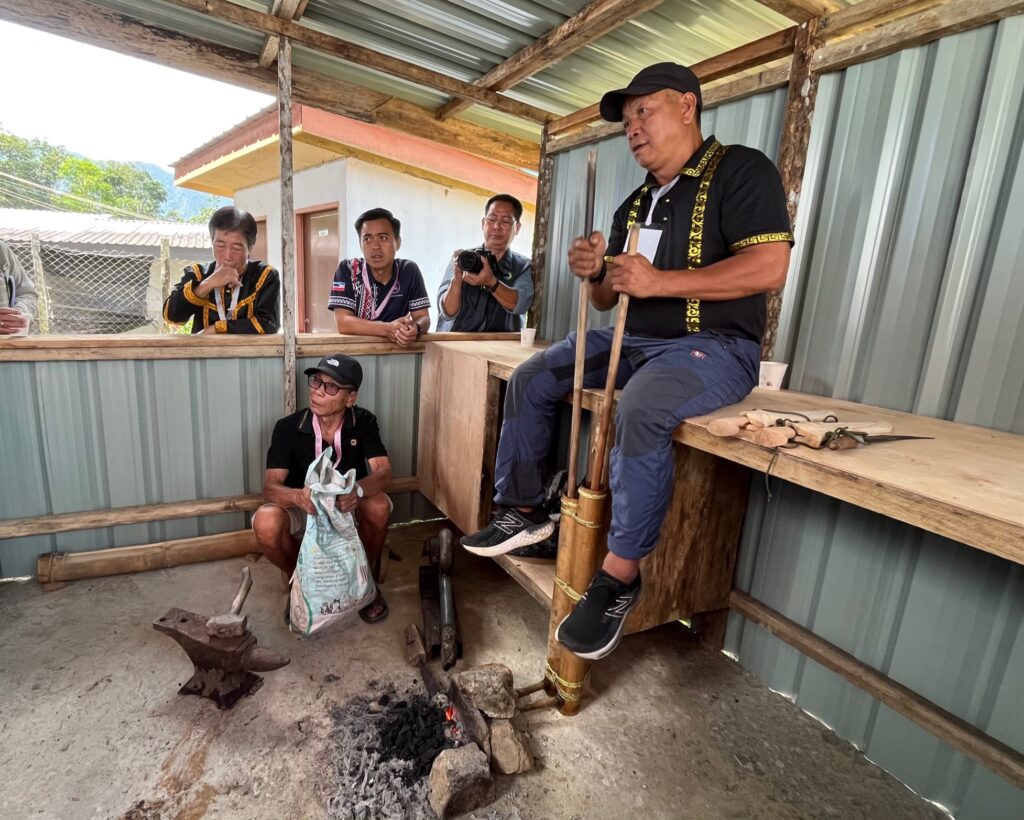
At the next station, the assessors witnessed traditional parang-making, known as Modsupu’.
The tradition of parang-making, or Modsupu’, is one of the cultural heritages of the Dusun community in Kampung Kiau. This iron-forging skill has been passed down through generations and represents the wisdom and expertise of ancestors in producing quality tools for daily use.
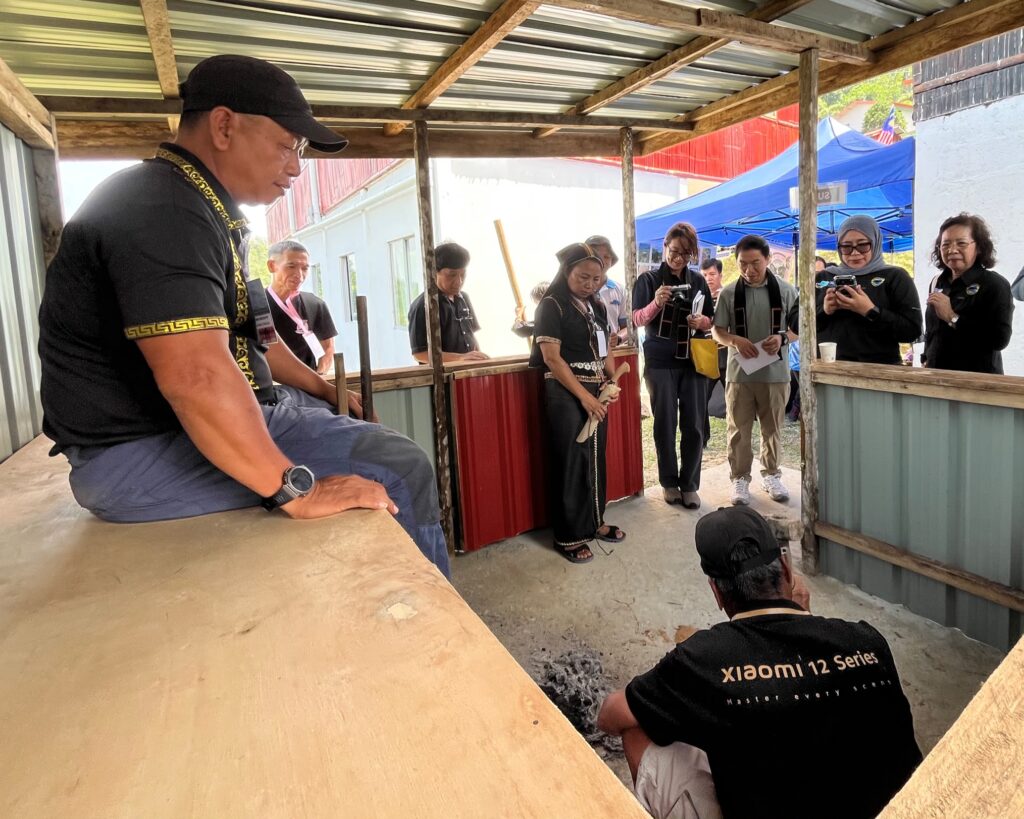
Today, although the use of modern equipment is increasingly widespread, several blacksmiths in Kampung Kiau continue the Modsupu’ practice as an effort to preserve cultural heritage.
This demonstration also serves as a community tourism product, giving visitors the opportunity to witness the traditional iron-forging process firsthand.
Gallery: Language, customs and Rinongkitan
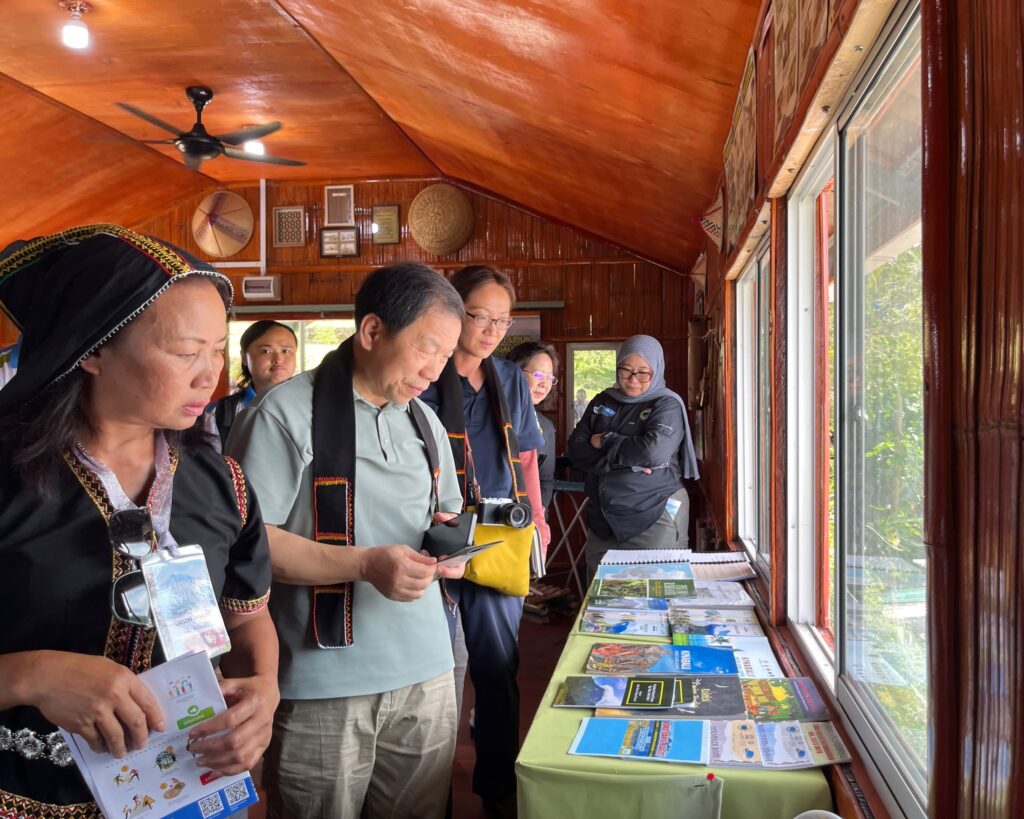
The assessors’ journey continued to a gallery featuring the Dusun language, customs and ceremonies, community activities, Rinongkitan, and handicrafts.
One interesting fact presented was that 99 per cent of Kampung Kiau residents still speak the Dusun Kiau language.
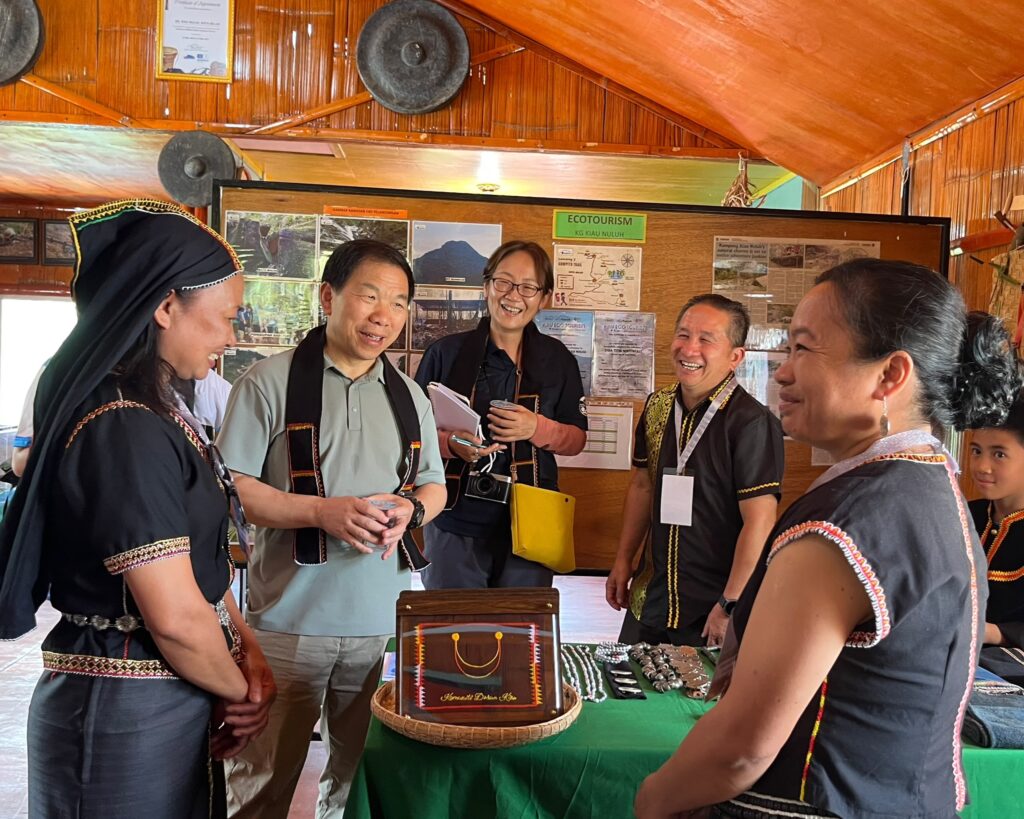
The language is not only used for daily communication but also serves as a medium for conveying customs, taboos, folktales, traditional songs, and local knowledge.
The assessors were also introduced to books documenting Kampung Kiau’s history, traditional living systems, customs, and protocols for entering the forest, which have served as community guidelines since ancient times.
According to Ivy Grace Geofarry, a young community member, the practice and learning of culture must continue so that heritage endures for future generations.
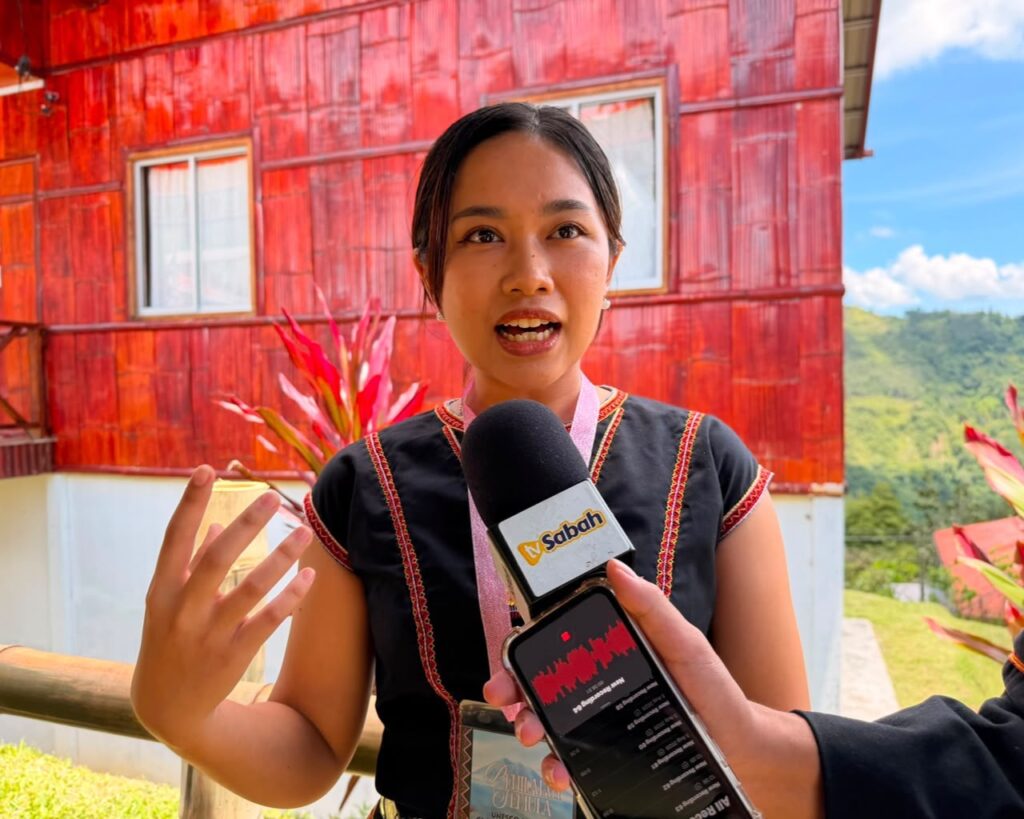
“We still practise and learn our culture so that these customs and traditions remain for generations to come. Atagak nopo boros, atagak no i tinaru” (If the language remains, the heritage remains), she said.
The gallery also showcased the customary system, taboos, and boros puru (ritual incantations) that have formed the foundation of Dusun Kiau community life for generations.
The Dusun Kiau community is renowned for its handicrafts using bamboo, rattan, wood, and forest plants.
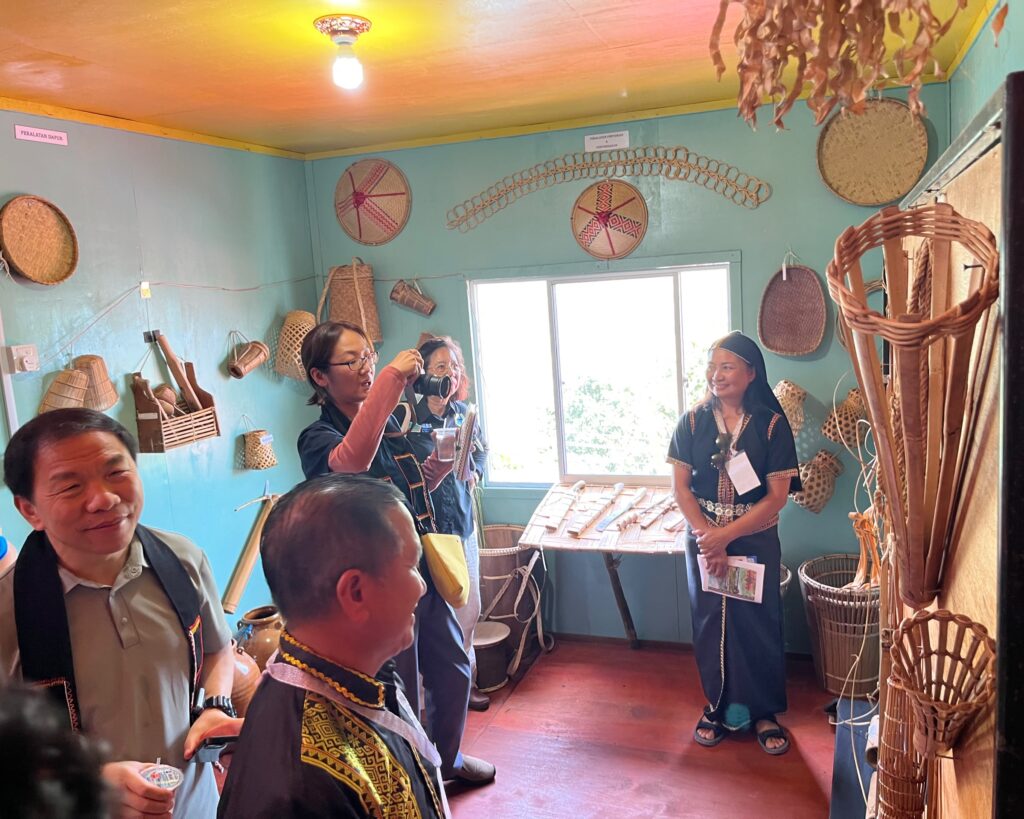
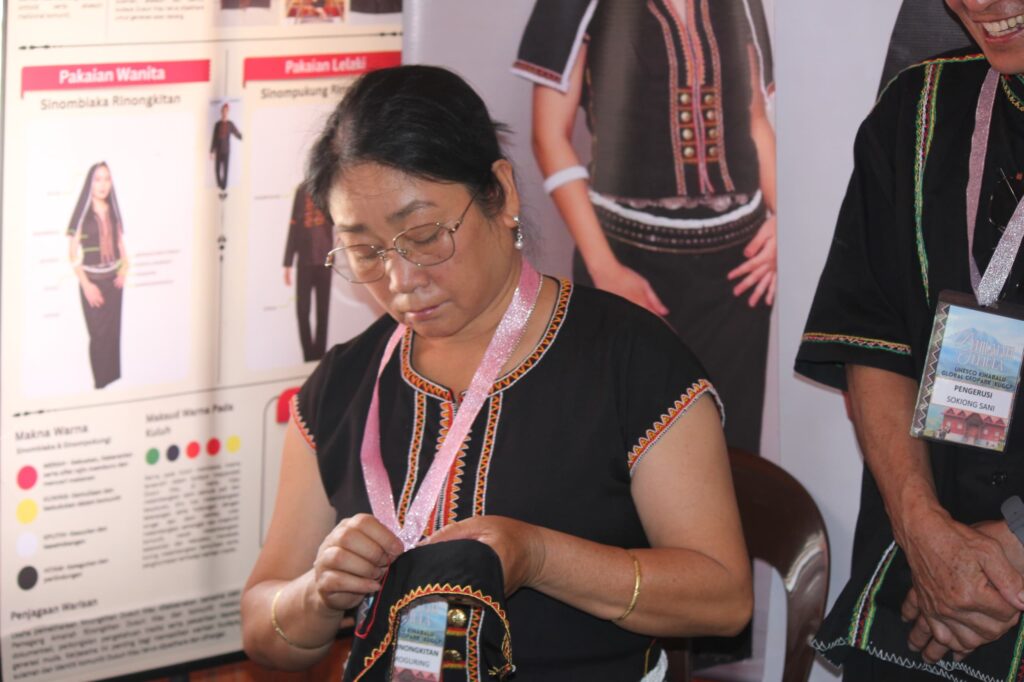
Also displayed was the Dusun Kiau Traditional Rinongkitan Costume, a traditional embroidery art passed down through generations and one of the main cultural identities of the community in Kampung Kiau Nuluh and Kampung Kiau Bersatu.
In 2026, the community achieved a significant milestone with the handover of a set of Dusun Kiau Rinongkitan traditional attire to the Koisaan KDCA Museum as a symbol of community heritage preservation.
Traditional food and oral heritage
After touring the various heritage stations, the assessors were treated to traditional Dusun Kiau cuisine made from local agricultural produce, highland vegetables, and natural resources harvested sustainably.
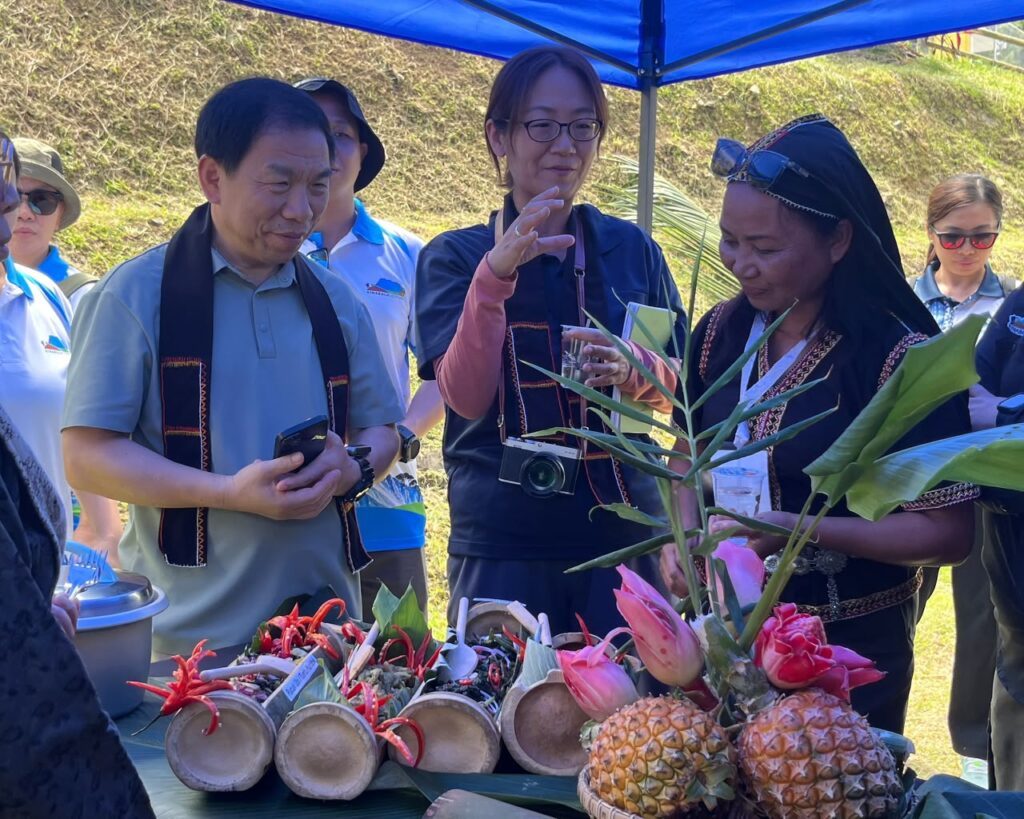
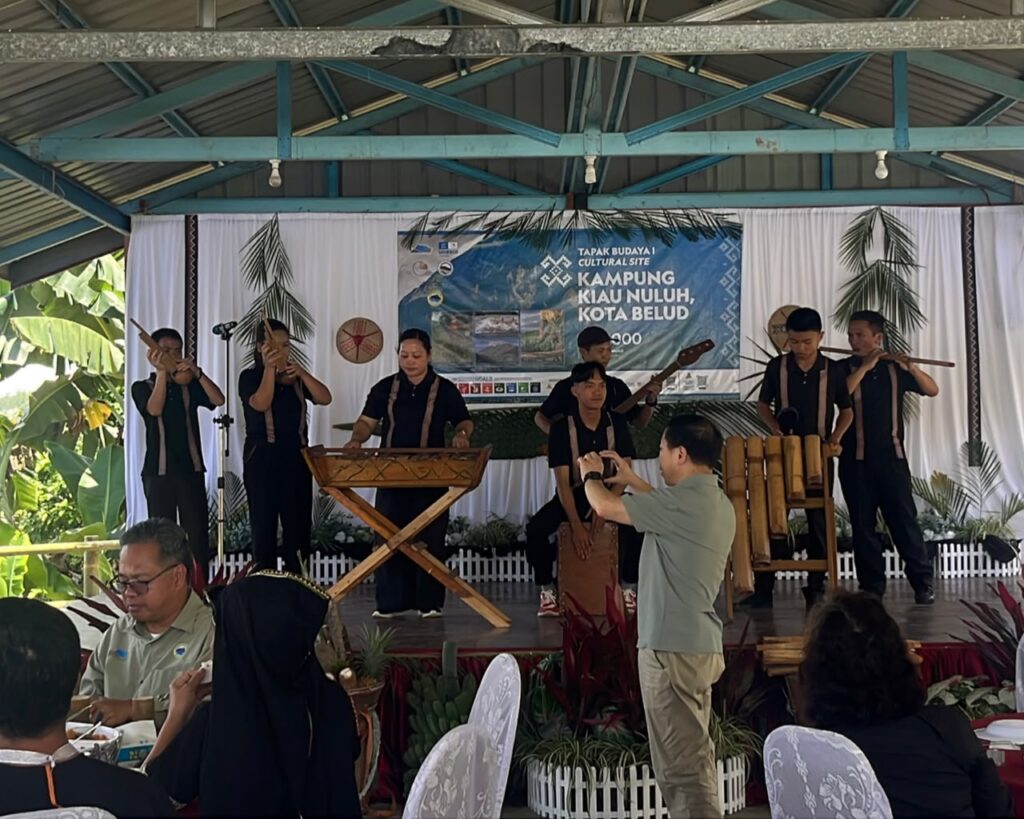
The atmosphere continued with Dusun Kiau community performances, making the lunch session not just a meal but another platform to showcase culture that remains an integral part of community life.
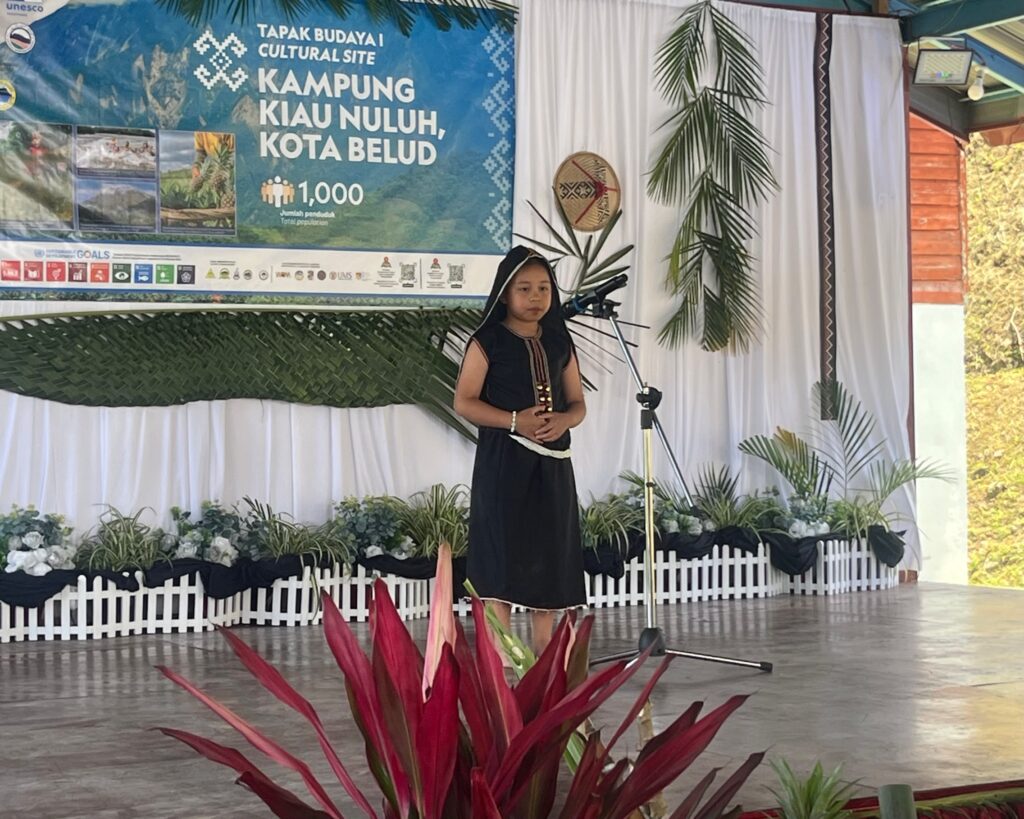
Among the performances presented was Lilihis, a rhythmic traditional poem delivered in poetic or song form.
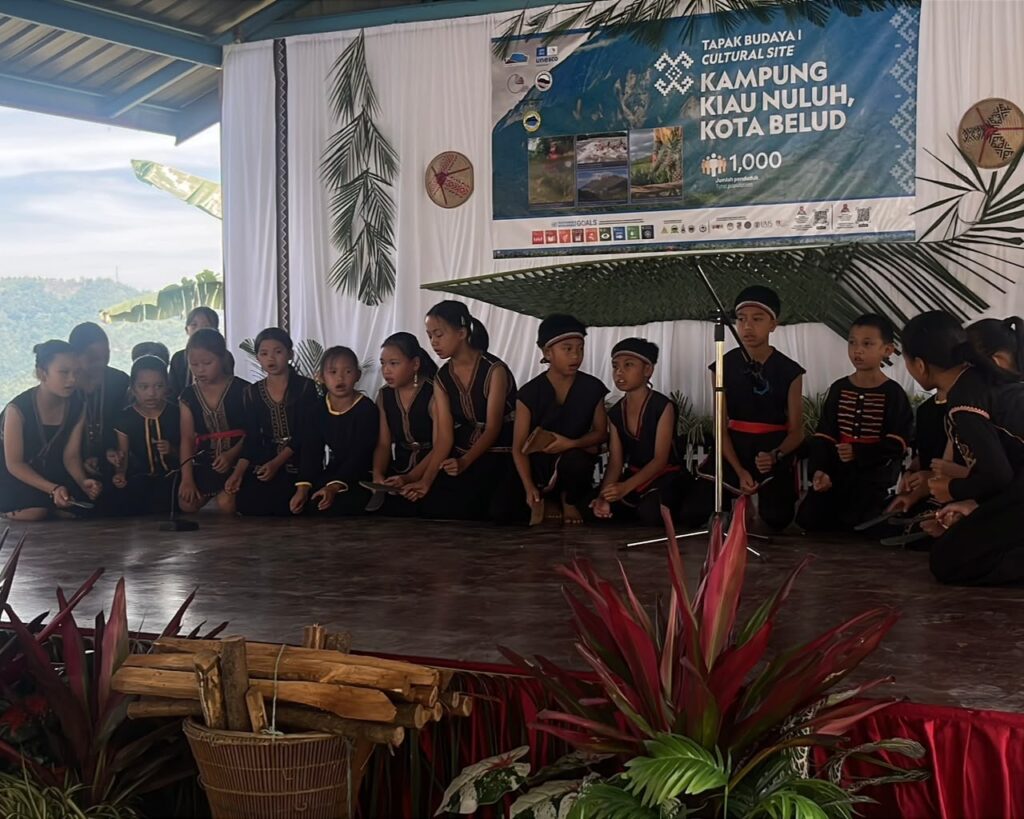
Three types of Lilihis were performed that day: Taala-ala, sung in a call-and-response format; pongusa taganak, a form of entertainment; and kalang, sung during harvest festival celebrations.
The performances continued with Manangon Tangon, an oral storytelling tradition that serves as an important medium for conveying history, village origins, heroic tales, and moral teachings to younger generations.
The story presented that day was the legend of Huminodun, the tale of a young woman who sacrificed herself to save her people from famine.
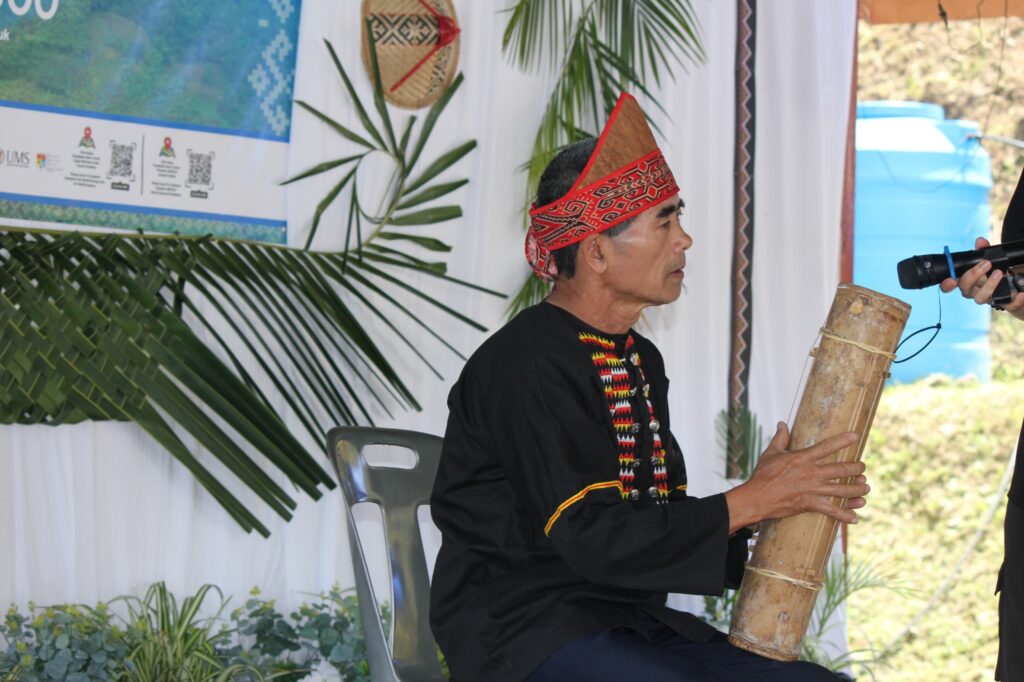
Also performed was the Tongkungon, a traditional bamboo musical instrument played solo, as well as a bamboo music performance blending traditional and modern elements, playing the songs “Tinggi-tinggi Gunung Kinabalu” and “Kg Kiau Kalangadan.”
Community tamu: Economy and culture in one space
The delegation had the opportunity to visit the Community Tamu (open market) at the village field.
In the Kadamaian area and Kampung Kiau, residents have traditionally brought crops, fruits, vegetables, small livestock, forest produce, traditional food, and handicrafts to sell or barter.
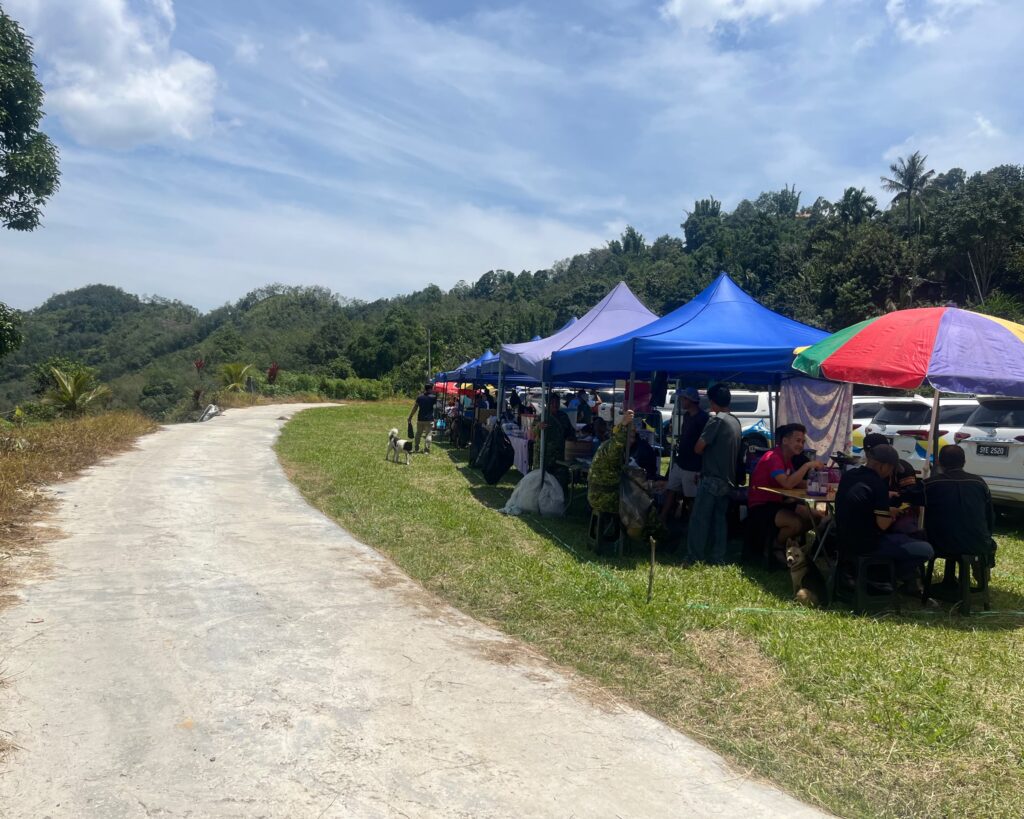
Today, the Community Tamu serves as a platform combining economic activity, cultural preservation, and tourism experiences.
Visitors not only have the opportunity to purchase local products such as Arabica coffee, stingless bee honey, and handicrafts but can also interact directly with villagers.
Culture must live in daily life
From gongs and dances to house blessings, agricultural produce, coffee, parang-making skills, language, traditional food, oral heritage, bamboo music, and the community tamu, the assessors’ journey showcased Kiau’s culture in its many forms.
However, cultural practitioner Wilson Tadius emphasised that the continuity of heritage should not depend solely on specific programmes or events.
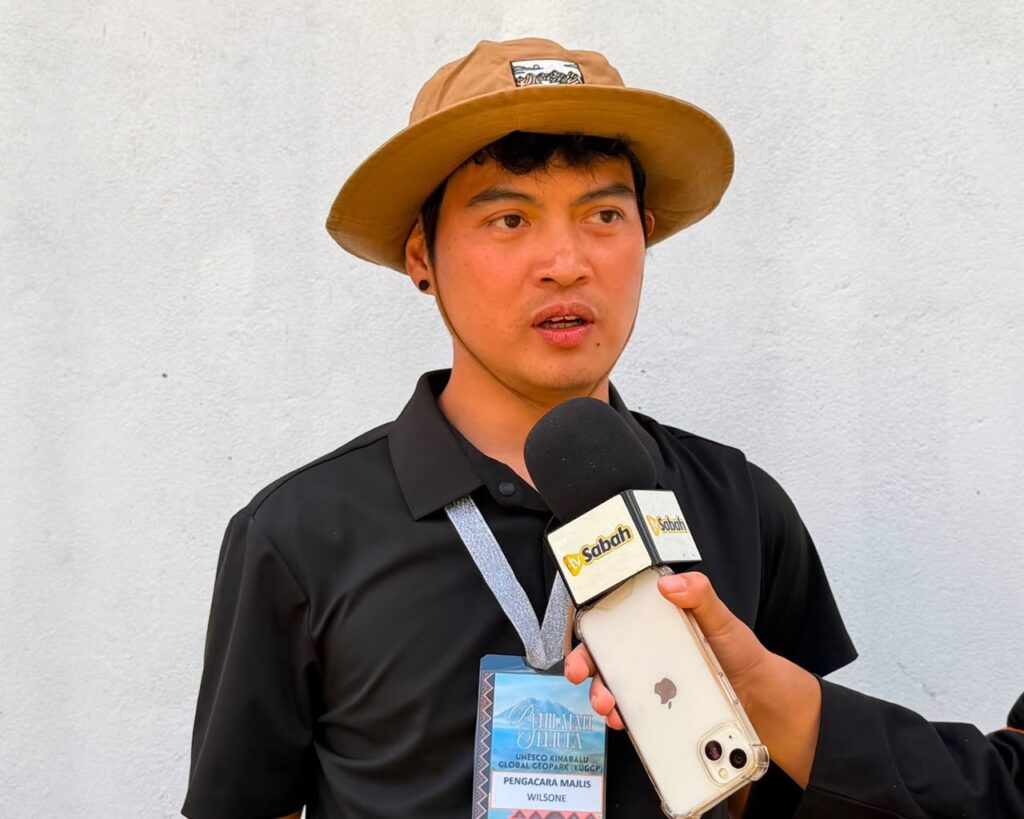
“Don’t wait for events like this alone to share cultural practices with outsiders. Instead, culture should be shared through daily conversation and activities,” he said.
He said the use of the Dusun Kiau language should be practised at home, while parents play a crucial role in ensuring that language, customs, and heritage continue to be practised by future generations.
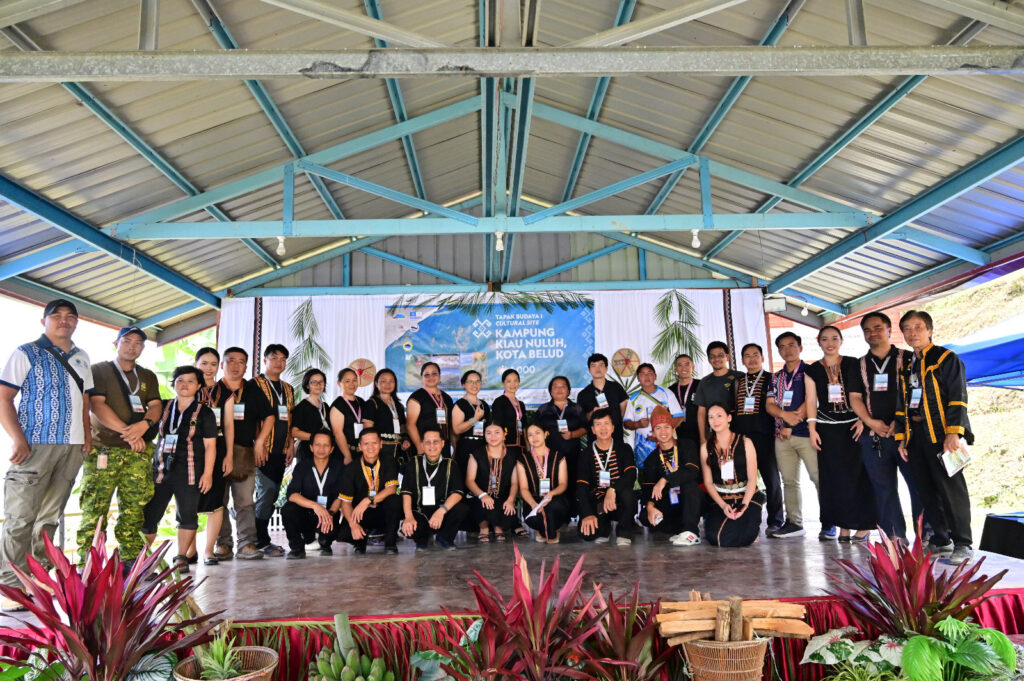
This message served as the culmination of the assessors’ entire journey through Kampung Kiau Nuluh.
What they witnessed was not merely a performance arranged for a single assessment session, but a living heritage still performed, learned, produced, enjoyed, and shared within the fabric of community life.
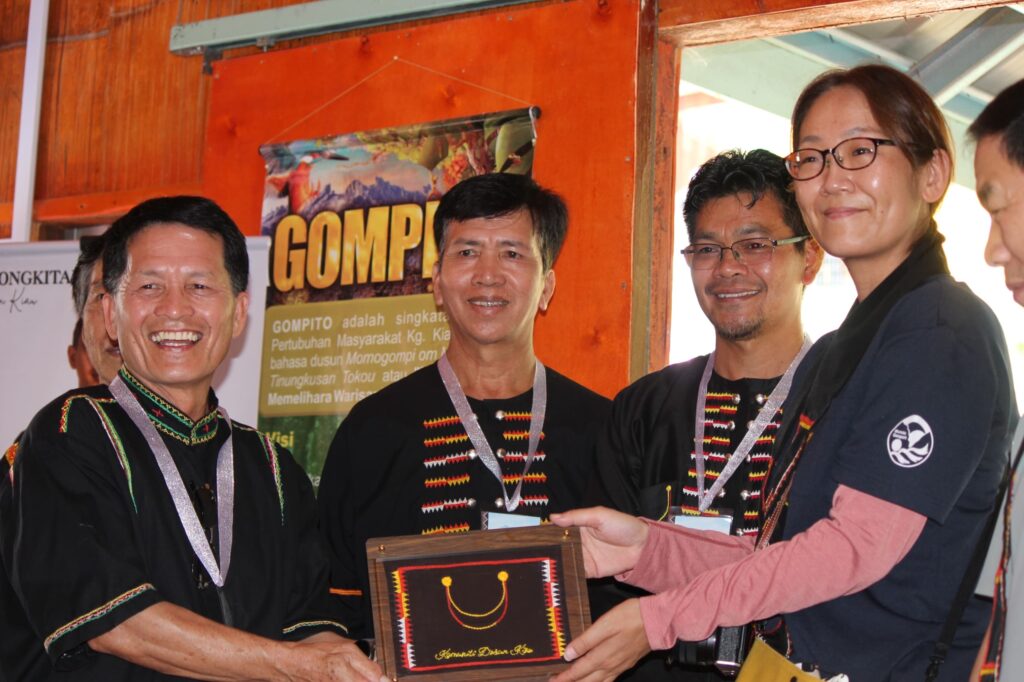
From the community’s perspective, this was the picture they wanted to convey to the assessors: that Dusun Kiau cultural heritage is not just for exhibition, but remains alive within the community and continues to be passed on to the next generation.