

KOTA MARUDU: July 9, 2026 – The Malaysia Civil Defence Force (APM) Kota Marudu successfully captured a gecko that had entered a house in Taman T&G 3 here on Wednesday. The reptile was found on the bathroom wall before attempting to flee after being spotted by the occupant. However, the gecko fell from the wall before APM personnel managed to safely catch it, with no injuries or property damage reported.

This minor incident might seem ordinary. But did you know, that seemingly small gecko can grow to the size of a monitor lizard hatchling, and is rumored to have a highly venomous bite that can be fatal?
Some people believe the gecko is highly valuable because it can be processed into medicine for cancer, leading them to risk encounters with this supposedly dangerous reptile, and even breed and keep many of them in pursuit of massive profits.
But how true are these two claims? Let’s delve into the actual facts.
Getting to Know the Gecko in Detail
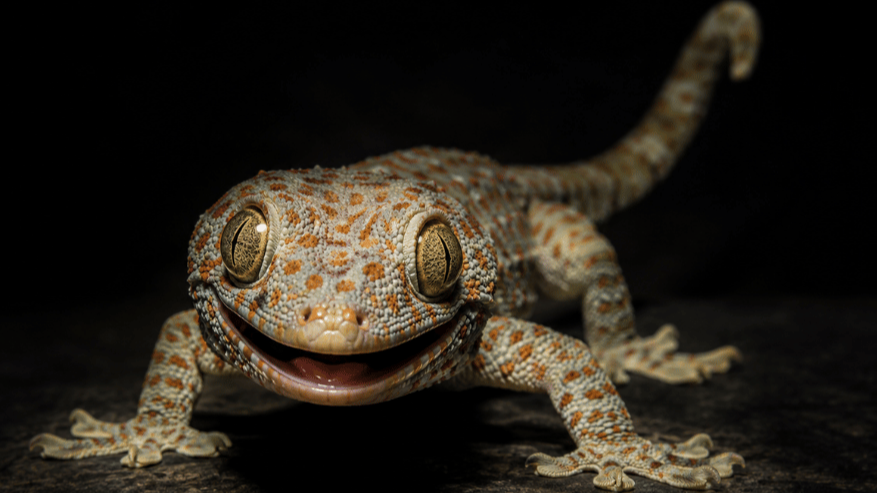
The gecko is a reptile from the family Gekkonidae, belonging to the same family as the common house lizard but larger in size. The most well-known species in Malaysia is the Tokay Gecko (Gekko gecko), which can be found throughout Southeast Asia, including Peninsular Malaysia and Sabah.
Geckos are nocturnal creatures, active at night to hunt insects such as mosquitoes, cockroaches, and roaches for food. Their ability to climb walls and ceilings makes them a common sight in residential areas, especially in traditional village houses.
But is it true that a gecko’s bite is poisonous and can be fatal?
The answer is: NO. According to researchers and scientific sources, geckos do not possess venom glands or poison in their bite. In fact, the strength of a gecko’s bite is not strong enough to break human skin.
However, there is one thing to be mindful of. Although non-venomous, a gecko’s saliva and gum areas can potentially contain bacteria such as Salmonella, which can cause infection if the bite wound is not properly cleaned. Therefore, if bitten by a gecko, wash the wound with soap and running water, then apply an antiseptic.
The myth that a gecko will only release its bite upon hearing thunder or lightning is also completely untrue. It is merely a folk tale.
Is the Gecko a Highly Valuable Reptile?
This is where the question becomes more intriguing. The common house gecko (Gekko gecko) does indeed have a high selling price and is highly sought after. Why?
Firstly, in Traditional Chinese Medicine (TCM), the gecko has long been used as a medicinal ingredient. There are claims that its flesh, tongue, or blood can cure various ailments, including asthma, eczema, sexual disorders, and even cancer and HIV/AIDS.
Some preliminary studies, such as those conducted by researchers from Henan University in China, have reported that gecko extract showed positive effects against malignant tumor cells in laboratory mice. Studies at Gadjah Mada University also found compounds within the gecko’s body that possess potential anti-tumor properties.
However, mainstream medicine has yet to provide scientific validation for these claims. The World Health Organization (WHO) and various health agencies have asserted that there is no strong scientific evidence to support the claim that geckos are a cure for cancer or AIDS.
Secondly, the gecko’s high value is also driven by rarity and speculation. Geckos weighing over 400 grams or exceeding 40 cm in length are extremely rare, causing their prices to skyrocket to hundreds of thousands of Ringgit per specimen.
However, the reality is that most geckos hunted are sold at much lower prices. In Lebak, Indonesia, for example, gecko hunters sell their catches to middlemen for around RM1 (Rp 3,000) per gecko. Meanwhile, elsewhere, there have been fraud cases where three Thai nationals nearly lost RM2 billion after believing there was a party selling geckos for RM1 billion each.
The Facts Behind the Myths
After examining the scientific facts, it is clear that:
First, the gecko is not a deadly venomous reptile. It possesses no venom or poison. However, like any wild animal, its bite carries a risk of bacterial infection if left untreated.
Second, the gecko’s high value is more a matter of myth and speculation rather than proven medical fact. Although there are promising preliminary studies, there is no solid evidence that geckos can cure cancer or AIDS. The inflated prices are largely driven by traditional beliefs, rarity, and market speculation.
So, if a gecko enters your home, as happened recently in Kota Marudu, don’t panic. Contact the emergency hotline 999 or the Kota Marudu District Operations Control Centre (PKOD) at 088-661656 if you need assistance. This reptile may look frightening, but in reality, it is more beneficial to us by feeding on pest insects around our surroundings.
That little gecko is not a harbinger of death, and its value, to be honest, is not as high as the hype suggests.