KUALA LUMPUR: July 11, 2026 – Tuaran Member of Parliament, Datuk Seri Panglima Wilfred Madius Tangau, has called for the rights and jurisdictions of Sabah and Sarawak to be consistently respected in the formulation of national agricultural policy, particularly in the implementation of the Paddy and Rice Control (Amendment) Bill 2026.
He stated that any policy or regulation touching on the functions and jurisdictions of Sabah and Sarawak must be carried out in line with the spirit of federalism and the provisions of the Federal Constitution.
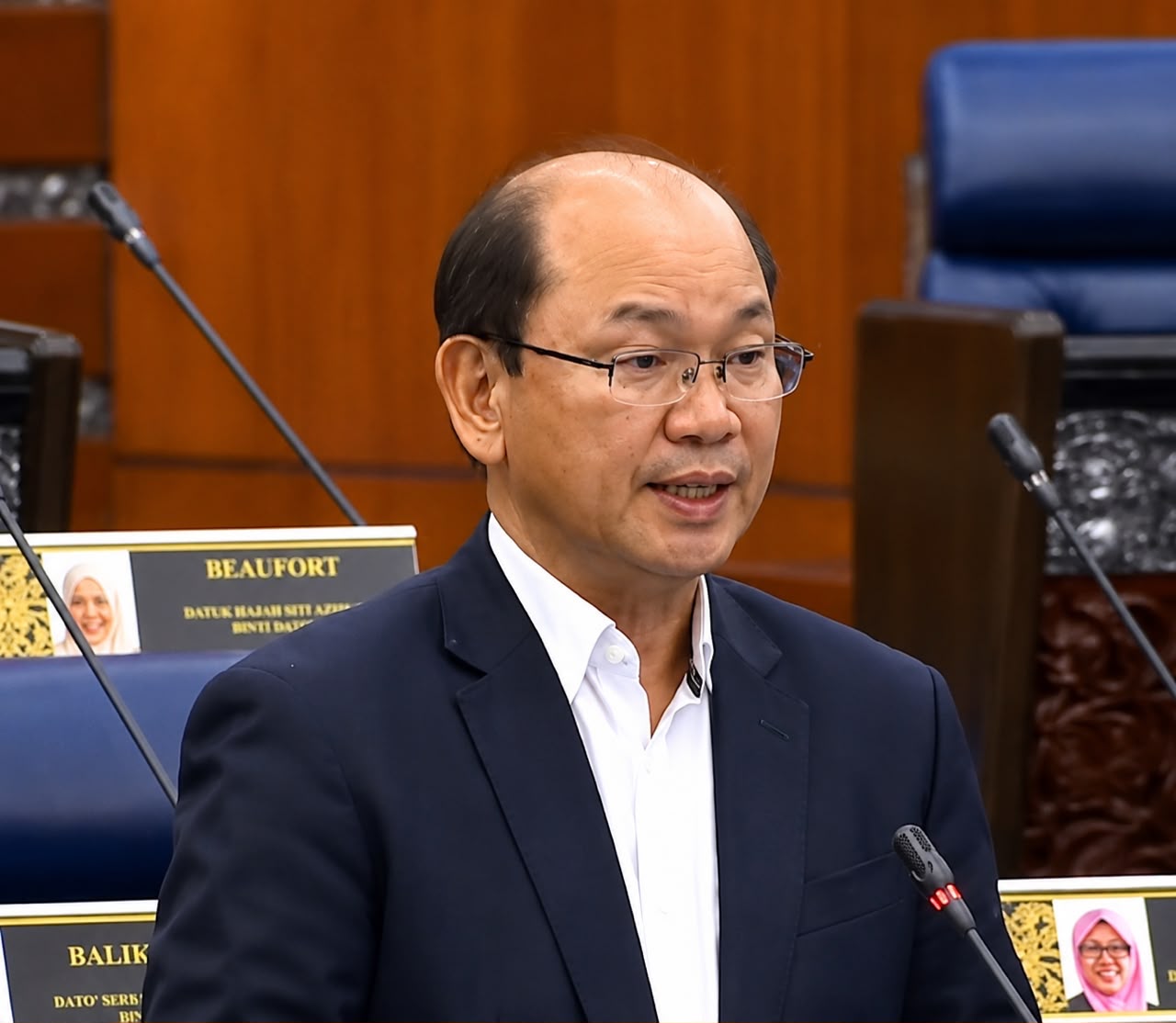
While debating the Bill in the Dewan Rakyat on Thursday, Madius said he supported the government’s efforts to strengthen the Paddy and Rice Control Act 1994 in order to combat fraud, hoarding, rice grade falsification, market manipulation, and cartel activities.
However, he stressed that the amendments should not focus solely on enforcement, but rather form part of a national strategy to strengthen food security, boost local paddy production, and reduce reliance on rice imports.
“Today, the bigger question is not how we control rice, but how we produce more rice,” he said.
According to him, the real problems facing the national paddy industry must be addressed comprehensively, including persistent low productivity, rising production costs, inadequate income for paddy farmers, and the country’s dependence on imported rice supplies.
In his debate, Madius also raised concerns over the powers granted to the Minister under Section 29 to make various regulations relating to rice grading, labelling, price controls, the transfer of paddy and rice, and other matters.
He proposed that any regulation made under that section be preceded by formal consultations with representatives of farmers, manufacturers, consumers, the Sabah and Sarawak governments, and all stakeholders.
“Broad powers must be balanced with strong accountability. Good policies are born from consultation and adherence to the Federal Constitution,” he said.
Madius said that Malaysia is a Federation founded on power-sharing, and therefore any policy involving Sabah and Sarawak must respect the special status of both territories as provided for in the Federal Constitution.
He also put forward the concept of Federal Agricultural Governance—an approach that enables strategic policies relating to agriculture, paddy, and rice to be jointly formulated by the Federal Government, the Sabah Government, and the Sarawak Government.
“This is the true spirit of a Federation. This is mature federalism. And TUARAN believes this is also the spirit that gave birth to Malaysia in 1963.”
He said that for any regulation involving matters under the constitutional jurisdiction of Sabah and Sarawak, the consent of both state governments must be obtained before it is enforced.
Madius noted that Sabah faces its own unique challenges, as most of its rice supply depends on sea transport, in addition to higher logistics costs and the fact that the majority of farmers are smallholders.
“What works in Kedah may not necessarily work in Kota Belud. What works in Perlis may not necessarily work in Tambunan. What works in Tanjung Karang may not necessarily work in Tuaran.”
In this regard, he put forward four proposals to the government, including establishing a mechanism for regular consultations with Sabah and Sarawak through the Federal Agricultural Governance approach, obtaining the consent of the Sabah and Sarawak governments for matters involving constitutional jurisdiction, tabling an annual National Rice Security Report in Parliament, and preparing a National Food Security Action Plan.
Concluding his debate, Madius said food security is not merely an enforcement issue, but is closely tied to national sovereignty, the future of farmers, and the people’s right to access staple food supplies at reasonable prices.
“Malaysia must move from a Federal Agricultural Administration approach to a Federal Agricultural Governance approach—from centralised administration to shared governance. Only through a genuine partnership between the Federal Government, the Sabah Government, and the Sarawak Government can we build a Malaysia that is truly food-secure, constitutionally robust, and prosperous for all its people.”