by David E.
SIBU: July 25, 2026 – Sarawak has begun onshore oil production for the first time in more than five decades, the state’s premier announced on Wednesday.
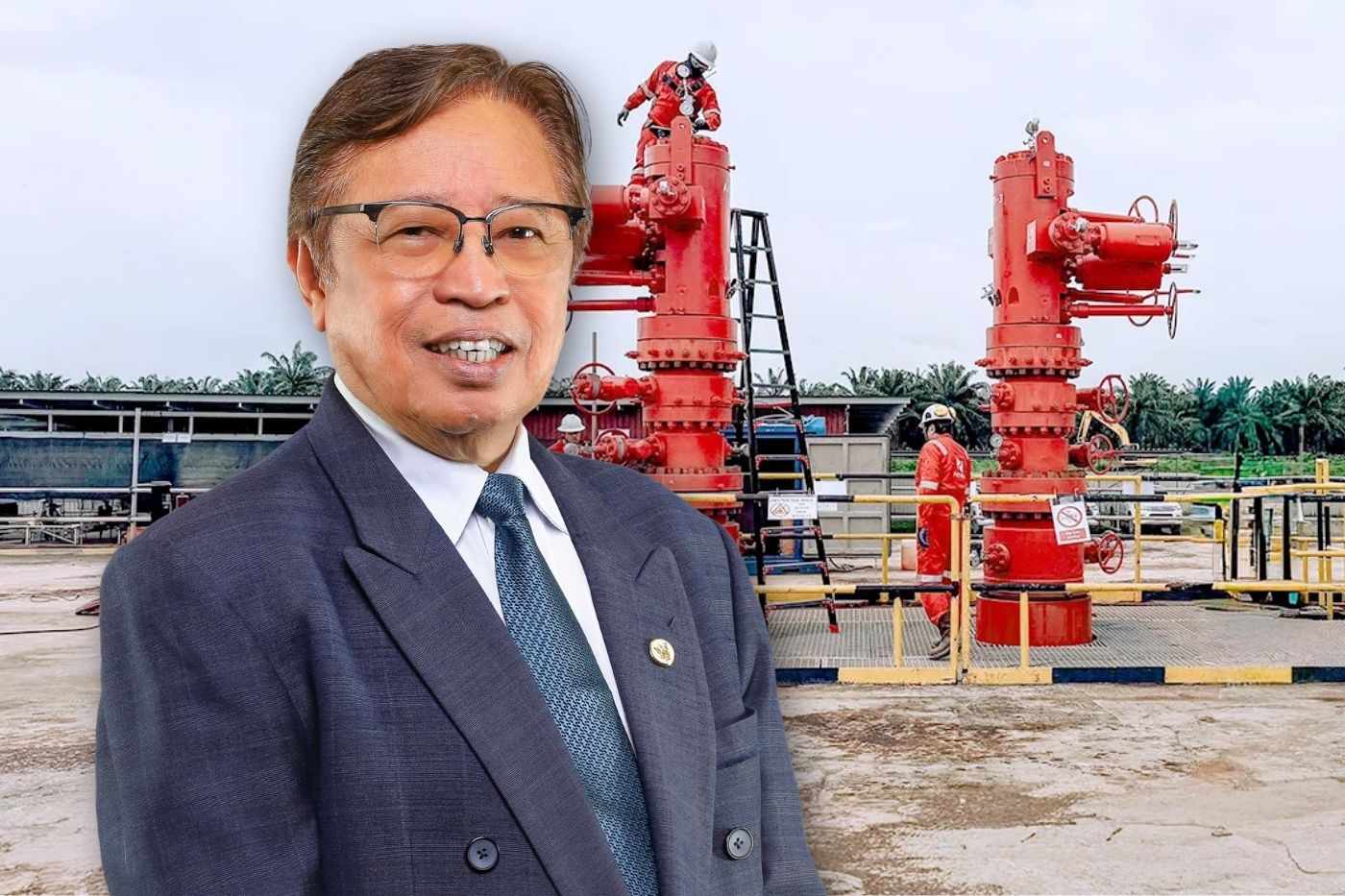
State-owned PETROS is extracting about 800 barrels per day at the Adong Kechil West field near Marudi.
Premier Tan Sri Abang Johari Tun Openg announced the milestone at the Sarawak Day 2026 gathering in Sibu. “This is just one well. More will follow,” he said.
He said the success demonstrated the capability of local engineers and the workforce, adding that Sarawak would play a larger role in the national oil and gas industry.
The state government wants to add value to its natural resources rather than exporting them raw, he explained. The Sarawak Gas Roadmap (SGR) has been introduced as a long-term strategy to develop the petrochemical industry, including methanol, ammonia, hydrogen and fertiliser.
“The government’s target is to increase domestic gas utilisation from 7% to at least 30% by 2030,” he said.
The 65km Kidurong-Samalaju gas pipeline is now 94% complete and is expected to start operating by the end of the second quarter of this year.
A Virtual Pipeline System (VPS) is scheduled to start in early 2026 to transport liquefied natural gas from Bintulu to Kuching, extending gas coverage to areas without pipelines.
In the transition to a low-carbon economy, Sarawak has a significant advantage from its hydro, solar and biomass resources.
Abang Johari said PETROS’ production would strengthen Sarawak’s ambition to develop blue hydrogen and ammonia. The federal government supports a feasibility study worth RM5-6 billion related to low-carbon technology in Bintulu. Sarawak aims to position itself as a major green hydrogen hub in South-east Asia.
Separately, two days before the gathering, on 20 July, the state-owned airline AirBorneo launched its inaugural commercial flight on the Kuala Lumpur-Kuching route. A regular twice-daily service began on 21 July.
He also noted that Sarawak has remained a high-income state for four consecutive years since 2022. Gross National Income per capita reached RM70,500 in 2025, exceeding the World Bank’s high-income threshold of RM61,600.