
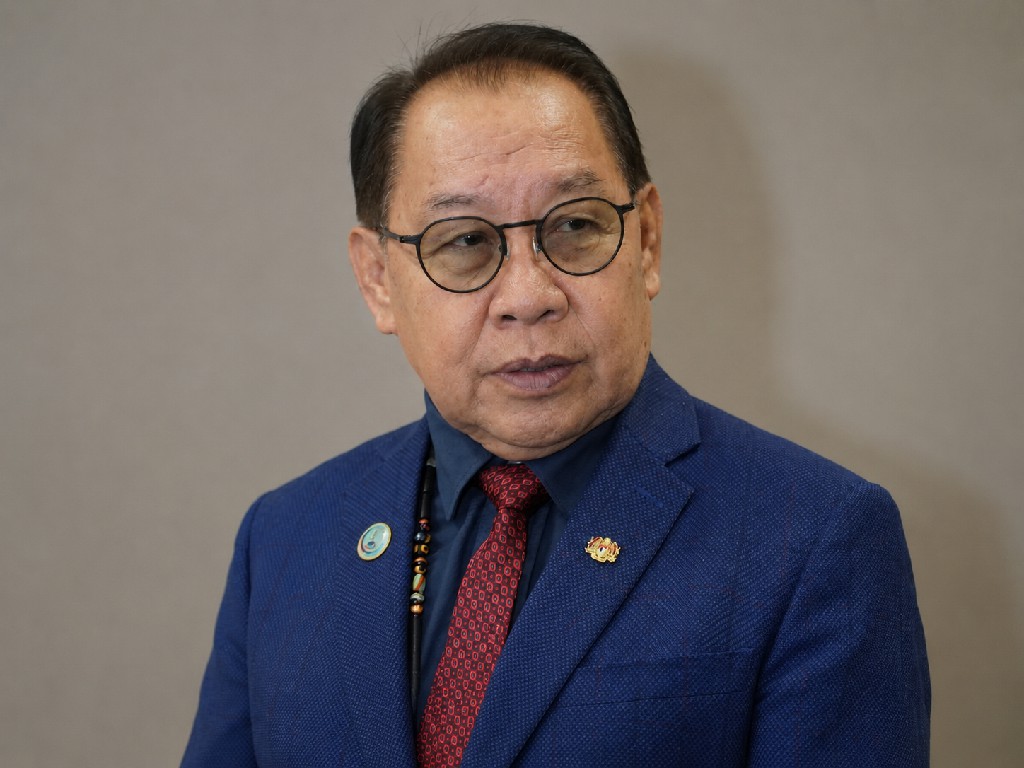
KOTA KINABALU: 3 July 2026 – Keningau Member of Parliament, Datuk Seri Panglima Dr Jeffrey G. Kitingan, has urged the Federal Government to review the implementation of the BUDI MADANI Diesel programme in Sabah, arguing that policies designed based on Peninsular Malaysia’s conditions are unsuitable for Sabah without taking into account its unique geographical factors, transportation needs, and socio-economic realities.
In a media statement on 2 July 2026, Jeffrey said the targeted subsidy policy, which was fully implemented on 1 July, places an unnecessary burden on legitimate diesel users in Sabah.
“An effective policy in Peninsular Malaysia is not necessarily effective in Sabah. Public policy must acknowledge Sabah’s realities and serve the interests of its people fairly and justly,” he said.
According to Jeffrey, the operational conditions for diesel vehicles in Sabah are fundamentally different from those in the Peninsula. The vast rural road network—including thousands of kilometres of gravel, laterite, and poorly maintained roads—makes four-wheel-drive vehicles a daily necessity for transportation, agriculture, small businesses, and essential services.
Sabah, which is the second-largest state in Malaysia and larger than any state in the Peninsula, involves long travel distances. A journey from Sipitang to Kota Kinabalu and onwards to Tawau via Sandakan covers approximately 780 kilometres—comparable to a journey of about 800 kilometres from Johor Bahru to Perlis.
He also noted that his Keningau parliamentary constituency alone is larger than the combined land area of Penang, Malacca and Perlis, with travel distances from one end to the other exceeding 150 kilometres.
Under the revised BUDI MADANI Diesel programme effective 1 July 2026, eligible private diesel vehicle owners receive a basic allocation of 200 litres of subsidised fuel per month. Eligible private four-wheel-drive and pickup owners can apply for an additional 100 litres, bringing their total eligibility to 300 litres per month.
The subsidised diesel price is set at RM2.10 per litre, compared to the market price of RM3.97 per litre for the period of 1 to 8 July 2026. The programme is expected to benefit approximately 400,000 private diesel vehicle owners in Peninsular Malaysia and another 300,000 in Sabah, Sarawak and the Federal Territory of Labuan.
However, individuals who are not registered owners or authorised persons are forced to purchase diesel at the unsubsidised price of RM3.97 per litre.
Jeffrey stressed that many diesel vehicle users are not the registered owners of the vehicles for legitimate reasons, including financing arrangements, family ownership, company ownership and business operations. He said most diesel vehicles are driven by small business employees, contractors and rural enterprises, rather than the registered owners themselves.
While efforts to curb fuel smuggling are understandable, Kitingan argued that this should be addressed through stronger enforcement, rather than restrictions that burden legitimate diesel users in Sabah.
Deputy Minister of Domestic Trade and Cost of Living, Datuk Dr Fuziah Salleh, had previously stated that the automatic implementation of BUDI MADANI Diesel is capable of curbing subsidised fuel leakage, especially in border areas of Sabah and Sarawak. She said that previously, users in Sabah and Sarawak enjoyed a blanket subsidised diesel price that allowed anyone to purchase diesel at subsidised rates without eligibility verification.
Several parties in Sabah have previously voiced similar concerns. Sabah Pakatan Harapan urged the government to ensure the implementation of BUDI MADANI Diesel in Sabah is transparent, fair and does not burden the people. Sabah PH Information Chief, Datuk Chan Foong Hin, said Sabahans are highly dependent on long-distance land transport, inter-district logistics, private diesel vehicle use, river boats, and generator use in interior areas.
The Sabah Teachers Union (KGKS) also appealed to the government to review the monthly diesel subsidy quota of 200 litres, arguing that many teachers in Sabah rely on diesel-powered four-wheel-drive vehicles on a daily basis, especially in rural areas.
Meanwhile, STARSabah questioned the Federal Government’s justification for maintaining the BUDI MADANI diesel subsidy quota, arguing that the policy was formulated using national statistics that do not reflect Sabah’s unique geographical and economic realities.
Jeffrey, who is also President of the Parti Solidariti Tanah Airku (STAR), also called on the Sabah State Government to play a more proactive role in protecting the interests of Sabah consumers by engaging the Federal Government to review aspects of the policy that adversely affect Sabahans.
He urged the Federal Government to listen to the voices of Sabahans and immediately review the implementation of the BUDI MADANI Diesel programme in the state, particularly the restrictions related to vehicle ownership, authorised purchasers, and monthly diesel purchase limits.
“An effective policy in Peninsular Malaysia is not necessarily effective in Sabah. Public policy must acknowledge Sabah’s realities and serve the interests of its people fairly and justly,” he asserted.