KOTA KINABALU, 11 June 2026 – Despite being endowed with abundant natural resources – including land, rivers, forests, seas, oil and gas, palm oil, fisheries and tourism – many of Sabah’s native children continue to be marginalised and live in poverty, a local non-governmental organisation has claimed.
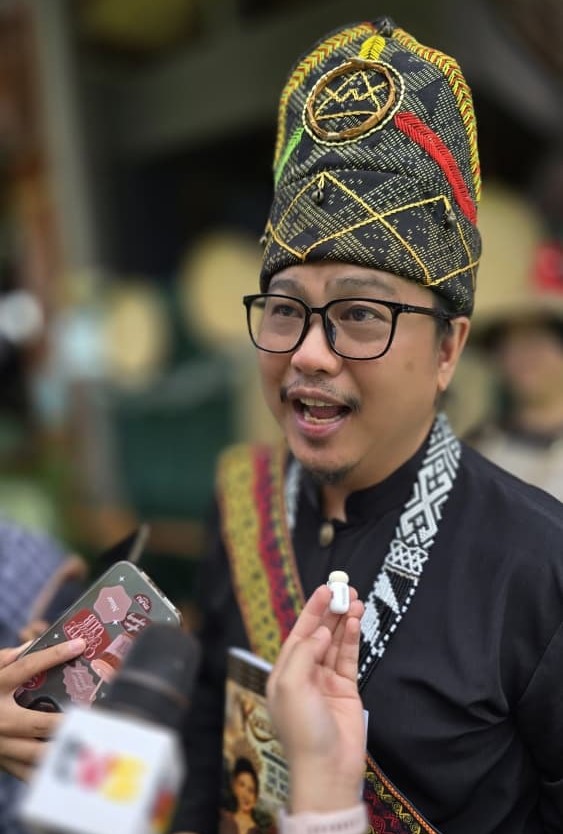
In a media statement on Thursday, Atama Katama, president of MOPOT – Defenders of Ancestral Lands Sabah, said the group attributes the situation to a failure of governance and the role of what it calls an “elite comprador” that prioritises capital and contract interests over defending the rights of indigenous people.
“The answer to why Sabah, which produces so much wealth, still sees its people living in poverty cannot be found merely in the slogans of development – it lies in the skewed structures of ownership,” the statement read.
MOPOT defined “elite comprador” as local intermediaries more loyal to capital, contracts, concessions, positions, licences and power relations than to the rights of indigenous people.
“They talk about development, but that development often does not transfer ownership to the native people,” the group said.
The organisation also cited the report of the Royal Commission of Inquiry (RCI) on Immigrants in Sabah as evidence that the crisis facing the state is not imaginary.
The RCI, which examined issues of undocumented migrants, the issuance of blue identity cards, voter registration and institutional weaknesses, is seen by MOPOT as a “major document” on governance failures affecting demographic change, national security and the protection of indigenous rights.
“When governance fails, the impact is not just in government offices. It reaches villages, customary lands, rivers, schools, clinics, elections, job markets and the future of our children,” the statement stressed.
MOPOT elaborated that in Sabah’s interior, pressure on customary land, plantation expansion and weak land documentation have cut communities off from rivers, forests and ancestral areas.
On the east coast, issues of borders, refugees, the IMM13 programme, stateless persons and squatter settlements have raised political-economic questions over who controls the land and sea, and who determines identity and political power.
On the west coast – including Kota Kinabalu, Penampang, Putatan and Papar – urbanisation is taking place without fair ownership.
“If land values rise but native families are increasingly squeezed, if hotels and commercial centres multiply but indigenous community ownership does not increase, then development is not yet just,” the group said.
In response, MOPOT has called on all native associations, customary leaders, youth, women, intellectuals, churches, mosques, temples, longhouses, NGOs, village movements and civil society to treat the Sabah RCI as a “people’s political school”.
The organisation proposed five immediate steps: establishing “RCI Evidence Schools” in every district; carrying out a Native Ownership Audit; forming a Customary Land Mapping Brigade; building native cooperatives across various sectors; and demanding an Economic Participation Clause for native people in every major project.
“Sabah does not need more comprador elites who only act as brokers of the state’s wealth. Sabah needs leadership that returns ownership to the indigenous people,” MOPOT said.
“Sabah is not poor because it lacks resources. Sabah is being made poor because the native people do not control the system of ownership over their own homeland,” the statement added.
The group’s message, it said, is clear: defend the land, read the evidence, expose the contradictions, fight governance failure, build native ownership, and return Sabah’s wealth to the power of Sabah’s people.